UNMC Patho Exam 1
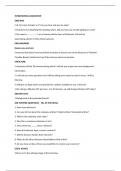
neuroanatomy of pain and the components of pain - ANS--Nociceptors → Afferent fibers
→ Spinal cord (substance P) → Brain for interpretation
-Substance P = neurotransmitter peptide - has to bind to a receptor
-Impulse MUST go to the brain AND be interpreted for the pain to be felt
Nociceptors - ANS-pain receptors
Afferent fibers - ANS--A-delta (for sharp pain)
-C-fibers (for dull/achy pain)
Spinal cord - ANS--dorsal horn, substantia gelatinosa
Substance P - ANS-key neurotransmitter
Impulse - ANS-MUST go to the brain AND be interpreted for the pain to be felt
Gate Control theory of pain - ANS--L fibers = large diameter fibers, conduct impulses
fast and attempt to EXCITE SG AND T CELLS → decrease of pain perception
-S fibers = small diameter fibers, conduct impulses slow and attempt to INHIBIT SG
CELLS AND EXCITE T CELLS → increase of pain perception
-Substansia Gelatinosa = attempts to INHIBIT T CELL
-Central Transmission Cell (T cell) = receives all input, the more excitation of the T cell,
the more perception of pain
L fibers (large diameter fibers) - ANS-conduct impulses fast and attempt to EXCITE SG
AND T CELLS → decrease of pain perception
S fibers (small diameter fibers) - ANS-conduct impulses slow and attempt to INHIBIT
SG CELLS AND EXCITE T CELLS → increase of pain perception
Substansia Gelatinosa - ANS-attempts to INHIBIT T CELL
Central Transmission Cell (T cell) - ANS-receives all input, the more excitation of the T
cell, the more perception of pain
INCREASE PAIN PERCEPTION - ANS--More excitation of T cell
-S fibers are more stimulated
, -Less SG excitation
-Less excitation of L fibers
DECREASE PAIN PERCEPTION - ANS--Less excitation of T cell
-S fibers are less excited
-L fibers are more excited
-More SG excitation
Define normal osmotic equilibrium in regard to fluid imbalance - ANS-
Explain all that will happen resulting from the addition of a hypotonic solution to ECF -
ANS-Water will move into the ICF and the cells will SWELL
Explain all that will happen resulting from the addition of a hypertonic solution to the
ECF - ANS-Water will move from the ICF to the ECF and the cell will SHRINK
Identify the three different fluid spaces in the body and where they are -
ANS-Intracellular, extracellular (interstitial), and intravascular
two forces that favor filtration out of the capillary - ANS-(H2O OUT of capillary):
-Capillary Hydrostatic Pressure: pressure and force caused by the flow of fluid inside
the capillary
-Interstitial Oncotic Pressure: the osmotic pull generated by large molecules in the
interstitial space
two forces that oppose filtration out of the capillary - ANS-(H2O INTO the capillary):
-Capillary Oncotic Pressure: the osmotic pull is generated by large molecules in the
capillary
-Interstitial Hydrostatic Pressure: pressure caused by the flow of fluid in the interstitial
space
Capillary Hydrostatic Pressure - ANS-pressure and force caused by the flow of fluid
inside the capillary (water won't leave the capillary)
Interstitial Oncotic Pressure - ANS-the osmotic pull generated by large molecules in the
interstitial space (water won't be pulled out of the capillary)
Capillary Oncotic Pressure - ANS-the osmotic pull is generated by large molecules in
the capillary (water won't be let back into the capillary)
neuroanatomy of pain and the components of pain - ANS--Nociceptors → Afferent fibers
→ Spinal cord (substance P) → Brain for interpretation
-Substance P = neurotransmitter peptide - has to bind to a receptor
-Impulse MUST go to the brain AND be interpreted for the pain to be felt
Nociceptors - ANS-pain receptors
Afferent fibers - ANS--A-delta (for sharp pain)
-C-fibers (for dull/achy pain)
Spinal cord - ANS--dorsal horn, substantia gelatinosa
Substance P - ANS-key neurotransmitter
Impulse - ANS-MUST go to the brain AND be interpreted for the pain to be felt
Gate Control theory of pain - ANS--L fibers = large diameter fibers, conduct impulses
fast and attempt to EXCITE SG AND T CELLS → decrease of pain perception
-S fibers = small diameter fibers, conduct impulses slow and attempt to INHIBIT SG
CELLS AND EXCITE T CELLS → increase of pain perception
-Substansia Gelatinosa = attempts to INHIBIT T CELL
-Central Transmission Cell (T cell) = receives all input, the more excitation of the T cell,
the more perception of pain
L fibers (large diameter fibers) - ANS-conduct impulses fast and attempt to EXCITE SG
AND T CELLS → decrease of pain perception
S fibers (small diameter fibers) - ANS-conduct impulses slow and attempt to INHIBIT
SG CELLS AND EXCITE T CELLS → increase of pain perception
Substansia Gelatinosa - ANS-attempts to INHIBIT T CELL
Central Transmission Cell (T cell) - ANS-receives all input, the more excitation of the T
cell, the more perception of pain
INCREASE PAIN PERCEPTION - ANS--More excitation of T cell
-S fibers are more stimulated
, -Less SG excitation
-Less excitation of L fibers
DECREASE PAIN PERCEPTION - ANS--Less excitation of T cell
-S fibers are less excited
-L fibers are more excited
-More SG excitation
Define normal osmotic equilibrium in regard to fluid imbalance - ANS-
Explain all that will happen resulting from the addition of a hypotonic solution to ECF -
ANS-Water will move into the ICF and the cells will SWELL
Explain all that will happen resulting from the addition of a hypertonic solution to the
ECF - ANS-Water will move from the ICF to the ECF and the cell will SHRINK
Identify the three different fluid spaces in the body and where they are -
ANS-Intracellular, extracellular (interstitial), and intravascular
two forces that favor filtration out of the capillary - ANS-(H2O OUT of capillary):
-Capillary Hydrostatic Pressure: pressure and force caused by the flow of fluid inside
the capillary
-Interstitial Oncotic Pressure: the osmotic pull generated by large molecules in the
interstitial space
two forces that oppose filtration out of the capillary - ANS-(H2O INTO the capillary):
-Capillary Oncotic Pressure: the osmotic pull is generated by large molecules in the
capillary
-Interstitial Hydrostatic Pressure: pressure caused by the flow of fluid in the interstitial
space
Capillary Hydrostatic Pressure - ANS-pressure and force caused by the flow of fluid
inside the capillary (water won't leave the capillary)
Interstitial Oncotic Pressure - ANS-the osmotic pull generated by large molecules in the
interstitial space (water won't be pulled out of the capillary)
Capillary Oncotic Pressure - ANS-the osmotic pull is generated by large molecules in
the capillary (water won't be let back into the capillary)