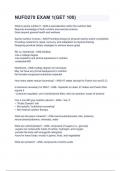
NUFD270 EXAM 1(GET 100)
What is sports nutrition? - ANS-A specialization within the nutrition field
Requires knowledge of both nutrition and exercise science
Goes beyond general health and wellness
Sports nutrition involves - ANS-Providing energy for physical activity and/or competition
Providing nutrients for repair, recovery, and adaptation to physical training
Designing practical dietary strategies to achieve above goals
RD vs. Nutritionist - ANS-Dietitian
-has a college degree
-has academic and clinical experience in nutrition
-credential=RD
Nutritionist - ANS-College degree not necessary
May not have any formal background in nutrition
No formally recognized nutritional credential
How many states require liscensing? - ANS-47 states (except for Puerto rico and D.C)
Is licensure necessary for RDs? - ANS-- Depends on state: 47 states and Puerto Rico
require it
- Licensure regulates: use of professional titles, who can practice, scope of practice
Can a non-RD give nutrition advice? - ANS-- Yes, if:
-- "Public Domain" info
-- Not specific "nutritional counseling"
-- Not medical nutrition therapy
What are the basic nutrients? - ANS-macronutrients(carbs, fats, proteins),
micronutrients(vitamins, minerals), water
What are carbohydrates? - ANS--composed of sugars (i.e., glucose)
-sugars are compounds made of carbon, hydrogen, and oxygen
-provide the body with energy(4k cals/gram)
-found in many foods, mostly in grains, fruits, and vegetables
What are proteins? - ANS--compounds of amino acids
, *essential
*nonessential
-made of carbon, hydrogen, oxygen, and nitrogen
-involved in growth and repair of body tissues
-provude some energy
-found in many foods, mostly dairy and various animal meats.
What are fats? - ANS-Also known as lipids
Serve as a concentrated form of energy (9 kcals/gram)
Provide structure to body tissues
Nerves
Cell membranes
Are concentrated in foods such as butter, oils, and meats
What are vitamins? - ANS-Micronutrients
Composed of carbon and other elements
Must be obtained from diet
Are essential to at least one vital process
Are found in nearly all foods, particularly fruits and vegetables
Vitamin Classifications - ANS-Water soluble
B-vitamins
C
Fat soluble
A
D
E
K
What are minerals? - ANS-Micronutrients
Composed of elements other than carbon
Serve important structural, electrical, and chemical roles in the body
mineral classifications - ANS-Major (requirements: > 100 mg/day)
-Calcium
-Sodium
-Potassium
-Chloride and others
Minor (requirements: < 100 mg/day)
What is sports nutrition? - ANS-A specialization within the nutrition field
Requires knowledge of both nutrition and exercise science
Goes beyond general health and wellness
Sports nutrition involves - ANS-Providing energy for physical activity and/or competition
Providing nutrients for repair, recovery, and adaptation to physical training
Designing practical dietary strategies to achieve above goals
RD vs. Nutritionist - ANS-Dietitian
-has a college degree
-has academic and clinical experience in nutrition
-credential=RD
Nutritionist - ANS-College degree not necessary
May not have any formal background in nutrition
No formally recognized nutritional credential
How many states require liscensing? - ANS-47 states (except for Puerto rico and D.C)
Is licensure necessary for RDs? - ANS-- Depends on state: 47 states and Puerto Rico
require it
- Licensure regulates: use of professional titles, who can practice, scope of practice
Can a non-RD give nutrition advice? - ANS-- Yes, if:
-- "Public Domain" info
-- Not specific "nutritional counseling"
-- Not medical nutrition therapy
What are the basic nutrients? - ANS-macronutrients(carbs, fats, proteins),
micronutrients(vitamins, minerals), water
What are carbohydrates? - ANS--composed of sugars (i.e., glucose)
-sugars are compounds made of carbon, hydrogen, and oxygen
-provide the body with energy(4k cals/gram)
-found in many foods, mostly in grains, fruits, and vegetables
What are proteins? - ANS--compounds of amino acids
, *essential
*nonessential
-made of carbon, hydrogen, oxygen, and nitrogen
-involved in growth and repair of body tissues
-provude some energy
-found in many foods, mostly dairy and various animal meats.
What are fats? - ANS-Also known as lipids
Serve as a concentrated form of energy (9 kcals/gram)
Provide structure to body tissues
Nerves
Cell membranes
Are concentrated in foods such as butter, oils, and meats
What are vitamins? - ANS-Micronutrients
Composed of carbon and other elements
Must be obtained from diet
Are essential to at least one vital process
Are found in nearly all foods, particularly fruits and vegetables
Vitamin Classifications - ANS-Water soluble
B-vitamins
C
Fat soluble
A
D
E
K
What are minerals? - ANS-Micronutrients
Composed of elements other than carbon
Serve important structural, electrical, and chemical roles in the body
mineral classifications - ANS-Major (requirements: > 100 mg/day)
-Calcium
-Sodium
-Potassium
-Chloride and others
Minor (requirements: < 100 mg/day)