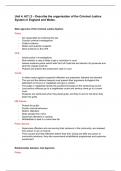
Unit 4, AC1.2 – Describe the organisation of the Criminal Justice
System in England and Wales.
Main agencies of the Criminal Justice System:
Police:
- Are responsible for enforcing the law
- Conduct criminal investigations
- Collect evidence
- Detain and question suspects
- Send evidence to the CPS
CPS:
- Advise police in investigations
- Rule whether a case is likely to get a conviction in court
- Assess evidence police submit with the Full Code test and decide if to prosecute and
what the charge would be
- Prepare and present the prosecution case in court
Courts:
- Is where cases against suspected offenders are presented, debated and decided
- The cps and the defence lawyers must present their arguments for/against the
defendant so the jury or magistrate can give a verdict.
- The judge or magistrate decide the punishment based on the sentencing council
- Less serious offences go to a magistrates courts and serious crime go to a crown
court.
- Suspects are sentenced when they plead guilty, and they’re sent to trial when they
plead not guilty.
HM Prisons:
- Protect the public
- Punish criminal behaviour
- Reform offenders
- Deter people from crime
- Supervise offenders in custody
- Rehabilitate to lead to a crime-free life
Prison Service:
- Supervises offenders who are serving their sentence in the community, are released
from prison or are on licence.
- They counsel and help offenders before their trial, during and after any prison or
community sentence, they also recommend rehabilitative programmes and supervise
punishment
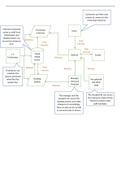
Relationships between Just Agencies
Police:
System in England and Wales.
Main agencies of the Criminal Justice System:
Police:
- Are responsible for enforcing the law
- Conduct criminal investigations
- Collect evidence
- Detain and question suspects
- Send evidence to the CPS
CPS:
- Advise police in investigations
- Rule whether a case is likely to get a conviction in court
- Assess evidence police submit with the Full Code test and decide if to prosecute and
what the charge would be
- Prepare and present the prosecution case in court
Courts:
- Is where cases against suspected offenders are presented, debated and decided
- The cps and the defence lawyers must present their arguments for/against the
defendant so the jury or magistrate can give a verdict.
- The judge or magistrate decide the punishment based on the sentencing council
- Less serious offences go to a magistrates courts and serious crime go to a crown
court.
- Suspects are sentenced when they plead guilty, and they’re sent to trial when they
plead not guilty.
HM Prisons:
- Protect the public
- Punish criminal behaviour
- Reform offenders
- Deter people from crime
- Supervise offenders in custody
- Rehabilitate to lead to a crime-free life
Prison Service:
- Supervises offenders who are serving their sentence in the community, are released
from prison or are on licence.
- They counsel and help offenders before their trial, during and after any prison or
community sentence, they also recommend rehabilitative programmes and supervise
punishment
Relationships between Just Agencies
Police: