Fog Computing for Intelligent Cloud IoT Systems (Advances in Learning Analytics for Intelligent Cloud-IoT Systems) 1st Edition 2024 with complete solution
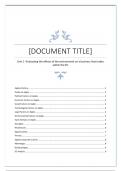
Fog Computing for Intelligent Cloud IoT Systems (Advances in Learning Analytics for Intelligent Cloud-IoT Systems) 1st Edition Table of Contents Cover Table of Contents Series Page Title Page Copyright Page Preface Part I: STUDY OF FOG COMPUTING AND MACHINE LEARNING 1 Fog Computing: Architecture and Application 1.1 Introduction 1.2 Fog Computing: An Overview 1.3 Fog Computing for Intelligent Cloud-IoT System 1.4 Fog Computing Architecture 1.5 Basic Modules of Fog Computing 1.6 Cloud Computing vs. Fog Computing 1.7 Fog Computing vs. IoT 1.8 Applications of Fog Computing 1.9 Will the Fog Be Taken Over by the Cloud? 1.10 Challenges in Fog Computing 1.11 Future of Fog Computing 1.12 Conclusion References 2 A Comparative Review on Different Techniques of Computation Offloading in Mobile Cloud Computing 2.1 Introduction 2.2 Related Works 2.3 Computation Offloading Techniques 2.4 Conclusion 2.5 Future Scope 2.6 Acknowledgement References 3 Fog Computing for Intelligent Cloud–IoT System: Optimization of Fog Computing in Industry 4.0 3.1 Introduction 3.2 How Fog Computing with IIoT Brings Revolution 3.3 Applications of Fog Computing on Which Industries Rely 3.4 Data Analysis 3.5 Illustration of Fog Computing and Application 3.6 Conclusion 3.7 Future Scope/Acknowledgement References 4 Machine Learning Integration in Agriculture Domain: Concepts and Applications 4.1 Introduction 4.2 Fog Computing in Agriculture 4.3 Methodology 4.4 Results and Discussion 4.5 Conclusion 4.6 Future Scope References 5 Role of Intelligent IoT Applications in Fog Computing 5.1 Introduction 5.2 Cloud Service Model’s Drawbacks 5.3 Fog Computation 5.4 Recompenses of FoG 5.5 Limitation of Fog Computing 5.6 Fog Computing with IoT 5.7 Edge AI Embedded 5.8 Network Intelligence Objectives 5.9 Farming with Fog Computation (Case Study) 5.10 Conclusion References 6 SaaS-Based Data Visualization Platform—A Study in COVID19 Perspective 6.1 Introduction 6.2 Summary of Objectives 6.3 What is a Pandemic? 6.4 COVID-19 and Information Gap 6.5 Data Visualization and its Importance 6.6 Data Management with Data Visualization 6.7 What is Power BI? 6.8 Output Data 6.9 Design & Implementation 6.10 Dashboard Development 6.11 Advantages and its Impact 6.12 Conclusion and Future Scope References 7 A Complete Study on Machine Learning Algorithms for Medical Data Analysis 7.1 Introduction 7.2 Pre-Processing Medical Data for Machine Learning 7.3 Supervised Learning Algorithms for Medical Data Analysis 7.4 Unsupervised Learning Algorithms for Medical Data Analysis 7.5 Applications of Machine-Learning Algorithms in Medical Data Analysis 7.6 Limitations and Challenges of Machine Learning Algorithms in Medical Data Analysis 7.7 Future Research Directions and Machine Learning Developments in the Realm of Medical Data Analysis 7.8 Conclusion References Part II: APPLICATIONS AND ANALYTICS 8 Fog Computing in Healthcare: Application Taxonomy, Challenges and Opportunities 8.1 Introduction 8.2 Research Methodology 8.3 Application Taxonomy in FC-Based Healthcare 8.4 Challenges in FC-Based Healthcare 8.5 Research Opportunities 8.6 Conclusion References 9 IoT-Driven Predictive Maintenance Approach in Industry 4.0: A Fiber Bragg Grating (FBG) Sensor Application 9.1 Introduction 9.2 Review of Related Research Articles 9.3 Research Gaps 9.4 Emerging Research Directions 9.5 The Broad Concept of FBG Sensor Applications in Industry 4.0 9.6 Conclusion References 10 Fog Computing-Enabled Cancer Cell Detection System Using Convolution Neural Network in Internet of Medical Things 10.1 Introduction 10.2 Fog Computing: Approach of IoMT 10.3 Relationship Between IoMT and Deep Neural Network 10.4 Fog Computing Enabled CNN for Medical Imaging 10.5 Algorithm Approach of Proposed Model 10.6 Result and Analysis 10.7 Conclusion References 11 Application of IoT in Smart Farming and Precision Farming: A Review 11.1 Introduction 11.2 Methodologies Used in Precision Agriculture 11.3 Contribution of IoT in Agriculture 11.4 IoT Enabled Smart Farming 11.5 IoT Enabled Precision Farming 11.6 Machine Learning Enable Precision Farming 11.7 Application of Operational Research Method in Farming System 11.8 Conclusion 11.9 Future Scope References 12 Big IoT Data Analytics in Fog Computing 12.1 Introduction 12.2 Literature Review 12.3 Motivation 12.4 Fog Computing 12.5 Big Data 12.6 Big Data Analytics Using Fog Computing 12.7 Conclusion References 13 IOT-Based Patient Monitoring System in Real Time 13.1 Introduction 13.2 Components Used 13.3 IoT Platform 13.4 Proposed Method 13.5 Experimental Setup and Result 13.6 Conclusion References 14 Fog Computing and Its Emergence with Reference to Applications and Potentialities in Traditional and Digital Educational Systems: A Scientific Review 14.1 Background 14.2 Objectives 14.3 Methods 14.4 Fog Computing: Basics and Advantages 14.5 Growing Fog Computing Applications Emphasizing Education 14.6 Impact of Fog Computing in Education 14.7 Education Industry and Fog: Future Context 14.8 Fog Computing and Its Role in IOT Security: The Context of Campus 14.9 Concluding Remarks References Part III: SECURITY IN FOG COMPUTING 15 Blockchain Security for Fog Computing 15.1 Introduction 15.2 State of the Art 15.3 Security Issues in the Fog Computing Environments 15.4 Blockchain Technology 15.5 Blockchain Security for Fog Computing Environment 15.6 Summary and Conclusion References 16 Blockchain Security for Fog Computing and Internet of Things 16.1 Introduction 16.2 Pros and Cons of Blockchain 16.3 The Properties of Blockchain 16.4 The Attacks on Blockchain 16.5 Application of Blockchain Technology in Healthcare 16.6 Fog Computing 16.7 Confidentiality Concerns in Fog Computing 16.8 Cloud Computing Security 16.9 Fog Computing Security Breaches 16.10 Optimized Fog Computing 16.11 Open Research Issues in Blockchain and Fog Computing Security 16.12 Conclusion References 17 Fine-Grained Access Through Attribute-Based Encryption for Fog Computing 17.1 Introduction 17.2 Attribute-Based Encryption 17.3 Fine-Grained Access Through ABE 17.4 ABE Model for Fine-Grained Access 17.5 Application of ABE on Fog Computing 17.6 A Comparison of ABE Scheme 17.7 Conclusion References Index End User License Agreement List of Tables Chapter 1 Table 1.1 Difference between cloud computing and fog computing. Table 1.2 Difference between fog computing and IoT. Chapter 2 Table 2.1 Comparative discussion among different computation offloading techni... Chapter 4 Table 4.1 Assessment of multiple ML algorithms’ accuracy. Chapter 6 Table 6.1 The pandemic alert system of the World Health Organization (WHO) has... Table 6.2 Data table names. Chapter 7 Table 7.1 Applications of machine-learning algorithms in medical data analysis... Chapter 8 Table 8.1 Summarization of layered activities in fog computing. Table 8.2 Research question. Table 8.3 Summary of review papers on FC-based healthcare. Table 8.4 Recent publications on diagnosis in FC-based healthcare. Table 8.5 Recent publications on monitoring in FC-based healthcare. Table 8.6 Recent publications on notification in FC-based healthcare. Chapter 9 Table 9.1 Literature review of related research articles. Table 9.2 Equipment and processes monitored by vibration analysis. Chapter 11 Table 11.1 Contribution of IoT in agriculture. Table 11.2 List of smart farming systems with functional sensors and communica... Table 11.3 Contribution of IoT in precision farming. Table 11.4 List of nutrients in soil. Table 11.5 Depicts the present scenario of soil properties control using ML-ba... Chapter 13 Table 13.1 LM35 sensor specifications. Table 13.2 Computation of errors of actual data and observed data. Table 13.3 Comparison with other techniques. Chapter 15 Table 15.1 Trust and authentication techniques in fog computing. Table 15.2 Data protection, privacy, and access control techniques in fog comp... Chapter 17 Table 17.1 Comparison table of ABE schemes [3]. List of Illustrations Chapter 1 Figure 1.1 Fog computing characteristics. Figure 1.2 Fog computing architecture. Figure 1.3 Basic modules of fog computing. Figure 1.4 Applications of fog computing. Chapter 2 Figure 2.1 Clone-cloud-based framework. Figure 2.2 Phone2Cloud architecture. Chapter 3 Figure 3.1 Fog computing in Industry 4.0. Figure 3.2 Application areas of fog computing. Chapter 4 Figure 4.1 The flow diagram of the proposed framework. Figure 4.2 Dataset parameters. Figure 4.3 Univariate distribution of parameters on the data set 1. Figure 4.4 Univariate distribution of N-P-K values. Figure 4.5 Heatmap on dataset 1 parameters. Figure 4.6 Heatmap on dataset 2. Figure 4.7 Line plot for N_P_K feature visualization. Figure 4.8 Crop-wise feature visualization. Figure 4.9 Comparison of model’s performance. Chapter 5 Figure 5.1 Procedure movement of sensor to cloud. Figure 5.2 Various categories of cloud computing. Figure 5.3 Flaws of fog computing. Figure 5.4 Advantages of fog computation. Figure 5.5 Limitations of fog computing. Figure 5.6 Fog calculation with IoT. Figure 5.7 Software characteristics in fog computing. Figure 5.8 Model of clever agriculture. Figure 5.9 Some key obstacles to IoT cloud computing. Chapter 6 Figure 6.1 Integration design. Figure 6.2 High-level process flow. Figure 6.3 Solution flow. Figure 6.4 Landing page. Figure 6.5 Helping information. Figure 6.6 Symptom detection. Figure 6.7 Testing centers for COVID-19. Figure 6.8 Hospital information. Figure 6.9 Oxygen supplier’s information. Figure 6.10 COVID cases information. Figure 6.11 Vaccination information. Figure 6.12 Patients’ information. Chapter 7 Figure 7.1 Types of machine learning algorithms. Figure 7.2 Types of clustering algorithms [35]. Chapter 8 Figure 8.1 Relationship between cloud computing, fog computing, and Internet o... Figure 8.2 Essential characteristics of fog computing (FC). Figure 8.3 Sketch of review process. Figure 8.4 Number of publications made by the publishers. Figure 8.5 Application taxonomy in FC-based healthcare. Figure 8.6 Major challenges in FC-based healthcare system. Figure 8.7 A chronological view of research opportunities in FCbased healthca... Chapter 9 Figure 9.1 Broad concept of Industrial Revolution and Industry 4.0. Figure 9.2 Snapshot of a prototype version of a CMS. [Source: Cakir et al. (20... Figure 9.3 Procedure to evaluate CMS model built using R-studio environment. [... Figure 9.4 Multiple FBGs are embedded inside an MR fluid container. [Source: L... Figure 9.5 The sensor units comprised FBG and Terfenol-D with opposing magneti... Figure 9.6 The configuration of optical fiber current sensors fabricated using... Figure 9.7 A dual-parameter sensor for both magnetic field and temperature. [S... Figure 9.8 A broad understanding of FBG sensing in Industry 4.0. Chapter 10 Figure 10.1 Fog computing block diagram. Figure 10.2 Wings of fog computation application. Figure 10.3 CNN-based fog computation model. Figure 10.4 Deep learning based algorithmic approach model. Figure 10.5 Result image of DGMM computation model. Chapter 11 Figure 11.1 Flowchart of conventional farming. Figure 11.2 Different applications of IoT in agriculture humidity monitoring.... Figure 11.3 Google survey on IoT and sensor-based agriculture. [Courtesy: M. T... Figure 11.4 Generalized model of machine learning. Figure 11.5 Different machine learning algorithms. Figure 11.6 ML-based agriculture system. Figure 11.7 Basic flow diagram of OR method to solve real world problems [59]. Chapter 12 Figure 12.1 Fog computing in larger perspective. Figure 12.2 Fog node architectural service model. Figure 12.3 Fog computing architecture. Figure 12.4 Data and control flow for layered fog computing architecture. Figure 12.5 Characteristic of big data. Figure 12.6 A typical big data analytic flow diagram. Figure 12.7 Big data analytic using fog-engine. Chapter 13 Figure 13.1 Flow diagram of the database search, selection, and the review pro... Figure 13.2 Node MCU. Figure 13.3 ESP-12E module in Node MCU. Figure 13.4 Power requirements in Node MCU. Figure 13.5 Peripherals and I/O. Figure 13.6 On-board switches and LED indicators. Figure 13.7 CP2102 in Node MCU. Figure 13.8 Complete pin diagram of the Node MCU. Figure 13.9 Pulse rate sensor. Figure 13.10 Hardware diagram of a heart rate sensor. Figure 13.11 Op-Amp and reverse protection diode. Figure 13.12 Working of a pulse sensor. Figure 13.13 Working of a pulse sensor. Figure 13.14 Pin diagram of the pulse sensor. Figure 13.15 LM35. Figure 13.16 Temperature vs. Ic collector current. Figure 13.17 Temperature vs. Ic collector current. Figure 13.18 ThingSpeak. Figure 13.19 Working process of ThingSpeak. Figure 13.20 Flow diagram of the proposed technique. Figure 13.21 Arduino programming IDE. Figure 13.22 Creating channel fields. Figure 13.23 Write API key. Figure 13.24 Implemented online virtual schematic. Figure 13.25 (a) Hardware connection and (b) checking vitals real time. Figure 13.26 Measured real-time data of patient temperature. Figure 13.27 Measured real-time data of patient pulse rate. Chapter 14 Figure 14.1 Basic fog computing architecture. Figure 14.2 Fog computing and in-contrast with end devices. Figure 14.3 Fog computing advantages and its beneficiaries. Figure 14.4 Fog computing potential utilization in education and allied areas.... Figure 14.5 Certain fog computing issues in education and allied areas. Chapter 15 Figure 15.1 Fog computing structure [2]. Figure 15.2 Security attack issues in fog computing. Figure 15.3 Structure of blockchain. Figure 15.4 Blockchain layered architecture. Figure 15.5 Blockchain in fog computing. Chapter 16 Figure 16.1 Steps in block chain information and transactions [21]. Figure 16.2 Supply chain transformation through blockchain [21]. Figure 16.3 Several types of block chain and trust levels [30]. Figure 16.4 The structure of the smart contract [33]. Figure 16.5 Cisco IOx lifecycle and security pillars. Chapter 17 Figure 17.1 Symmetric-key cryptography. Figure 17.2 Asymmetric-key cryptography. Figure 17.3 Attribute-based encryption. Figure 17.4 Fine-grain data access control. Figure 17.5 ABE in fog computing.
Connected book
- 2024
- 9781394175321
- Unknown
Written for
- Institution
- Fog Computing for Intelligent Cloud IoT
- Module
- Fog Computing for Intelligent Cloud IoT
Document information
- Uploaded on
- June 28, 2024
- Number of pages
- 540
- Written in
- 2023/2024
- Type
- Exam (elaborations)
- Contains
- Only questions
Subjects
-
fog computing for intelligent cloud iot systems a