BIO 221 Practice Questions and Solutions
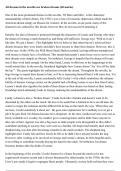
Understand that the scientific method requires that experiments be: Reproductive or Predictive Know how early microbiology disproved spontaneous generation. Before the discovery of microbes, it was widely thought that life, as in the case of rotting food, arose from nothing. This idea was referred to as spontaneous generation. By sterilizing cultures and keeping them isolated from the open air, Pasteur found that contamination of the media only occurred upon exposure to the outside environment, showing that some element was needed to give rise to life. In other words, life does not arise spontaneously Recognize the important properties of endospores. -Spore Coat: Dense protein material. Protects against UV radiation. -Cortex: Spongy, contains peptidogylcan, and absorbs water, which lowers the heat capacity, and makes endospore resistant to boiling. -Core: Innert, no enzyme activity. The spore therefore does not require a lot of energy. -Contains Calcium Dipicolonic acid which also reduces water activity and therefore enzymatic activity in the core, reducing the use of energy. Know the basic differences between prokaryotes and eukaryotes. -Eukaryotes: Have mitochondria and a nucleus. Use microtubules and filaments to move material from one side of the cell to the other. Includes algae, fungi, protozoa, viruses, viroids, and prions. -Prokaryotes: Material diffuses from one side of the cell to the other randomly (inefficient). Extremely small. Includes bacteria and archaea. Understand what we mean when we say prokaryotic cells are "diffusion limited." Material in prokaryates diffuse from one side of the cell to the other randomly. Therefore, Prokaryotes must be really small. Be able to explain why prokaryotic cells generally are smaller than eukaryotes. Diffusion in prokaryotes is completely random so material must be able to make it from one side of the cell to the other. Know the differences between bacteria and archaea. -Bacteria: Contain peptidoglycan in their cell walls. About 0.3-2 um in size. Contain no nuclear membrane, mitochondria, or chloroplasts. Definitely has a cytoskeleton. -Archaea: Cell walls contain protein but no peptidoglycan. Many have extreme life-styles. About 0.3-2 um in size. No nuclear membrane, mitochondria, or chloroplasts. May have a cytoskeleton.
Written for
- Institution
- BIO 221
- Module
- BIO 221
Document information
- Uploaded on
- July 7, 2024
- Number of pages
- 2
- Written in
- 2023/2024
- Type
- Exam (elaborations)
- Contains
- Questions & answers
Subjects
-
bio 221 practice questions and solutions
-
understand that the scientific method requires tha
-
know how early microbiology disproved spontaneous

Also available in package deal