Chapter 10 Questions and Answers
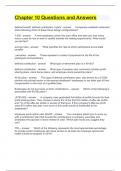
Chapter 10 Questions and Answers defined benefit, defined contribution, hybrid Companies establish retirement plans following which of these three design configurations? 1,000 A new employee comes into your office and asks you how many hours a year he has to work to qualify towards his vesting requirements. What would you tell him? accrual rules What specifies the rate at which participants accumulate benefits ) annuities These represent a series of payments for the life of the participant and beneficiary defined contribution What type of retirement plan is a 401(k)? defined contribution What type of pension plan commonly includes profit-sharing plans, stock bonus plans, and employee stock ownership plans? 401(k) plan This type of defined contribution plan, also known as a CODA, permits only private sector or tax-exempt employers' employees to tax defer part of their compensation to the trust of a qualified plan. Employees do not pay taxes on their contributions. Which of the following is associated with 401(k) plans? ) $750,000 A company uses graduated first-dollar-of-profits formula for their profit-sharing plans. They choose to share 4% of the first $10 million of after-tax profits and 7% of the after-tax profits in excess of that level. If this company's after-tax profit were $15 million last year, how much of this profit would be distributed to the employees? employee stock option plan (ESOP Your company asked you to come up with a contribution plan that invests the contributions in company securities and distributes the payouts in stock instead of cash. Which plan would you suggest they use? 70% Which of the following represents the most approximate percentage for private sector employees who have access to at least one employer-sponsored health insurance program in 2010? fee-for-service plans Which of the following types of insurance plans provides protection against health care expenses in the form of cash benefits paid to the insured or directly to the provider after the services are rendered? dentist visits Which of the following is NOT a benefit covered by fee-for-service plans? indemnity plans, self-funded plans What are the two types of fee-for-service plans? ) coinsurance This term refers to the percentage of the health bill the insured employee is required to pay. the percentage of covered expenses paid by the insured What is coinsurance ) preexisting condition ) This is the condition for which medical advice, diagnosis, care, or treatment was received or recommended during a designated period prior to coverage. prepaid medical services What is another name for health maintenance organizations (HMOs)? $15-$50 ) Common HMO copayment amounts for each doctor's visit vary between ) preferred provider organization (PPO) According to the provisions in her health insurance plan with Get Well Insurance, Ursula's coinsurance payment would be $50 if she goes to Dr. Kitt but will only be $25 if she goes to Dr. Matthew. She probably belongs to what type of insurance plan? point-of-service plans In which plan do employees possess the option to receive care from health care providers outside the designated network of physicians, paying more for the choice? carve-out plans Which of the following types of insurance plans are set up to cover things like dental care, vision care, and prescription drugs?
Written for
- Institution
- CODA
- Module
- CODA
Document information
- Uploaded on
- July 19, 2024
- Number of pages
- 3
- Written in
- 2023/2024
- Type
- Exam (elaborations)
- Contains
- Questions & answers
Subjects
-
chapter 10 questions and answers
-
defined benefit defined contribution hybrid comp
-
1000 a new employee comes into your office and as
-
accrual rules what specifies the rate at which par

Also available in package deal