HESI MED SURG #1 TEST
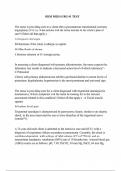
The nurse is providing care to a client after a percutaneous transluminal coronary angioplasty (PTCA). What actions will the nurse include in the client's plan of care? (Select all that apply.) – A.Frequent vital signs. B.Determine if the client is allergic to aspirin. D.Offer fluids of choice. F.Monitor infusion of IV nitroglycerine. In assessing a client diagnosed with primary aldosteronism, the nurse expects the laboratory test results to indicate a decreased serum level of which substance? - C.Potassium Clients with primary aldosteronism exhibit a profound decline in serum levels of potassium; hypokalemia; hypertension is the most prominent and universal sign. The nurse is providing care for a client diagnosed with trigeminal neuralgia (tic douloureux). Which symptoms will the nurse be looking for in the focused assessment related to this condition? (Select all that apply.) - A.Facial muscle spasms B.Sudden facial pain Trigeminal neuralgia is characterized by paroxysms of pain, similar to an electric shock, in the area innervated by one or more branches of the trigeminal nerve (cranial V). A 74-year-old male client is admitted to the intensive care unit (ICU) with a diagnosis of respiratory failure secondary to pneumonia. Currently, the client is ventilator-dependent, with settings of tidal volume (VT) of 750 mL and an intermittent mandatory ventilation (IMV) rate of 10 breaths/min. Arterial blood gas (ABG) results are as follows: pH, 7.48; PaCO2, 30 mm Hg; PaO2, 64 mm Hg; HCO3, 25 mEq/L; and FiO2, 0.80. Which action should the nurse take first? - D.Add 5 cm positive end-expiratory pressure (PEEP) Adding PEEP helps improve oxygenation while reducing FiO2 to a less toxic level The clinic nurse is providing post-operative teaching for a client scheduled for a myringoplasty. Which client statements indicate to the nurse that the teaching has been effective? (Select all that apply.) - B."I will avoid forceful and deep coughing until my post-op checkup. C."I must lay flat on my non-operative side for the first 12 hours after surgery." D."My hearing may be less or muffled until the packing comes out." The client must keep the ear bandage clean and dry until the packing is removed. Showering and hair washing is discouraged. During the shift report, the charge nurse informs a nurse of a reassignment to another unit for the day. The nurse begins to sigh deeply and tosses about her belongings when preparing to leave. What is the best immediate action for the charge nurse to take? - A. Continue with the shift report and talk to the nurse about the incident at a later time. Continuing with the shift report is the best immediate action because it allows the nurse who was floated some cooling off time. At a later time (after the nurse has cooled off) the charge nurse should discuss the conduct of the nurse in private. The nurse is completing an admission interview for a client with Parkinson disease. Which question will provide additional information about manifestations that the client is likely to experience? - C."Have you ever been frozen in one spot, unable to move?" Clients with Parkinson disease frequently experience difficulty in initiating, maintaining, and performing motor activities. They may even experience being rooted to the spot and unable to move. The nurse teaches a client with type 2 diabetes nutritional strategies to decrease obesity. Which food items chosen by the client indicate understanding of the teaching? (Select all that apply.) - B.Salmon C.Broccoli E.Banana Options B, C, and E provide fresh fruits, lean meats and fish, vegetables, whole grains, and low-fat dairy products. All are recommended by the American Diabetes Association (ADA) and are a part of the My Plate guidelines recommended by the U.S. Department of Agriculture (USDA). Which nursing action would be appropriate for a client who is newly diagnosed with Cushing syndrome? - A.Monitor blood glucose levels daily. Cushing syndrome results from a hypersecretion of glucocorticoids in the adrenal cortex. Clients with Cushing syndrome often develop diabetes mellitus. Monitoring of serum glucose levels assesses for increased blood glucose levels so that treatment can begin early A resident in a long-term care facility is diagnosed with hepatitis B. Which action should the nurse take with the staff caring for this client? - A.Determine if all employees have had the hepatitis B vaccine series. Hepatitis B vaccine should be administered to all health care providers. Hepatitis A (not hepatitis B) can be transmitted by fecal-oral contamination. A client in the emergency department is bleeding profusely from a gunshot wound to the abdomen. What action should the nurse immediately? - C.Maintain the client in a supine position to reduce diaphragmatic pressure and visualize the wound. Placing the client in a supine position reduces diaphragmatic pressure, thereby enhancing oxygenation, and allows for visualization of the abdominal wound. While at a home game, the mother of a 6-year-old is heard screaming, "My child is having an asthma attack! Can anyone help?" The nurse arrives and finds the child gasping for breath with circumoral cyanosis. What are the nurse's next actions? (Select all that apply.) - A.Yell, "Call 911." B.Ask the mother if she has the child's bronchodilator. E.Stay with the child and mother until the ambulance arrives. F.Sit the child straight up in Fowler's position. A client is diagnosed with an acute small bowel obstruction and suddenly spikes a temperature of 102°F/38.9°C. What other assessments should the nurse include in the client's focused assessment? (Select all that apply.) - A.Nausea and vomiting B.Loss of appetite C.Abdominal cramping D.Guarding with abdominal palpation The nurse is assessing a 75-year-old client for symptoms of hyperglycemia. Which symptom of hyperglycemia is an older adult most likely to exhibit? - D.Infection Signs and symptoms of hyperglycemia in older adults may include fatigue, infection, and evidence of neuropathy (e.g., sensory changes). An older client comes to the outpatient clinic complaining of left calf pain. The nurse notices a reddened area on the calf of the right leg that is warm to the touch, and the nurse suspects that the client may have thrombophlebitis. Which additional assessment is most important for the nurse to perform? - B.Auscultate the client's breath sounds. All these techniques provide useful assessment data. The most important is to auscultate the client's breath sounds because the client may have a pulmonary embolus secondary to the thrombophlebitis. The nurse receives the client's next scheduled bag of TPN labeled with the additive NPH insulin. Which action should the nurse implement? - D.Return the solution to the pharmacy. Only regular insulin is administered by the IV route, so the TPN solution containing NPH insulin should be returned to the pharmacy. Which data would the nurse expect to find when reviewing laboratory values of an 80-year-old who is in good health overall? - C.Urinalysis reveals slight protein in the urine and bacteriuria, with pyuria. In older adults, the protein found in urine slightly rises, probably as a result of kidney changes or subclinical urinary tract infections, and clients frequently experience asymptomatic bacteriuria and pyuria as a result of incomplete bladder emptying. A client with chronic asthma is admitted to the PACU complaining of pain at a level of 8 on a 1 to 10 scale, with a blood pressure of 124/78 mm Hg, pulse of 88 beats/min, and respirations of 20 breaths/min. The PACU recovery prescription is "Morphine, 2 to 4 mg IV push, while in recovery for pain level over 5." Which action should the nurse take first? - B.Call the anesthesia provider for a different medication for pain. The nurse should call the provider for a different medication because morphine is a histamine-releasing opioid and should be avoided when the client has asthma. The clinic nurse is teaching a client with osteoarthritis to the knees bilaterally about self-care. Which teaching points will the nurse include in the client's plan of care? (Select all that apply.) - A.Apply heat packs to your knees as needed for pain. B.Support your knees while you are in bed with a pillow or a rolled towel. E.Get 7 to 8 hours of sleep every night. F.Eat a balanced diet, including fish with Omega-3 fatty acids. A family member was taught to suction a client's tracheostomy prior to the client's discharge from the hospital. Which observation by the nurse indicates that the family member is capable of correctly performing the suctioning technique? - B.Inserts the catheter until resistance or coughing occurs During assessment of a client in the intensive care unit, the nurse notes that the client's breath sounds are clear on auscultation, but jugular vein distention and muffled heart sounds are present. Which action should the nurse take first? - A.Prepare the client for a pericardial tap. The client is exhibiting symptoms of cardiac tamponade, a collection of fluid in the pericardial sac that results in a reduction in cardiac output, which is a potentially fatal complication of pericarditis. Treatment for tamponade is a pericardial tap. A 58-year-old client who has no health problems asks the nurse about receiving the pneumococcal vaccine. Which statement given by the nurse would offer the client accurate information about this vaccine? - B.The immunization is administered once to older adults or those at risk for illness. It is usually recommended that persons older than 65 years and those with a history of chronic illness should receive the vaccine once in their lifetime. Some recommend receiving the vaccine at 50 years of age. The influenza vaccine is given once a year. The nurse is concerned about infection for a client after an esophagogastrostomy for esophageal cancer. Which actions should the nurse include in the client's plan of care? (Select all that apply.) - A.Frequent oral care every 2 hours while awake. B.Use incentive spirometer every 2 hours. C.Empty contents from NG tube every 8 hours. One hour post op is too soon to ambulate for this client. Visitors help support the patient and are encouraged to visit. Oral care is necessary as the client will be NPO. To decrease the risk of infection post operatively, implement routine pulmonary exercises. The client will have an NG tube in place, likely to intermittent suction, to decompress the stomach post surgery.
Written for
- Institution
- Chamberlain College Of Nursing
- Module
- HESI MED SURG
Document information
- Uploaded on
- September 27, 2024
- Number of pages
- 11
- Written in
- 2024/2025
- Type
- Exam (elaborations)
- Contains
- Questions & answers
Subjects
-
hesi med surg
-
hesi med surg 1 test

Also available in package deal