Prokaryotic and Eukaryotic DNA summary notes
09 December 2022 10:12
DNA can code for:
- mRNA to make polypeptides
- rRNA- in ribosomes
- tRNA
- Genes occur at fixed locations from start of DNA molecule called the locus
DNA is universal- the same code works in all living organisms
Non overlapping - codons are read once only
Degenerate- multiple codons code for the same amino acid (as 64 codons are possible b
acids)
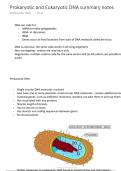
Prokaryotic DNA
- Single circular DNA molecule- nucleoid
- Also have one or more plasmids- small circular DNA molecules - contain additional non
essential genes- such as antibiotic resistance- bacteria can take them in and use them
- Not associated with any proteins
- Shorter length of strands
- Has no introns or exons
- Has shorter non coding sequences between genes
- No chromosomes
09 December 2022 10:12
DNA can code for:
- mRNA to make polypeptides
- rRNA- in ribosomes
- tRNA
- Genes occur at fixed locations from start of DNA molecule called the locus
DNA is universal- the same code works in all living organisms
Non overlapping - codons are read once only
Degenerate- multiple codons code for the same amino acid (as 64 codons are possible b
acids)
Prokaryotic DNA
- Single circular DNA molecule- nucleoid
- Also have one or more plasmids- small circular DNA molecules - contain additional non
essential genes- such as antibiotic resistance- bacteria can take them in and use them
- Not associated with any proteins
- Shorter length of strands
- Has no introns or exons
- Has shorter non coding sequences between genes
- No chromosomes