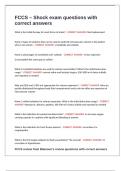
FCCS – Shock exam questions with
correct answers
What is the initial therapy for most forms of shock? - CORRECT ANSWER -fluid replacement
Name 2 types of solutions that can be used to replenish intravascular volume in the patient
who is not anemic. - CORRECT ANSWER -crystalloids and colloids
Name 2 advantages of crystalloids over colloids. - CORRECT ANSWER -1) less expensive
2) accomplish the same goal as colloid
What 2 crystalloid solutions are used for volume resuscitation? What is the initial bolus dose
range? - CORRECT ANSWER -normal saline and lactated ringers; 500-1000 ml iv bolus initially
and repeated as needed
Why are D5W and 1/2NS not appropriate for volume expansion? - CORRECT ANSWER -they are
quickly distributed throughout body fluid compartments and so do not offer any expansion of
intravascular volume
Name 3 colloid solutions for volume expansion. What is the initial bolus dose range? - CORRECT
ANSWER -hetastarch, albumin, gelatins; 300-500 ml iv bolus initially and repeated as needed
What is the indication for packed red blood cells? - CORRECT ANSWER -to increase oxygen
carrying capacity in a patient with significant bleeding or anemia
What is the indication for fresh frozen plasma? - CORRECT ANSWER -correction of a
coagulopathy
What is the first target endpoint in fluid resuscitation? The second? - CORRECT ANSWER -1)
correction of hypotension
FCCS review from Blamoun's review questions with correct answers
, 2) decreased heart rate and correction of hypoperfusion abnormalities
What happens if fluid resuscitation is overly aggressive? - CORRECT ANSWER -deterioration of
oxygenation d/t increase in pulmonary capillary pressure and resultant pulmonary edema
Name 5 vasoactive agents used in shock treatment. - CORRECT ANSWER -1) dopamine
2) norepinephrine
3) epinephrine
4) vasopressin
5) dobutamine
Define inotropic effect. - CORRECT ANSWER -alters the strength of the contraction of heart
muscle
Define vasopressor effect. - CORRECT ANSWER -causes vasoconstriction and elevates mean
arterial pressure (MAP)
Define chronotropic effect. - CORRECT ANSWER -alters the heart rate
Dopamine (low infusion rate) - CORRECT ANSWER -2-3mcg/kg/min; modest inotropic and
chronotropic effects; acts on dopaminergic receptors in the kidney and may increase urine
output, but it's use for renal effect is not recommended b/c it doesn't prevent renal dysfxn or
improve outcomes
Dopamine (intermediate infusion rate) - CORRECT ANSWER -4-10mcg/kg/min; primarily
inotropic effects; loses it's effect on the kidneys
Dopamine (high infusion rate) - CORRECT ANSWER -greater than 10mcg/kg/min; significant
alpha agonist effects that produce dose related vasoconstriction
FCCS review from Blamoun's review questions with correct answers
correct answers
What is the initial therapy for most forms of shock? - CORRECT ANSWER -fluid replacement
Name 2 types of solutions that can be used to replenish intravascular volume in the patient
who is not anemic. - CORRECT ANSWER -crystalloids and colloids
Name 2 advantages of crystalloids over colloids. - CORRECT ANSWER -1) less expensive
2) accomplish the same goal as colloid
What 2 crystalloid solutions are used for volume resuscitation? What is the initial bolus dose
range? - CORRECT ANSWER -normal saline and lactated ringers; 500-1000 ml iv bolus initially
and repeated as needed
Why are D5W and 1/2NS not appropriate for volume expansion? - CORRECT ANSWER -they are
quickly distributed throughout body fluid compartments and so do not offer any expansion of
intravascular volume
Name 3 colloid solutions for volume expansion. What is the initial bolus dose range? - CORRECT
ANSWER -hetastarch, albumin, gelatins; 300-500 ml iv bolus initially and repeated as needed
What is the indication for packed red blood cells? - CORRECT ANSWER -to increase oxygen
carrying capacity in a patient with significant bleeding or anemia
What is the indication for fresh frozen plasma? - CORRECT ANSWER -correction of a
coagulopathy
What is the first target endpoint in fluid resuscitation? The second? - CORRECT ANSWER -1)
correction of hypotension
FCCS review from Blamoun's review questions with correct answers
, 2) decreased heart rate and correction of hypoperfusion abnormalities
What happens if fluid resuscitation is overly aggressive? - CORRECT ANSWER -deterioration of
oxygenation d/t increase in pulmonary capillary pressure and resultant pulmonary edema
Name 5 vasoactive agents used in shock treatment. - CORRECT ANSWER -1) dopamine
2) norepinephrine
3) epinephrine
4) vasopressin
5) dobutamine
Define inotropic effect. - CORRECT ANSWER -alters the strength of the contraction of heart
muscle
Define vasopressor effect. - CORRECT ANSWER -causes vasoconstriction and elevates mean
arterial pressure (MAP)
Define chronotropic effect. - CORRECT ANSWER -alters the heart rate
Dopamine (low infusion rate) - CORRECT ANSWER -2-3mcg/kg/min; modest inotropic and
chronotropic effects; acts on dopaminergic receptors in the kidney and may increase urine
output, but it's use for renal effect is not recommended b/c it doesn't prevent renal dysfxn or
improve outcomes
Dopamine (intermediate infusion rate) - CORRECT ANSWER -4-10mcg/kg/min; primarily
inotropic effects; loses it's effect on the kidneys
Dopamine (high infusion rate) - CORRECT ANSWER -greater than 10mcg/kg/min; significant
alpha agonist effects that produce dose related vasoconstriction
FCCS review from Blamoun's review questions with correct answers