Lecture 6 – Papers:
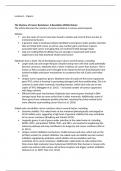
The Mystery of Cancer Resistance: A Revelation Within Nature
The article discusses the mystery of cancer resistance in various animal species
Whales:
very few cases of cancer have been found in whales and most of them are due to
environmental factors
A genomic study in bowhead whales identified several genes under positive selection
that are linked with cancer as well as copy number gains and losses in genes
associated with cancer and aging that are involved in DNA damage repair.
long non-coding RNAs (lncRNAs) that are strongly co-expressed with tumor
suppressors may help bowhead whales avoid cancer
Elephants have a lower risk of developing cancer due to several factors, including:
Larger body size and longer lifespan: Despite having more cells that could potentially
become cancerous, elephants have a lower incidence of cancer than humans. This is
known as Peto's paradox and is thought to be related to the fact that elephants have
evolved multiple anticancer mechanisms to counteract this risk (Caulin and Maley
2011).
Unique tumor suppressor genes: Elephants have 20 copies of the tumor suppressor
gene TP53, which is involved in preventing damaged cells from proliferating. This is in
contrast to most other mammals, including humans, which have only one or two
copies of TP53 (Abegglen et al. 2015). – increased number of tumour suppreoors
with larger animals
Efficient DNA repair mechanisms: Elephants have several genes involved in DNA
damage repair that are more active than in other mammals. Additionally, some of
these genes have undergone positive selection, meaning they have evolved to be
more effective at preventing cancer (Ferris et al. 2018).
Naked mole rat exhibits cancer resistance due to several factors, including:
Genomic stability: The naked mole rat has remained phenotypically unchanged for
30-50 million years, suggesting a high level of genomic stability that may contribute
to its cancer resistance (Bredberg and Schmitz 2019).
Longevity genes: A set of genes under selection in the naked mole rat, including
APEX1, RFC1, and proteins TOP2A, TEP1, and TRF1, are involved in lengthening the
telomere pathway and may contribute to its longevity and cancer resistance (Kim et
al. 2011).
Unique contact inhibition mechanisms: Unlike humans and mice, which rely on the
p27Kip1 protein for contact inhibition, the naked mole rat exhibits two-tier contact
inhibition regulated by p16Ink4a, which inhibits cell accumulation and may
contribute to its cancer resistance. Additionally, naked mole rat cells produce five
times more high-molecular mass hyaluronan (HMM-HA) than human or mouse cells,
which may interact with various cell surface receptors and trigger contact inhibition
(Seluanov et al. 2009; Tian et al. 2013).
The Mystery of Cancer Resistance: A Revelation Within Nature
The article discusses the mystery of cancer resistance in various animal species
Whales:
very few cases of cancer have been found in whales and most of them are due to
environmental factors
A genomic study in bowhead whales identified several genes under positive selection
that are linked with cancer as well as copy number gains and losses in genes
associated with cancer and aging that are involved in DNA damage repair.
long non-coding RNAs (lncRNAs) that are strongly co-expressed with tumor
suppressors may help bowhead whales avoid cancer
Elephants have a lower risk of developing cancer due to several factors, including:
Larger body size and longer lifespan: Despite having more cells that could potentially
become cancerous, elephants have a lower incidence of cancer than humans. This is
known as Peto's paradox and is thought to be related to the fact that elephants have
evolved multiple anticancer mechanisms to counteract this risk (Caulin and Maley
2011).
Unique tumor suppressor genes: Elephants have 20 copies of the tumor suppressor
gene TP53, which is involved in preventing damaged cells from proliferating. This is in
contrast to most other mammals, including humans, which have only one or two
copies of TP53 (Abegglen et al. 2015). – increased number of tumour suppreoors
with larger animals
Efficient DNA repair mechanisms: Elephants have several genes involved in DNA
damage repair that are more active than in other mammals. Additionally, some of
these genes have undergone positive selection, meaning they have evolved to be
more effective at preventing cancer (Ferris et al. 2018).
Naked mole rat exhibits cancer resistance due to several factors, including:
Genomic stability: The naked mole rat has remained phenotypically unchanged for
30-50 million years, suggesting a high level of genomic stability that may contribute
to its cancer resistance (Bredberg and Schmitz 2019).
Longevity genes: A set of genes under selection in the naked mole rat, including
APEX1, RFC1, and proteins TOP2A, TEP1, and TRF1, are involved in lengthening the
telomere pathway and may contribute to its longevity and cancer resistance (Kim et
al. 2011).
Unique contact inhibition mechanisms: Unlike humans and mice, which rely on the
p27Kip1 protein for contact inhibition, the naked mole rat exhibits two-tier contact
inhibition regulated by p16Ink4a, which inhibits cell accumulation and may
contribute to its cancer resistance. Additionally, naked mole rat cells produce five
times more high-molecular mass hyaluronan (HMM-HA) than human or mouse cells,
which may interact with various cell surface receptors and trigger contact inhibition
(Seluanov et al. 2009; Tian et al. 2013).