🔟
REST APIs
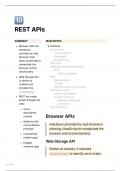
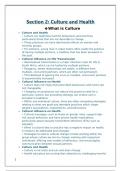
SUMMARY MAIN NOTES
Browser APIs are Contents
interfaces Browser APIs
provided by web Web Storage API
browsers that Geolocation
allow JavaScript to Drag-and-Drop
REST APIs
manipulate the
Application and Resource States
browser and its
State
functionality
Transferring States
Web Storage API REST
is similar to Representation
cookies and Transfer
Representational State Transfer
includes the
APIs Ideal scenario
sessionStorage
Common API Mistakes
REST are made Semantic challenge
public through the Application Semantics
web: Constraints
REST API Design
serve
descriptive
contnet Browser APIs
abode by the
connectdness interfaces provided by web browsers
principle allowing JavaScript to manipulate the
constrained browser and its functionality
media-types
bridges Web Storage API
semantic gap
Similar to cookies, it includes
sessionStorage to specify each origin,
REST APIs 1
, The state is a until the browser is closed,
particular
and
condition that
something is in at
localStorage which persists even when
a specific time the browser is closed
State of the
client is the Geolocation
page the user
is currently Provides user’s coordinates i.e.
visiting location to the application if the user
links gives permission
provide the
links uses navigator.geolocation
between
resources Drag-and-Drop
State of
server:
Drag and drop events, where some
elements are draggable
considers
state of
resources
server REST APIs
might have Web APIs are made public through the Web
multiple
resources REST APIs are Web APIs that
GET does - serves self-descriptive content
not change - abodes by connectedness principles
resource
- constrained media-types
state, while
POST and - bridges semantic gap
other
unsafe
methods ‼️ Django REST framework is actually a web
take API
resources
to a new
state
REST APIs 2
REST APIs
SUMMARY MAIN NOTES
Browser APIs are Contents
interfaces Browser APIs
provided by web Web Storage API
browsers that Geolocation
allow JavaScript to Drag-and-Drop
REST APIs
manipulate the
Application and Resource States
browser and its
State
functionality
Transferring States
Web Storage API REST
is similar to Representation
cookies and Transfer
Representational State Transfer
includes the
APIs Ideal scenario
sessionStorage
Common API Mistakes
REST are made Semantic challenge
public through the Application Semantics
web: Constraints
REST API Design
serve
descriptive
contnet Browser APIs
abode by the
connectdness interfaces provided by web browsers
principle allowing JavaScript to manipulate the
constrained browser and its functionality
media-types
bridges Web Storage API
semantic gap
Similar to cookies, it includes
sessionStorage to specify each origin,
REST APIs 1
, The state is a until the browser is closed,
particular
and
condition that
something is in at
localStorage which persists even when
a specific time the browser is closed
State of the
client is the Geolocation
page the user
is currently Provides user’s coordinates i.e.
visiting location to the application if the user
links gives permission
provide the
links uses navigator.geolocation
between
resources Drag-and-Drop
State of
server:
Drag and drop events, where some
elements are draggable
considers
state of
resources
server REST APIs
might have Web APIs are made public through the Web
multiple
resources REST APIs are Web APIs that
GET does - serves self-descriptive content
not change - abodes by connectedness principles
resource
- constrained media-types
state, while
POST and - bridges semantic gap
other
unsafe
methods ‼️ Django REST framework is actually a web
take API
resources
to a new
state
REST APIs 2