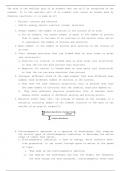
Conservatism, Edexcel A-Level Government and Politics
Core Ideas:
Pragmatism:
▪ Pragmatists value practical experience over ideological thinking, known as
empiricism.
▪ Believe slow change is better than revolutionary change.
▪ Believe humans are not rational.
▪ Both Traditional (Burke) and One-nation (Oakeshott) conservatives believe in
this.
Tradition
▪ Traditions are the practices, customs, institutions, and principles that have
developed over time.
▪ Belief that abandoning traditions can have far-reaching and damaging
consequences.
▪ Both Traditional (Burke) and One-nation (Oakeshott) Conservatives believe in
this.
Human Imperfection
▪ Humans are morally imperfect, motivated by selfish desires.
▪ They have little capacity for rational understanding and need tradition and social
order for comfort.
▪ Both Traditional (Hobbes and Burke) and One-Nation (Oakeshott) Conservatives
believe in this.
Organic State
▪ The organic state grows in a slow manner where everything is connected.
▪ Belief in traditional institutions providing authority to humans.
▪ Includes a natural hierarchy as all humans are different.
, ▪ Individual rights given by the state as only state can maintain them.
▪ Traditional (Hobbes), One-Nation (Burke) and Neo-Conservatism (Oakeshott)
Conservatives believe in this.
Paternalism
▪ Believe that society is inherently unequal and the elite in society are natural
leaders.
▪ Sometimes referred to as the noblesse oblige, meaning the elite have a
responsibility to help the less fortunate.
▪ Traditional (Hobbes), One Nation (Oakeshott) and Neo-Conservatives believe in
this.
Libertarianism
▪ A belief in individual freedom and liberty and laissez-faire economics.
▪ Traditional (Burke) and Neo-Liberal (Rand and Nozick) Conservatives believe in
this.
Types of Conservatives:
Traditional Conservatives
▪ There is a hierarchy to the organic state.
▪ Society is a living organism.
▪ The elite have an obligation to help the less fortunate.
▪ Laissez-faire approach to Economics.
▪ Change should be slow and evolutionary.
▪ Humans are imperfect.
One-Nation Conservatives
▪ Maintaining the traditional hierarchy of society to provide stability and tradition.
▪ A form of nationalism where all classes are part of ‘the nation’
▪ To ensure social order and contentment, some social reform for working class
such as voting rights and some social reforms.
▪ Keynesian Economics.
Core Ideas:
Pragmatism:
▪ Pragmatists value practical experience over ideological thinking, known as
empiricism.
▪ Believe slow change is better than revolutionary change.
▪ Believe humans are not rational.
▪ Both Traditional (Burke) and One-nation (Oakeshott) conservatives believe in
this.
Tradition
▪ Traditions are the practices, customs, institutions, and principles that have
developed over time.
▪ Belief that abandoning traditions can have far-reaching and damaging
consequences.
▪ Both Traditional (Burke) and One-nation (Oakeshott) Conservatives believe in
this.
Human Imperfection
▪ Humans are morally imperfect, motivated by selfish desires.
▪ They have little capacity for rational understanding and need tradition and social
order for comfort.
▪ Both Traditional (Hobbes and Burke) and One-Nation (Oakeshott) Conservatives
believe in this.
Organic State
▪ The organic state grows in a slow manner where everything is connected.
▪ Belief in traditional institutions providing authority to humans.
▪ Includes a natural hierarchy as all humans are different.
, ▪ Individual rights given by the state as only state can maintain them.
▪ Traditional (Hobbes), One-Nation (Burke) and Neo-Conservatism (Oakeshott)
Conservatives believe in this.
Paternalism
▪ Believe that society is inherently unequal and the elite in society are natural
leaders.
▪ Sometimes referred to as the noblesse oblige, meaning the elite have a
responsibility to help the less fortunate.
▪ Traditional (Hobbes), One Nation (Oakeshott) and Neo-Conservatives believe in
this.
Libertarianism
▪ A belief in individual freedom and liberty and laissez-faire economics.
▪ Traditional (Burke) and Neo-Liberal (Rand and Nozick) Conservatives believe in
this.
Types of Conservatives:
Traditional Conservatives
▪ There is a hierarchy to the organic state.
▪ Society is a living organism.
▪ The elite have an obligation to help the less fortunate.
▪ Laissez-faire approach to Economics.
▪ Change should be slow and evolutionary.
▪ Humans are imperfect.
One-Nation Conservatives
▪ Maintaining the traditional hierarchy of society to provide stability and tradition.
▪ A form of nationalism where all classes are part of ‘the nation’
▪ To ensure social order and contentment, some social reform for working class
such as voting rights and some social reforms.
▪ Keynesian Economics.