HOW TO USE:
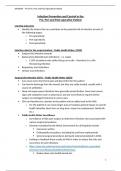
- Each subheading corresponds to the subsection on the GMC guidance for doctors
- Each number and sub-categories corresponds to the exact guideline number on the
document
- YELLOW highlighted words are the exact correct answers when doing the situational
judgement section of the UCAT
PROFESSIONALISM IN ACTION
- Friendship NOT IMPORTANT AT ALL when professionalism is concerned
- Medical students also have a responsibility to protect patient’s well-being and health
- Medical student are held to the same standard as anyone else in the medical
profession
DOMAIN 1: KNOWLEDGE, SKILLS AND PERFORMANCE
APPLY KNOWLEDGE AND EXPERIENCE TO PRACTICE
14- “Work within the limits of your competence”
- Example: Medical student/internship work within their limits
- Nurses CANNOT autonomously reschedule patient appointments
o Overstepping her boundaries, needs to be done by surgical team
14.1: If patient doesn’t know English, using google translate can help but not the best
solution as it can delay treatment or cannot stop emergency in time
- When a patient is taking medication that is not supposed to be taken (whether it’s the
wrong time/interval/dosage), first immediately stop, if the question asks about google
translate or someone who knows the language, it cannot be “very appropriate”
16-
a. “Prescribe drugs or treatment…”
- Medical student cannot prescribe medication
- Reputation of healthcare profession always comes SECOND to patient well-
being/safety
o But can also be a VERY IMPORTANT consideration depending on question
b. “Provide effective treatment…”
- Patient autonomy over the effectiveness of medication
- Priority when deciding treatment:
1. Most effective treatment
2. Safety of treatment
3. Cost of treatment
c. “Take all possible steps to alleviate…”
- Holding a boy down when he is jolting (example: from needles for injection) is
VERY INAPPROPRIATE
- Only IMPORTANT consideration if the patient chooses against the surgery
d. “Consult colleagues where appropriate”
- Can seek guidance from more senior personnel, but only OF MINOR IMPORTANCE
f. “check that the care or treatment…”
- Patient suspected for addiction of medication is VERY IMPORTANT
g. “Wherever possible, avoid providing medical care…”
- Example: Prescribing painkillers to myself/witnessing someone prescribing
painkillers to themselves
17- “You must be satisfied that you have consent or other…”
, - Written consent for whatever medical procedure is required by law
- Only relying on verbal agreement for medical procedure from anyone is VERY
INAPPROPRIATE
- If patient is determined to be unable to give an informed decision, must ask relatives
DOMAIN 2: SAFETY AND QUALITY
CONTRIBUTE TO AND COMPLY WITH SYSTEMS TO PROTECT PATIENTS
23- “To help patients safe you must:”
- Patient safety comes before ward reputation
a- “Contribute to confidential inquiries”
- Even if no patient name is mentioned, still VERY INAPPROPRIATE to talk about
PATIENT IDENTIFIABLE INFORMATION out loud in public, or to discuss it with
any personnel outside (even if they are medical professional)
b- “Report adverse incidents involving…”
- If doctors suspected of being drunk/high, CONFRONTING is VERY
INAPPROPRIATE
o Patient safety is in question here, which is VERY IMPORTANT
RESPOND TO RISKS TO SAFETY
25- “You must take prompt action if…”
- Even if it is a consultant / person marking your work / person writing your reference
letter after placement
c- “If you have concerns that a colleague may…”
- If colleague asks to keep secret of anything that can affect patient safety (drug/alcohol
usage, not attending lessons, asking you to sign in to anything that counts
attendance…) VERY INAPPROPRIATE to do so / NOT IMPORTANT AT ALL (If
it affects his grades/reputation/relationship with you)
26- “You must offer help if emergencies arise in clinical settings…”
- If no doctors around, medical student with sufficient knowledge must come forward,
help as much as possible but also continue to ask for doctor to help in emergency
setting (example: airplane)
27- “Whether or not you have vulnerable adults…”
- Asking parents to be INVOLVED to calm children down is different to asking parent
to calm the child
o Much more appropriate, but medical staff must also be involved in calming
the child down
DOMAIN 3: COMMUNICATION, PARTNERSHIP AND TEAMWORK
COMMUNICATE EFFECTIVELY
34- “You must listen to patients, take account…”
- DO NOT intervene and potentially distract the flow of lecture/others in lecture
o Best to leave it after the ongoing event is done, or if too disturbing, quietly
remind the person to not be distractive
WORKING COLLABORATIVELY WITH COLLEAGUES
35- “You must work collaboratively with colleagues,…”
- Show confidence in partner’s ability even if they have made a mistake
, o Only remind/tell, NEVER confront/shout
o Never mention in front of patient
36- “You must treat colleagues fairly and with respect”
- Including working environment and if patient makes a generalisation about staff of
open particular institution/ one individual
- If patient accuses someone of poor professionalism/skills, you must first be very
certain and have evidence (rumours do not count)
o Aim to ask about patient’s worry
- Seniority of staff is irrelevant when a mistake is made
- If colleague is not performing well/psychologically not ideal, wait to see (OF MINOR
IMPORTANCE) and not intervene unless it affects patient wellbeing
37- “You must be aware of how your behaviour…”
- If something is wrong socially, be very certain and have evidence and resolve locally
o Affects interpersonal working skills
- If there is a problem, first talk to colleague
o If unsolved/not handled well, then talk to consultant/senior people
§ Always try to resolve matter locally
- If placements experience inappropriate behaviour, speak to tutors (hospitals do not
deal with placement experiences)
38- “Patient safety may be affected if there is not…”
- If past working time, can ask the next doctor to complete the work, but this is
APPROPRIATE, BUT NOT IDEAL
- If colleague is unwell/in trouble
o Ask in depth/suggest GP appointment if experiencing serious problem
o Offer reassurance
o Monitoring in secret first is VERY INAPPROPRIATE
o If colleague faints/significantly unwell, treat the colleague as a patient
(transfer to a hospital bed, let a nurse attend to the colleague…)
ESTABLISH AND MAINTAIN APRTNERSHIPS WITH PATIENTS
49- “You must work in partnership with patients,…”
- If patient has a complaint, it is VERY APPROPRIATE to direct patients to formal
channel
- A: “their condition, its likely progression…”
o If they have mental illness, first give psychological evaluation, then seek
advice from consultant
50- “You must treat information…”
- Even to insurance company
DOMAIN 4: MAINTAINING TRUST
SHOW RESPECT FOR PATIENTS
53- “You must not use your professional…”
- No social medical contact with patient
o Breach of professionalism
55C- “Explain fully and promptly…”
- VERY APPROPRIATE to inform consultant
- Reflection is VERY IMPORTANT
TREAT PATIENTS AND COLLEAGUES FAIRLY AND WITHOUT
DISCRIMINATION
59- “You must not unfairly discriminate against…”
- If colleagues were disrespectful, give them a chance to apologise first
- Each subheading corresponds to the subsection on the GMC guidance for doctors
- Each number and sub-categories corresponds to the exact guideline number on the
document
- YELLOW highlighted words are the exact correct answers when doing the situational
judgement section of the UCAT
PROFESSIONALISM IN ACTION
- Friendship NOT IMPORTANT AT ALL when professionalism is concerned
- Medical students also have a responsibility to protect patient’s well-being and health
- Medical student are held to the same standard as anyone else in the medical
profession
DOMAIN 1: KNOWLEDGE, SKILLS AND PERFORMANCE
APPLY KNOWLEDGE AND EXPERIENCE TO PRACTICE
14- “Work within the limits of your competence”
- Example: Medical student/internship work within their limits
- Nurses CANNOT autonomously reschedule patient appointments
o Overstepping her boundaries, needs to be done by surgical team
14.1: If patient doesn’t know English, using google translate can help but not the best
solution as it can delay treatment or cannot stop emergency in time
- When a patient is taking medication that is not supposed to be taken (whether it’s the
wrong time/interval/dosage), first immediately stop, if the question asks about google
translate or someone who knows the language, it cannot be “very appropriate”
16-
a. “Prescribe drugs or treatment…”
- Medical student cannot prescribe medication
- Reputation of healthcare profession always comes SECOND to patient well-
being/safety
o But can also be a VERY IMPORTANT consideration depending on question
b. “Provide effective treatment…”
- Patient autonomy over the effectiveness of medication
- Priority when deciding treatment:
1. Most effective treatment
2. Safety of treatment
3. Cost of treatment
c. “Take all possible steps to alleviate…”
- Holding a boy down when he is jolting (example: from needles for injection) is
VERY INAPPROPRIATE
- Only IMPORTANT consideration if the patient chooses against the surgery
d. “Consult colleagues where appropriate”
- Can seek guidance from more senior personnel, but only OF MINOR IMPORTANCE
f. “check that the care or treatment…”
- Patient suspected for addiction of medication is VERY IMPORTANT
g. “Wherever possible, avoid providing medical care…”
- Example: Prescribing painkillers to myself/witnessing someone prescribing
painkillers to themselves
17- “You must be satisfied that you have consent or other…”
, - Written consent for whatever medical procedure is required by law
- Only relying on verbal agreement for medical procedure from anyone is VERY
INAPPROPRIATE
- If patient is determined to be unable to give an informed decision, must ask relatives
DOMAIN 2: SAFETY AND QUALITY
CONTRIBUTE TO AND COMPLY WITH SYSTEMS TO PROTECT PATIENTS
23- “To help patients safe you must:”
- Patient safety comes before ward reputation
a- “Contribute to confidential inquiries”
- Even if no patient name is mentioned, still VERY INAPPROPRIATE to talk about
PATIENT IDENTIFIABLE INFORMATION out loud in public, or to discuss it with
any personnel outside (even if they are medical professional)
b- “Report adverse incidents involving…”
- If doctors suspected of being drunk/high, CONFRONTING is VERY
INAPPROPRIATE
o Patient safety is in question here, which is VERY IMPORTANT
RESPOND TO RISKS TO SAFETY
25- “You must take prompt action if…”
- Even if it is a consultant / person marking your work / person writing your reference
letter after placement
c- “If you have concerns that a colleague may…”
- If colleague asks to keep secret of anything that can affect patient safety (drug/alcohol
usage, not attending lessons, asking you to sign in to anything that counts
attendance…) VERY INAPPROPRIATE to do so / NOT IMPORTANT AT ALL (If
it affects his grades/reputation/relationship with you)
26- “You must offer help if emergencies arise in clinical settings…”
- If no doctors around, medical student with sufficient knowledge must come forward,
help as much as possible but also continue to ask for doctor to help in emergency
setting (example: airplane)
27- “Whether or not you have vulnerable adults…”
- Asking parents to be INVOLVED to calm children down is different to asking parent
to calm the child
o Much more appropriate, but medical staff must also be involved in calming
the child down
DOMAIN 3: COMMUNICATION, PARTNERSHIP AND TEAMWORK
COMMUNICATE EFFECTIVELY
34- “You must listen to patients, take account…”
- DO NOT intervene and potentially distract the flow of lecture/others in lecture
o Best to leave it after the ongoing event is done, or if too disturbing, quietly
remind the person to not be distractive
WORKING COLLABORATIVELY WITH COLLEAGUES
35- “You must work collaboratively with colleagues,…”
- Show confidence in partner’s ability even if they have made a mistake
, o Only remind/tell, NEVER confront/shout
o Never mention in front of patient
36- “You must treat colleagues fairly and with respect”
- Including working environment and if patient makes a generalisation about staff of
open particular institution/ one individual
- If patient accuses someone of poor professionalism/skills, you must first be very
certain and have evidence (rumours do not count)
o Aim to ask about patient’s worry
- Seniority of staff is irrelevant when a mistake is made
- If colleague is not performing well/psychologically not ideal, wait to see (OF MINOR
IMPORTANCE) and not intervene unless it affects patient wellbeing
37- “You must be aware of how your behaviour…”
- If something is wrong socially, be very certain and have evidence and resolve locally
o Affects interpersonal working skills
- If there is a problem, first talk to colleague
o If unsolved/not handled well, then talk to consultant/senior people
§ Always try to resolve matter locally
- If placements experience inappropriate behaviour, speak to tutors (hospitals do not
deal with placement experiences)
38- “Patient safety may be affected if there is not…”
- If past working time, can ask the next doctor to complete the work, but this is
APPROPRIATE, BUT NOT IDEAL
- If colleague is unwell/in trouble
o Ask in depth/suggest GP appointment if experiencing serious problem
o Offer reassurance
o Monitoring in secret first is VERY INAPPROPRIATE
o If colleague faints/significantly unwell, treat the colleague as a patient
(transfer to a hospital bed, let a nurse attend to the colleague…)
ESTABLISH AND MAINTAIN APRTNERSHIPS WITH PATIENTS
49- “You must work in partnership with patients,…”
- If patient has a complaint, it is VERY APPROPRIATE to direct patients to formal
channel
- A: “their condition, its likely progression…”
o If they have mental illness, first give psychological evaluation, then seek
advice from consultant
50- “You must treat information…”
- Even to insurance company
DOMAIN 4: MAINTAINING TRUST
SHOW RESPECT FOR PATIENTS
53- “You must not use your professional…”
- No social medical contact with patient
o Breach of professionalism
55C- “Explain fully and promptly…”
- VERY APPROPRIATE to inform consultant
- Reflection is VERY IMPORTANT
TREAT PATIENTS AND COLLEAGUES FAIRLY AND WITHOUT
DISCRIMINATION
59- “You must not unfairly discriminate against…”
- If colleagues were disrespectful, give them a chance to apologise first