Phlebotomy Chapter 2 Questions with Correct Solutions Graded A+
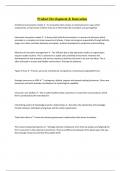
The ___ is the oldest and largest healthcare standards-setting body in the nation. a.) American Medical Society b.) Center for Medicare and Medicaid c.) College of American Pathologists d.) Joint Commission - d The CLIA federal regulations are administered by: a.) CAP b.) CLSI c.) CMS d.) COW - c _____ are set up to monitor all aspects of lab work. a.) Quality indicators b.) Quality System Essentials c.) Sentinel events d.) Threshold values - a A QA program monitors: a.) indicators b.) outcomes c.) procedures d.) threshold values - b What book describes the necessary steps to follow in patient preparation? a.) The Infection Control Manual b.) The Procedure Manual c.) The Safety Manual d.) The Specimen Collection Manual - d Which of the following is a necessary element of risk management? a.) Education b.) Evaluation c.) Identification d.) All of the above - d Informed consent means that a: a.) nurse has the right to perform a procedure on a patient even if the patient refuses b.) patient agrees to a procedure after being told of the consequences associated with it c.) patient has the right to look at all his or her medical records and test results d.) phlebotomist tells the patient what is ordered and the implications of the test results - b A national organization that develops guidelines and sets standards for lab procedures is the: a.) CAP b.) CLIAC c.) CLSI d.) NAACLS - c The physician employer of a phlebotomist who injures a patient during a blood draw is sued for negligence. This is an example of: a.) assault and battery b.) res ipsa loquitur c.) the statue of limitations d.) vicarious liability - d A young adult comes to an outpatient lab to have his blood drawn. What should the phlebotomist know before drawing this patient's blood? a.) Age on majority in the state b.) Date of birth of the patient c.) Name of the patient d.) All of the above - d The NPSGs are the: a.) CLSI's voluntary standards and guidelines b.) Commission's annual safety requirement goals c.) NAACLS national educational guidelines d.) safety rules set down by CDC and OSHA - b A delta check refers to: a.) checking the wristband with the requistion b.) comparing current test results with previous one c.) documenting all the results of the QC checks d.) reporting new infection control precautions - b Which one of the following is used as a monitor or quality indicator for the process of "test requesting"? a.) Employee safety b.) Ordering accuracy c.) Stat transit time d.) Wristband evaluation - b Failure to exercise "due care" is: a.) assault and battery b.) invasion of privacy c.) negligence d.) res ipsa loquitur - c The statute of limitations timing can begin: a.) on the day the negligent act took place b.) the first day in a series of medical treatments c.) the first day of consulting with a lawyer d.) a month after the injury was discovered - a assault - An act or threat causing another to be in fear of immediate battery battery - Intentional harmful or offensive touching of, or use of force on, a person without consent or legal justification breach of confidentiality - Failure to keep privileged medical information private
Written for
- Institution
- Phlebotomy
- Course
- Phlebotomy
Document information
- Uploaded on
- July 10, 2023
- Number of pages
- 7
- Written in
- 2022/2023
- Type
- Exam (elaborations)
- Contains
- Questions & answers
Subjects
-
phlebotomy chapter 2 questions with correct soluti

Also available in package deal