NR547 Week 2
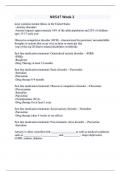
most common mental illness in the United States - Anxiety disorders -Anxiety impacts approximately 18% of the adult population and 25% of children ages 13-17 each year Obsessive-compulsive disorder (OCD) - characterized by persistent, uncontrollable thoughts or actions that occur over an hour or more per day -one of the top 20 illness-related disabilities worldwide first line medication treatment: Generalized anxiety disorder - -SSRIs -SNRIs -Buspirone -Drug Therapy at least 12 months first line medication treatment: Panic disorder - -Paroxetine -Sertraline -Fluoxetine -Drug therapy 6-9 months first line medication treatment: Obsessive compulsive disorder - -Fluoxetine -Fluvoxamine -Sertraline -Paroxetine -Clomipramine (TCA) -Drug therapy for at least 1 year first line medication treatment: Social anxiety disorder - -Sertraline -Paroxetine -Drug therapy takes 4 weeks to see effects first line medication treatment: Post-traumatic stress disorder - -Paroxetine -Sertraline Anxiety is often comorbid with _________________ as well as medical conditions such as ____________, ___________, and ___________ - major depression, COPD, asthma, diabetes Generalized anxiety disorder (anxiety) - neurological condition -characterized by persistent, uncontrollable worrying that causes emotional distress -show symptoms on most days, for a period of at least six months -common symptoms of anxiety include restlessness, irritability, muscle tension, fatigue, and sleep disturbances -GAD is twice as common in women as in men Patients with anxiety disorders often show increased activity in the ______________ and _______________ - amygdala and prefrontal cortex Positron emission tomography (PET) scans have shown reduced ___________________ in patients with anxiety - serotonin binding Risk factors for developing anxiety: - -genetic predisposition (family history of anxiety) -being female -recent life stressors -chronic physical illness -lack of support during childhood Anxiety Disorders - Generalized Anxiety Disorder (GAD) Social Anxiety Disorder Panic Phobias Agoraphobia Adjustment Disorder with Anxiety GAD often presents with physical symptoms, including: - restlessness or edginess fatigue difficulty concentrating irritability muscle tension sleep disturbance Functional neuroimaging studies of GAD show: - increased activation of the amygdala and reduced activation in the prefrontal cortex, indicating heightened activation of the fear response with diminished capacity for reasoning Harold is a 32-year-old who presents to the clinic with complaints of fatigue, difficulty concentrating, and difficulty falling asleep at night. He states he worries about finances, his performance at work, and his relationship, and his worries have been "almost constant" for 8 months. He denies substance use and recently had a normal physical exam. He feels that his relationship is suffering due to his constant worry. Based on the DSM-5-TR, does Harold meet diagnostic criteria for generalized anxiety disorder? - Yes
Written for
- Institution
-
Chamberlain College Of Nursing
- Course
-
NR 547
Document information
- Uploaded on
- October 16, 2023
- Number of pages
- 15
- Written in
- 2023/2024
- Type
- Exam (elaborations)
- Contains
- Questions & answers
Subjects

Also available in package deal