HISTOLOGY FINAL REVIEW CORRECT 100%
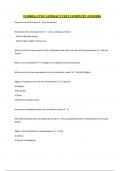
*evolve question* Which of the following lesions appears initially as red patches, then paler pink, and finally turns to white patches on the body of the tongue? - ANSWERgeographic tongue *evolve question* What type of cell listed below has prominent granules in the cytoplasm that form a keratin chemical precursor? - ANSWERepitheleal cells note: Keratohyaline granules are prominent granules in the cytoplasm of epithelial cells that form a keratin chemical precursor. *evolve question* Where is the capillary blood plexus located in the lamina propria of the oral mucosa? - ANSWERBetween the papillary layer and dense layer *evolve question* Which tissue listed below is CLOSELY associated with parakeratinized stratified squamous epithelium? - ANSWERattached gingiva ____________ stratified squamous epithelium makes lining mucosa. ____________ stratified squamous epithelium makes masticatory mucosa. The lingual papilla are made of _______________ epithelium and ___________ which both form the specialized oral mucosa. - ANSWER-Nonkeratinized -Ortho and para keratnized - keratinized epithelium & lamina propria What are the very thin areas in the mouth of nonkeratinized epi? What are the very thick areas in the mouth of nonkeratinized epi? - ANSWER-THIN : soft palate, ventral of tongue, floor of mouth, and alveolar mucosa -THICK: the labial and buccal mucosa. Where is the basement membrane located in the oral mucosa ? what is its purpose? - ANSWERlies between the epithelium (SS epitheliem) and the connective tissue (lamina propria). IT SERVES AS A CONNECTION (NOT A SEPERATION!) Besides the buccal, labial, and alveolar mucosa, what other parts are covered by Lining mucosa? - ANSWERVentral surface of the tongue, soft palate, and floor of mouth. Nonkeratinized Stratified Sqaumous epithlelim makes up _________ mucosa. - ANSWERLining mucosa What does submucosa overly and what is its function? - ANSWERmuscle To allow compression of superficial tissue What type of oral mucosa is most and least painful in an anesthesia injection ..... Why ? - ANSWERLeast- lining because it has a cushiony submucosa Most - masticatory because the needle stabs the bone underneath 3 Functions of lining mucosa - ANSWERspeech, mastication, swallowing. Masticatory mucosa lines which 3 parts of mouth? - ANSWERDorsal surface of tongue Attached Gingiva Hard palate Which type of mucosa is more likely to need sutures if there was an incision ? - ANSWERLining mucosa Which type of mucosa has more difficulty absorbing liquids like dental medication? - ANSWERMasticartory because it is less permeable Where is the specialized oral mucosa and how does it appear? - ANSWEROn the dorsal and lateral sides of the tongue, its just the papillae portions of the tongue What are the functions of all oral epitheleal cells in general? - ANSWEREnvironmental barrier to pathogenic infection Protect from mechanical irritation Protect against dryness Which 2 cell types found in oral mucosa are derived from bone marrow and both function in immune response - ANSWERLangerhans and Granstein Merkel cells found in the oral mucosa are involved in what? - ANSWERTactile sensory information What is the most common type of white blood cell found in the oral mucossa - ANSWERpolymorphonuclear leukocyte (PMN) The superficial surface layer of most oral mucosa contains what kinds of ridgelike cellular folds? - ANSWERmicroplicae (MPL) basal layer is AKA ______ prickle layer is AKA (2 more things) ______ granular layer is AKA ___ keratin layer is AKA ___ superficial layer is AKA ___ Rete ridges is AKA ___ Lamina propria is AKA ___ - ANSWERstratum basale stratum spinosum / intermedium stratum granulosum stratum corneum stratum superficiale rete pegs connective tissue proper Is keratinized or nonkeratinized SS epithelium more common in the whole oral cavity? - ANSWERNonkeratinized What are melanocytes derived from? - ANSWERNeural crest cells Which layer of Nonkeratinized SS epi. is considered germinative? - ANSWERThe basal layer (stratum basale) because mitosis of epitheleal cells occurs here Differences between orthokeratinized and parakeritnized SS Epithelieum? - ANSWERThe keratin layer : Ortho's keratin cells have no nuclei Para's keratin cells DO have nuclei Which type of epithelium has these 4 layers : Keratin, granular, prickle, and basal? - ANSWERBOTH ORTHO AND PARA keratinized stratified squamous epithelium. Lining mucosa is made of which 3 layers? - ANSWERbasal, intermediate, superficial A single layer of cuboidal cells overlying the basement membrane , which is situated superior to the lamina propria is ??? - ANSWERthe basal layer A layer of stacked, polyhedral, large cells containing a lot of cytoplasm is? - ANSWERIntermediate layer how does the superficial layer of nonkeratinized epithelium look - ANSWERit looks a lot like the intermediate layer being polyhedral in shape, except the outer cells flatten and shed. What makes the cells in the prickle layer look sharp ? - ANSWERThey were once plump but they lost their cytpolasm. Desmosomes join the dehydrated cells and cause prickle appearance Most histologists believe that Parakeratinized epi. is an immature form of what ? - ANSWEROrthokeratinized. *hint* think of IMMATURE parakeratinized being younger and having a full head of hair (pretend hair is a nucleus) , and ORTHO is Older because its bald. (has no nucleus) -Lamina propria is located ??? -its 2 layers are ? -What does it contain that provides nutrition to oral mucosa? - ANSWER-deep to the basement membrane -papillary and dense -a caplillary plexus Submucosa contains what 3 things? Where would submucosa be located IF IT WAS THERE? (it's only found in some parts of oral mucosa) - ANSWER-adipose (fat), loose connective tissue, and salivary glands -it would be deep to the lamina propria Why is buccal mucosa more pink and alveolar mucosa more red? - ANSWER-Buccal mucosa's stratum intermedium is much thicker and obscures (hides) the very vascular area of the submucosa -alveolar mucosa's stratum intermedium is very thin so the vascular blood vessels make it appear more red what part of the mouth's lining mucosa is pink with yellowish hue? - ANSWERsoft palate which 2 parts of the mouth have no submucosa, and the mucosa is directly attached to the bone underneath? Both of those 2 areas are examples of _________________ which describes when a mucous membrane touches bone and forms a single membrane. - ANSWER-Only the medial part of the hard palate, attached gingiva -mucoperiosteum (because mucus touches periosteum which is the outermost layer of bone) The core of the tongue beneath its lining is a mass of what? - ANSWERstriated muscle Small, discrete appendages of keratinized epithelium overlying lamina propria are? - ANSWERthe lingual papillae (specialized mucosa) Which lingual papillae have taste buds and which dont - ANSWERFiliform - No Fungiform- yes Foliate- yes Circumvallate - yes Which lingual papilla possibly has a rudimentary function of mechanically guiding food to the pharynx for swallowing? - ANSWERThe filiform, because they have a rougher texture caused by the increased keratinization and they also serve no purpose in tasting. Where can you find minor Von Ebner salivary glands? - ANSWERin the circumvallate lingual papilla When the usual shedding of the filiform epithelium does not occur and dead cells remain built up on the tongue, what can happen? - ANSWERBlack "hairy" tongue What is the body required to produce in order for oral tissue to repair injury ? what is dry socket ? - ANSWER-A moist blood clot is needed. -Dry socket is a post extraction infection. So if a patient just had a tooth extracted, tell them they cannot smoke or use straws because the force will dislodge the blood clot from the socket.. What are some appearances that change in a persons oral mucosa as they age - ANSWER-loss of stippling -incre
Written for
- Institution
- HISTOLOGY
- Course
- HISTOLOGY
Document information
- Uploaded on
- January 23, 2024
- Number of pages
- 36
- Written in
- 2023/2024
- Type
- Exam (elaborations)
- Contains
- Questions & answers
Subjects
-
histology final review correct 100
-
histology final review stuvia
-
evolve question which of the following lesions
-
evolve question what type of cell listed below

Also available in package deal