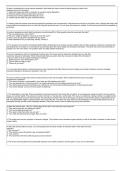
A client is scheduled for a bone marrow aspiration. What does the client's nurse do before taking the client to the
treatment room for the biopsy?
1. Cleans the biopsy site with an antiseptic or povidone-iodine (Betadine)
2. Holds the client's hand and asks about concerns
3. Reviews the client's platelet (thrombocyte) count
4. Verifies that the client has given informed consent
4. Verifying informed consent must be done before the procedure can be performed. A signed permit must be on the client's chart. Cleaning the biopsy site
is done before the procedure but is not the first thing that should be done. It is not done until consent is verified. It will be done just before the procedure is
performed.
A nurse is assessing an adult client's endurance in performing ADLs. What question does the nurse ask the client?
1."Can you prepare your own meals?"
2."Has your weight changed by 5 pounds or more this year?"
3."How is your energy level-compared with last year?"
4."What medications do you take daily, weekly, monthly?"
3. This question from Gordon's Functional Health Pattern Assessment is an activity exercise question that correctly assesses endurance compared with
self-assessment in the past. It is most likely to provide data about the client's ability and endurance with ADLs. The client may never have been able to
prepare his or her own meals. This question does not really address endurance.
A nurse is assessing a client for hematologic function risks. The nurse seeks to determine whether there is a risk that
cannot be reduced or eliminated. Which clinical health history question does the nurse ask to obtain this information?
1."Do you seem to have excessive bleeding or bruising?"
2. "Does anyone in your family bleed a lot?"
3. "Tell me what you eat in a day."
4. "Where do you work?"
2. An accurate family history is important because many disorders that affect blood and blood clotting are inherited. Genetics cannot be changed.
Excessive bleeding or bruising is a symptom, not a risk.
A nurse is teaching a client about what to expect during a bone marrow biopsy. Which statement by the nurse accurately
describes the procedure?
1. "The doctor will place a small needle in your back and will withdraw some fluid."
2. "You may experience a crunching sound or a scraping sensation as the needle punctures your bone."
3. "You will be alone because the procedure is a sterile one; we cannot allow additional people to contaminate the area."
4. "You will be sedated, so you will not be aware of anything."
2. This description is accurate. Proper expectations minimize the client's fear during the procedure. A very large-bore needle is used for a bone marrow
biopsy, not a small needle. The puncture is made in the hip or in the sternum, not the back. The nurse, or sometimes a family member, is available to the
client for support during a bone marrow biopsy. The procedure is sterile at the site of the biopsy, but others can be present without contamination at the
site. A local anesthetic agent is injected into the skin around the site. The client may also receive a mild tranquilizer or a rapid-acting sedative (such as
lorazepam [Ativan]) but will not be completely sedated. Clients are aware of what is happening during the procedure.
A client with anemia asks, "Why am I feeling tired all the time?" How does the nurse respond?
1. "How many hours are you sleeping at night?"
2. "You are not getting enough iron."
3. "You need to rest more when you are sick."
4. "Your cells are delivering less oxygen than you need."
4. The single most common symptom of anemia is fatigue. This problem occurs because oxygen delivery to cells is less than is required to meet normal
oxygen needs.
A client with anemia asks the nurse, "Do most people have the same number of red blood cells?" How does the nurse
respond?
1."No, they don't."
2. "The number varies with gender, age, and general health."
3. "Yes, they do."
4. "You have fewer red blood cells because you have anemia."'
2. This is the most educational and reasonable response to the client's question. the first option is true, but not informative.
, A nurse is reviewing complete blood count (CBC) data for a 76-year-old client. Which decreased value causes concern
because it is not age related?
1.Hemoglobin (Hgb) level
2. Platelet (thrombocyte) count
3. Red blood cell (RBC) count
4. White blood cell (WBC) response
2. Platelet counts do not generally change with age. Hemoglobin levels in men and women fall after middle age. Iron-deficient diets may play a role in this
reduction. Total red blood cell (RBC) and white blood cell (WBC) counts (especially lymphocyte counts) are lower in older adults. The WBC count does not
rise as high in response to infection in older adults as it does in younger people.
A client with a low platelet count asks why platelets are important. How does the nurse answer?
1."Platelets make blood clots for you."
2. "Blood clotting is prevented by your platelets."
3. "The clotting process begins with your platelets."
4. "Your platelets finish the clotting process."
3. Platelets begin the blood clotting process by forming platelet plugs, but these platelet plugs are not clots and cannot provide complete hemostasis.
Platelets do not clot blood. They are a part of the clotting process or cascade of coagulation.
A newly admitted client has an elevated reticulocyte count. Which disorder does the nurse suspect in this client?
1. Aplastic anemia
2. Hemolytic anemia
3. Infectious process
4. Leukemia
2. An elevated reticulocyte count in the anemic client indicates that the bone marrow is responding appropriately to a decrease in the total red blood cell
(RBC) mass and is prematurely destroying red blood cells. Therefore more immature RBCs are in circulation. Aplastic anemia is associated with a low
reticulocyte count. A high white blood cell count is expected in clients with infection, while a low WBC is expected in clients with leukemia
A client on anticoagulant therapy is being discharged. Which statement indicates that the client has a correct
understanding of this therapy's purpose or action?
1. "It is to dissolve blood clots."
2. "It might cause me to get injured more often."
3. "It should prevent my blood from clotting."
4. "It will thin my blood."
3. Anticoagulants work by interfering with one or more steps involved in the blood clotting cascade. Thus, these agents prevent new clots from forming and
limit or prevent extension of formed clots. Anticoagulants do not cause any change in the thickness or viscosity of the blood. Anticoagulants do not cause
more injuries but may cause more bleeding and bruising when someone is injured. Anticoagulants do not dissolve clots, rather fibrinolytics do.
A nurse is caring for a group of hospitalized clients. Which client is at greatest risk for infection and sepsis?
1. 18-year-old who had an emergency splenectomy
2. 22-year-old with recently diagnosed sickle cell anemia
3. 38-year-old with hemolytic anemia
4. 40-year-old alcoholic with liver disease
1. Removal of the spleen causes the client to have reduced immune function. Without a spleen, people are less able to remove disease-causing
organisms. Sickle cell anemia causes pain and discomfort owing to the changed cell morphology. Acute pain, especially at joints, is the greatest threat to
this client. A low red blood cell (RBC) count can contribute to a client's risk for infection, but this client is more at risk for low oxygen levels and ensuing
fatigue.The liver plays a role in blood coagulation. This client is more at risk for coagulation problems than for infection.
A nurse is assessing the nutritional status of a client with anemia. How does the nurse obtain information about the client's
diet?
1.Asks the client to rate his or her diet on a scale of 1 (poor) to 10 (excellent)
2. Determines who prepares the client's meals and plans an interview with him or her
3. From a prepared list, finds out the client's food preferences
4. Has the client write down everything he or she has eaten for the past week
4. This method is the most accurate way to find out what the client likes and dislikes, as well as what the client has been eating. It will provide information
about "junk" food intake, as well as about the client's protein, vitamin, and mineral intake. the third option method of dietary analysis provides a list of what
the client enjoys eating, not necessarily what the client has been eating. The client may like steak but may be unable to afford it.
treatment room for the biopsy?
1. Cleans the biopsy site with an antiseptic or povidone-iodine (Betadine)
2. Holds the client's hand and asks about concerns
3. Reviews the client's platelet (thrombocyte) count
4. Verifies that the client has given informed consent
4. Verifying informed consent must be done before the procedure can be performed. A signed permit must be on the client's chart. Cleaning the biopsy site
is done before the procedure but is not the first thing that should be done. It is not done until consent is verified. It will be done just before the procedure is
performed.
A nurse is assessing an adult client's endurance in performing ADLs. What question does the nurse ask the client?
1."Can you prepare your own meals?"
2."Has your weight changed by 5 pounds or more this year?"
3."How is your energy level-compared with last year?"
4."What medications do you take daily, weekly, monthly?"
3. This question from Gordon's Functional Health Pattern Assessment is an activity exercise question that correctly assesses endurance compared with
self-assessment in the past. It is most likely to provide data about the client's ability and endurance with ADLs. The client may never have been able to
prepare his or her own meals. This question does not really address endurance.
A nurse is assessing a client for hematologic function risks. The nurse seeks to determine whether there is a risk that
cannot be reduced or eliminated. Which clinical health history question does the nurse ask to obtain this information?
1."Do you seem to have excessive bleeding or bruising?"
2. "Does anyone in your family bleed a lot?"
3. "Tell me what you eat in a day."
4. "Where do you work?"
2. An accurate family history is important because many disorders that affect blood and blood clotting are inherited. Genetics cannot be changed.
Excessive bleeding or bruising is a symptom, not a risk.
A nurse is teaching a client about what to expect during a bone marrow biopsy. Which statement by the nurse accurately
describes the procedure?
1. "The doctor will place a small needle in your back and will withdraw some fluid."
2. "You may experience a crunching sound or a scraping sensation as the needle punctures your bone."
3. "You will be alone because the procedure is a sterile one; we cannot allow additional people to contaminate the area."
4. "You will be sedated, so you will not be aware of anything."
2. This description is accurate. Proper expectations minimize the client's fear during the procedure. A very large-bore needle is used for a bone marrow
biopsy, not a small needle. The puncture is made in the hip or in the sternum, not the back. The nurse, or sometimes a family member, is available to the
client for support during a bone marrow biopsy. The procedure is sterile at the site of the biopsy, but others can be present without contamination at the
site. A local anesthetic agent is injected into the skin around the site. The client may also receive a mild tranquilizer or a rapid-acting sedative (such as
lorazepam [Ativan]) but will not be completely sedated. Clients are aware of what is happening during the procedure.
A client with anemia asks, "Why am I feeling tired all the time?" How does the nurse respond?
1. "How many hours are you sleeping at night?"
2. "You are not getting enough iron."
3. "You need to rest more when you are sick."
4. "Your cells are delivering less oxygen than you need."
4. The single most common symptom of anemia is fatigue. This problem occurs because oxygen delivery to cells is less than is required to meet normal
oxygen needs.
A client with anemia asks the nurse, "Do most people have the same number of red blood cells?" How does the nurse
respond?
1."No, they don't."
2. "The number varies with gender, age, and general health."
3. "Yes, they do."
4. "You have fewer red blood cells because you have anemia."'
2. This is the most educational and reasonable response to the client's question. the first option is true, but not informative.
, A nurse is reviewing complete blood count (CBC) data for a 76-year-old client. Which decreased value causes concern
because it is not age related?
1.Hemoglobin (Hgb) level
2. Platelet (thrombocyte) count
3. Red blood cell (RBC) count
4. White blood cell (WBC) response
2. Platelet counts do not generally change with age. Hemoglobin levels in men and women fall after middle age. Iron-deficient diets may play a role in this
reduction. Total red blood cell (RBC) and white blood cell (WBC) counts (especially lymphocyte counts) are lower in older adults. The WBC count does not
rise as high in response to infection in older adults as it does in younger people.
A client with a low platelet count asks why platelets are important. How does the nurse answer?
1."Platelets make blood clots for you."
2. "Blood clotting is prevented by your platelets."
3. "The clotting process begins with your platelets."
4. "Your platelets finish the clotting process."
3. Platelets begin the blood clotting process by forming platelet plugs, but these platelet plugs are not clots and cannot provide complete hemostasis.
Platelets do not clot blood. They are a part of the clotting process or cascade of coagulation.
A newly admitted client has an elevated reticulocyte count. Which disorder does the nurse suspect in this client?
1. Aplastic anemia
2. Hemolytic anemia
3. Infectious process
4. Leukemia
2. An elevated reticulocyte count in the anemic client indicates that the bone marrow is responding appropriately to a decrease in the total red blood cell
(RBC) mass and is prematurely destroying red blood cells. Therefore more immature RBCs are in circulation. Aplastic anemia is associated with a low
reticulocyte count. A high white blood cell count is expected in clients with infection, while a low WBC is expected in clients with leukemia
A client on anticoagulant therapy is being discharged. Which statement indicates that the client has a correct
understanding of this therapy's purpose or action?
1. "It is to dissolve blood clots."
2. "It might cause me to get injured more often."
3. "It should prevent my blood from clotting."
4. "It will thin my blood."
3. Anticoagulants work by interfering with one or more steps involved in the blood clotting cascade. Thus, these agents prevent new clots from forming and
limit or prevent extension of formed clots. Anticoagulants do not cause any change in the thickness or viscosity of the blood. Anticoagulants do not cause
more injuries but may cause more bleeding and bruising when someone is injured. Anticoagulants do not dissolve clots, rather fibrinolytics do.
A nurse is caring for a group of hospitalized clients. Which client is at greatest risk for infection and sepsis?
1. 18-year-old who had an emergency splenectomy
2. 22-year-old with recently diagnosed sickle cell anemia
3. 38-year-old with hemolytic anemia
4. 40-year-old alcoholic with liver disease
1. Removal of the spleen causes the client to have reduced immune function. Without a spleen, people are less able to remove disease-causing
organisms. Sickle cell anemia causes pain and discomfort owing to the changed cell morphology. Acute pain, especially at joints, is the greatest threat to
this client. A low red blood cell (RBC) count can contribute to a client's risk for infection, but this client is more at risk for low oxygen levels and ensuing
fatigue.The liver plays a role in blood coagulation. This client is more at risk for coagulation problems than for infection.
A nurse is assessing the nutritional status of a client with anemia. How does the nurse obtain information about the client's
diet?
1.Asks the client to rate his or her diet on a scale of 1 (poor) to 10 (excellent)
2. Determines who prepares the client's meals and plans an interview with him or her
3. From a prepared list, finds out the client's food preferences
4. Has the client write down everything he or she has eaten for the past week
4. This method is the most accurate way to find out what the client likes and dislikes, as well as what the client has been eating. It will provide information
about "junk" food intake, as well as about the client's protein, vitamin, and mineral intake. the third option method of dietary analysis provides a list of what
the client enjoys eating, not necessarily what the client has been eating. The client may like steak but may be unable to afford it.