Final-Neuro – SCI Questions and Answers with complete solutions
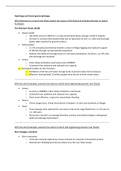
Final-Neuro – SCI Questions and Answers with complete solutions A client with a C6 spinal injury would most likely have which of the following symptoms? A. Aphasia B. Hemiparesis C. Paraplegia D. Tetraplegia - ANS- A. Tetraplegia occurs as a result of cervical spine injuries. Paraplegia occurs as a result of injury to the thoracic cord and below. A 30-year-old was admitted to the progressive care unit with a C5 fracture from a motorcycle accident. Which of the following assessments would take priority? A. Bladder distension B. Neurological deficit C. Pulse ox readings D. The client's feelings about the injury - ANS- C. After a spinal cord injury, ascending cord edema may cause a higher level of injury. The diaphragm is innervated at the level of C4, so assessment of adequate oxygenation and ventilation is necessary. Although the other options would be necessary at a later time, observation for respiratory failure is the priority. While in the ER, a client with C8 tetraplegia develops a blood pressure of 80/40, pulse 48, and RR of 18. The nurse suspects which of the following conditions? A. Autonomic dysreflexia B. Hemorrhagic shock C. Neurogenic shock D. Pulmonary embolism - ANS- C. Symptoms of neurogenic shock include hypotension, bradycardia, and warm, dry skin due to the loss of adrenergic stimulation below the level of the lesion. Hypertension, bradycardia, flushing, and sweating of the skin are seen with autonomic dysreflexia. Hemorrhagic shock presents with anxiety, tachycardia, and hypotension; this wouldn't be suspected without an injury. Pulmonary embolism presents with chest pain, hypotension, hypoxemia, tachycardia, and hemoptysis; this may be a later complication of spinal cord injury due to immobility. A client is admitted with a spinal cord injury at the level of T12. He has limited movement of his upper extremities. Which of the following medications would be used to control edema of the spinal cord? A. Acetazolamide (Diamox) B. Furosemide (Lasix) C. Methylprednisolone (Solu-Medrol) D. Sodium bicarbonate - ANS- C. High doses of Solu-Medrol are used within 24 hours of spinal injury to reduce cord swelling and limit neurological deficit. The other drugs aren't indicated in this circumstance. A 22-year-old client with quadriplegia is apprehensive and flushed, with a blood pressure of 210/100 and a heart rate of 50 bpm. Which of the following nursing interventions should be done first? A. Place the client flat in bed B. Assess patency of the indwelling urinary catheter C. Give one SL nitroglycerin tablet D. Raise the head of the bed immediately to 90 degrees - ANS- D. Anxiety, flushing above the level of the lesion, piloerection, hypertension, and bradycardia are symptoms of autonomic dysreflexia, typically caused by such noxious stimuli such as a full bladder, fecal impaction, or decubitus ulcer. Putting the client flat will cause the blood pressure to increase even more. The indwelling urinary catheter should be assessed immediately after the HOB is raised. Nitroglycerin is given to reduce chest pain and reduce preload; it isn't used for hypertension or dysreflexia. A client with a cervical spine injury has Gardner-Wells tongs inserted for which of the following reasons? A. To hasten wound healing B. To immobilize the surgical spine C. To prevent autonomic dysreflexia D. To hold bony fragments of the skull together - ANS- B. Gardner-Wells, Vinke, and Crutchfield tongs immobilize the spine until surgical stabilization is accomplished. Which of the following interventions describes an appropriate bladder program for a client in rehabilitation for spinal cord injury? A. Insert an indwelling urinary catheter to straight drainage B. Schedule intermittent catherization every 2 to 4 hours C. Perform a straight catherization every 8 hours while awake D. Perform Crede's maneuver to the lower abdomen before the client voids. - ANS- B. Intermittent catherization should begin every 2 to 4 hours early in the treatment. When residual volume is less than 400 ml, the schedule may advance to every 4 to 6 hours. Indwelling catheters may predispose the client to infection and are removed as soon as possible. Crede's maneuver is not used on people with spinal cord injury. Which of the following clients on the rehab unit is most likely to develop autonomic dysreflexia? A. A client with a brain injury B. A client with a herniated nucleus pulposus C. A client with a high cervical spine injury D. A client with a stroke - ANS- C. Autonomic dysreflexia refers to uninhibited sympathetic outflow in clients with spinal cord injuries about the level of T10. The other clients aren't prone to dysreflexia. Which of the following conditions indicates that spinal shock is resolving in a client with C7 quadriplegia? A. Absence of pain sensation in chest B. Spasticity C. Spontaneous respirations D. Urinary continence - ANS- C. Spasticity, the return of reflexes, is a sign of resolving shock. Spinal or neurogenic shock is characterized by hypotension, bradycardia, dry skin, flaccid paralysis, or the absence of reflexes below the level of injury. The absence of pain sensation in the chest doesn't apply to spinal shock. Spinal shock descends from the injury, and respiratory difficulties occur at C4 and above. A nurse assesses a client who has episodes of autonomic dysreflexia. Which of the following conditions can cause autonomic dysreflexia? A. Headache B. Lumbar spinal cord injury C. Neurogenic shock D. Noxious stimuli - ANS- D. Noxious stimuli, such as a full bladder, fecal impaction, or a decub ulcer, may cause autonomic dysreflexia. A headache is a symptom of autonomic dysreflexia, not a cause. Autonomic dysreflexia is most commonly seen with injuries at T10 or above. Neurogenic shock isn't a cause of dysreflexia.
Written for
- Institution
- Neuro - SCI
- Course
- Neuro - SCI
Document information
- Uploaded on
- May 28, 2024
- Number of pages
- 9
- Written in
- 2023/2024
- Type
- Exam (elaborations)
- Contains
- Questions & answers
Subjects
-
final neuro sci questions and answers with compl