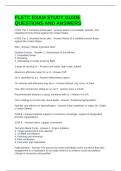
FLETC EXAM STUDY GUIDE
QUESTIONS AND ANSWERS
NTAS Tier 1: Imminent threat alert - Answer-Warns of a credible, specific, and
impeding terrorist threat against the United States
NTAS Tier 2: Elevated threat alert - Answer-Warns of a credible terrorist threat
against the United States
WIN - Answer-"Whats Important Now"
Graham Factors - Answer-1. Seriousness of the offense
2. Immediate threat
3. Resisting
4. Attempting to evade arrest by flight
3 ways of carrying oc - Answer-Low ready, high ready, loaded
Maximum effective range for oc is - Answer-15ft
Oc is classified as an - Answer-Inflammatory agent
Oc solvents and deliveries may be in - Answer-Stream, fog, cone, or foam
How often should you shake an oc can? - Answer-once a month
Recommended distance to spray someone with oc - Answer-4 to 8 ft
Term relating to oc that may cause death - Answer-"Positional asphyxiation"
Number one offense for decertification - Answer-False statement or report (ex. Giglio
v United States)
2339 B - Answer-Material support or resources, knowingly, support of designated
terrorist organizations
2339 A - Answer-Intent, support of terrorism
Terrorist Attack Cycle - Answer-1. Project initiation
2. Target assessment and selection
3. In-depth surveillance
4. Planning and rehearsal
5. Plan verification
6. Execution and exploitation
Radicalization - Answer-The process by which individuals come to believe that their
engagement in or facilitation of non state violence to achieve social and political
change is necessary and justified
, 3 steps of becoming radicalized - Answer-1. Radicalization
2. Mobilization
3. Action
SAR - Answer-Suspicious
Activity
Reports
KST - Answer-Known or
Suspected
Terrorists
NCIC - Answer-National Crime Information Center
Conscious mind - Answer-Rational, analytical part, will power, short term memory
Subconscious mind - Answer-Real boss, feelings and emotions, intuition or sixth
sense
TEDD - Answer-Time
Environment
Distance
Demeanor
When dealing with conflict - Answer-Ask, tell, make
Central nervous system - Answer-Brain and spinal cord
Autonomic nervous system - Answer--Sympathetic and parasympathetic
-Command central for the chemical and physiological changes that occur in the body
in response to a stressor
Sympathetic branch - Answer-Gets us going and will rev things up as needed
Parasympathetic branch - Answer-Functions to calm things down
Unadressed, cumulative negative work stress can also lead to - Answer-Burnout
Burnout - Answer-The exhaustion of body, mind and motivation due to prolonged
unresolved work stress or frustration
Effects of unmanaged stress - Answer-1. Decreased concentration
2. Decreased energy
3. Increased powerlessness and cynicism
4. Increased irritability and frustration
5. Decreased effectiveness, morale, productivity
6. Increased pessimism, detachment and callousness
The ABC's of stress - Answer-Activating event
QUESTIONS AND ANSWERS
NTAS Tier 1: Imminent threat alert - Answer-Warns of a credible, specific, and
impeding terrorist threat against the United States
NTAS Tier 2: Elevated threat alert - Answer-Warns of a credible terrorist threat
against the United States
WIN - Answer-"Whats Important Now"
Graham Factors - Answer-1. Seriousness of the offense
2. Immediate threat
3. Resisting
4. Attempting to evade arrest by flight
3 ways of carrying oc - Answer-Low ready, high ready, loaded
Maximum effective range for oc is - Answer-15ft
Oc is classified as an - Answer-Inflammatory agent
Oc solvents and deliveries may be in - Answer-Stream, fog, cone, or foam
How often should you shake an oc can? - Answer-once a month
Recommended distance to spray someone with oc - Answer-4 to 8 ft
Term relating to oc that may cause death - Answer-"Positional asphyxiation"
Number one offense for decertification - Answer-False statement or report (ex. Giglio
v United States)
2339 B - Answer-Material support or resources, knowingly, support of designated
terrorist organizations
2339 A - Answer-Intent, support of terrorism
Terrorist Attack Cycle - Answer-1. Project initiation
2. Target assessment and selection
3. In-depth surveillance
4. Planning and rehearsal
5. Plan verification
6. Execution and exploitation
Radicalization - Answer-The process by which individuals come to believe that their
engagement in or facilitation of non state violence to achieve social and political
change is necessary and justified
, 3 steps of becoming radicalized - Answer-1. Radicalization
2. Mobilization
3. Action
SAR - Answer-Suspicious
Activity
Reports
KST - Answer-Known or
Suspected
Terrorists
NCIC - Answer-National Crime Information Center
Conscious mind - Answer-Rational, analytical part, will power, short term memory
Subconscious mind - Answer-Real boss, feelings and emotions, intuition or sixth
sense
TEDD - Answer-Time
Environment
Distance
Demeanor
When dealing with conflict - Answer-Ask, tell, make
Central nervous system - Answer-Brain and spinal cord
Autonomic nervous system - Answer--Sympathetic and parasympathetic
-Command central for the chemical and physiological changes that occur in the body
in response to a stressor
Sympathetic branch - Answer-Gets us going and will rev things up as needed
Parasympathetic branch - Answer-Functions to calm things down
Unadressed, cumulative negative work stress can also lead to - Answer-Burnout
Burnout - Answer-The exhaustion of body, mind and motivation due to prolonged
unresolved work stress or frustration
Effects of unmanaged stress - Answer-1. Decreased concentration
2. Decreased energy
3. Increased powerlessness and cynicism
4. Increased irritability and frustration
5. Decreased effectiveness, morale, productivity
6. Increased pessimism, detachment and callousness
The ABC's of stress - Answer-Activating event