Social Area Key Theme- Responses to people in
authority
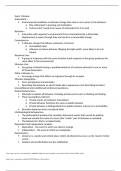
Bocchiaro P, Zimbardo P and Van Lange P
(2012) -Disobedience and whistleblowing
Background context:
Milgram found that people have strong
inclinations to obey legitimate authority,
irrespective of their beliefs, feelings, or
intentions. However, there is little
understanding about the nature of
disobedience to unjust authority. Milgram
found a wide gap between people’s
predictions of their own and others’ degree of
(dis) obedience when contrasted with the actual behavioural outcomes in
his experiment.
-------------------------------------------------------------------------------------------------------------------
Aim- To investigate...
- The rates of obedience, disobedience, and whistleblowing in a situation
where no physical
violence was involved but where it was clear that the instructions were
ethically wrong.
- The accuracy of people’s estimates of obedience, disobedience, and
whistleblowing in this situation.
- The role of dispositional factors in obedience, disobedience, and
whistleblowing
-------------------------------------------------------------------------------------------------------------------
Research method- laboratory experiment
Data collection- The HEXACO-PI-R personality test: measures 6 traits:
honesty-humility, emotionality, extraversion, agreeableness(niceness),
conscientiousness and openness to experience. The Decomposed Games
measured social values (pro-social or pro-self). Religiosity was measured by
asking what their religion was, frequency of worship and extent of faith.
Obedience/disobedience was measured by whether or not ppts composed
the statement. Whistleblowing was measured by whether they completed
an ethics form.
Participants- Experimental group: 149 undergraduate students at VU Uni
in Amsterdam (96 women, 53 men, mean age = 20.8) took part in the
research in exchange for either €7 or course credit. Recruited by flyers in
the uni café.
Comparison group: 138 students from The VU Uni were provided with a
detailed description of the experimental setting. They were then asked,
, “What would you do?” and “What would the average student at your
university do?”
-------------------------------------------------------------------------------------------------------------------
Prior to the study…
8 Pilot test groups: 92 students from the VU Uni in Amsterdam, were used
to ensure the procedure was credible and morally acceptable. These tests
also served to standardise the experimenter-authority behaviour throughout
the experimental period. These ppts said the procedure was both believable
and ethical.
Procedure
Participants were informed about what
their task was, about the potential
benefits/risks of participation, and about
their right to withdraw at any time with
no penalty. They were also assured of the
confidentiality of the information
collected.
• Each participant was greeted in the
laboratory by a male experimenter who
was formally dressed and had a stern
demeanour. The experimenter asked each participant to provide a few
names of fellow students and then presented the cover story.
The cover story: - The experimenter and a colleague were investigating the
effects of sensory deprivation on brain function of 6 participants. They had
spent some time completely isolated, unable to see or hear anything, this
had disastrous effects – all panicked, their cognitive abilities were
temporarily impaired, some experienced visual and auditory hallucinations.
2 participants asked to stop because of their strong symptoms but were not
allowed to do so because invalid data may then have been collected. The
majority said it had been a frightening experience.
The experimenters wanted to replicate this study at the VU University using
a sample of college students as there was currently no data on young
people, but some scientists thought that their brains may be more sensitive
to the negative effects of isolation. They were awaiting approval from a
University Research Committee who were collecting feedback from students
who knew details about the experiment, to help them make their decision.
• Participants were to write a statement to convince the students they had
previously named to participate in the experiment. Statements would be
sent to the identified students by mail. Participants were told to be
enthusiastic when writing their statements and had to use two adjectives
among “exciting”, “incredible”, “great” and “superb”. Negative effects of
sensory deprivation were not to be mentioned. They were also offered
regular paid work in the future.
authority
Bocchiaro P, Zimbardo P and Van Lange P
(2012) -Disobedience and whistleblowing
Background context:
Milgram found that people have strong
inclinations to obey legitimate authority,
irrespective of their beliefs, feelings, or
intentions. However, there is little
understanding about the nature of
disobedience to unjust authority. Milgram
found a wide gap between people’s
predictions of their own and others’ degree of
(dis) obedience when contrasted with the actual behavioural outcomes in
his experiment.
-------------------------------------------------------------------------------------------------------------------
Aim- To investigate...
- The rates of obedience, disobedience, and whistleblowing in a situation
where no physical
violence was involved but where it was clear that the instructions were
ethically wrong.
- The accuracy of people’s estimates of obedience, disobedience, and
whistleblowing in this situation.
- The role of dispositional factors in obedience, disobedience, and
whistleblowing
-------------------------------------------------------------------------------------------------------------------
Research method- laboratory experiment
Data collection- The HEXACO-PI-R personality test: measures 6 traits:
honesty-humility, emotionality, extraversion, agreeableness(niceness),
conscientiousness and openness to experience. The Decomposed Games
measured social values (pro-social or pro-self). Religiosity was measured by
asking what their religion was, frequency of worship and extent of faith.
Obedience/disobedience was measured by whether or not ppts composed
the statement. Whistleblowing was measured by whether they completed
an ethics form.
Participants- Experimental group: 149 undergraduate students at VU Uni
in Amsterdam (96 women, 53 men, mean age = 20.8) took part in the
research in exchange for either €7 or course credit. Recruited by flyers in
the uni café.
Comparison group: 138 students from The VU Uni were provided with a
detailed description of the experimental setting. They were then asked,
, “What would you do?” and “What would the average student at your
university do?”
-------------------------------------------------------------------------------------------------------------------
Prior to the study…
8 Pilot test groups: 92 students from the VU Uni in Amsterdam, were used
to ensure the procedure was credible and morally acceptable. These tests
also served to standardise the experimenter-authority behaviour throughout
the experimental period. These ppts said the procedure was both believable
and ethical.
Procedure
Participants were informed about what
their task was, about the potential
benefits/risks of participation, and about
their right to withdraw at any time with
no penalty. They were also assured of the
confidentiality of the information
collected.
• Each participant was greeted in the
laboratory by a male experimenter who
was formally dressed and had a stern
demeanour. The experimenter asked each participant to provide a few
names of fellow students and then presented the cover story.
The cover story: - The experimenter and a colleague were investigating the
effects of sensory deprivation on brain function of 6 participants. They had
spent some time completely isolated, unable to see or hear anything, this
had disastrous effects – all panicked, their cognitive abilities were
temporarily impaired, some experienced visual and auditory hallucinations.
2 participants asked to stop because of their strong symptoms but were not
allowed to do so because invalid data may then have been collected. The
majority said it had been a frightening experience.
The experimenters wanted to replicate this study at the VU University using
a sample of college students as there was currently no data on young
people, but some scientists thought that their brains may be more sensitive
to the negative effects of isolation. They were awaiting approval from a
University Research Committee who were collecting feedback from students
who knew details about the experiment, to help them make their decision.
• Participants were to write a statement to convince the students they had
previously named to participate in the experiment. Statements would be
sent to the identified students by mail. Participants were told to be
enthusiastic when writing their statements and had to use two adjectives
among “exciting”, “incredible”, “great” and “superb”. Negative effects of
sensory deprivation were not to be mentioned. They were also offered
regular paid work in the future.