Mark Klimek - Prioritization/Delegation Questions And Answers With Verified Study Solutions
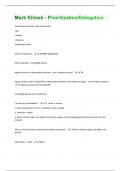
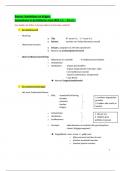
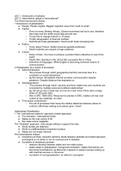
Prioritization questions will always have: -Age -Gender -Diagnosis -Modifying Phrase What is important? - IGNORE age/gender Most important = modifying phrase Angina Pectoris vs Myocardial Infarction - who is higher priority? - MI Angina Pectoris with unstable BP vs Myocardial Infarction with stable vital signs - who is higher priority? - Angina pectoris with unstable BP (modifying phrase more important) *4 rules for prioritization* - 1. acute chronic 2. fresh postop (first 12 hrs) medical or other surgical 3. Unstable stable 4. More vital the organ, the higher the priority (organ of the modifying phrase) (only use this as a tiebreaker) What is the tie-breaker used for prioritization questions? - More vital the organ, the higher the priority Vital Organs - order - BrainLung Heart Liver Kidney Pancreas Who is the priority? COPD CHF Appendicitis - Appendicitis (acute) Who is the priority? COPD CHF Appendicitis 2 hour post-op cholecystectomy 3 day post-CABG - 2 hour post-op cholecystectomy (fresh post-op within 12 hr) Who is the highest priority? A. 23 yr old male with CHF with a potassium of 6.6 and no ECG changes. B. Chronic Renal Failure with a creatinine of 20.7 and pink, frothy sputum.C. Acute hepatitis with jaundice and increased ammonia level, who you cannot arouse. - C. Acute hepatitis with jaundice and increased ammonia level, who you cannot arouse. Potassium = heart (3rd organ) Pink, frothy sputum is PE = Lung (2nd organ) Cannot arouse = brain (1st organ)*** UNSTABLE words - -Unstable -Acute illness -Post-op 12 hrs -General anesthesia (12 hrs) -Lab abnormalities of a C or D -Not ready for discharge -Newly admitted -Newly diagnosed -Admitted less than 24 hrs ago -Changed assessments -Unexpected signs/symptoms STABLE words - -Stable -Chronic illness -Post-op 12 hrs -Local/Regional anesthesia -Lab abnormalities of an A or B level -Ready for discharge -Admitted more than 24 hrs ago -Unchanged assessment -Experiencing the typical expected signs/symptoms with which they were diagnosedStable or Unstable: Kidney stones with severe colicky pain - STABLE because expected sign Stable or Unstable: Mild pain while having a chest x-ray - UNSTABLE because unexpected sign Who is the highest priority patient? 1. 16 yr-old female with meningitis who has had a temp of 103.8 since admission 3 days ago 2. 67 yr-old male with IBS who spiked a temp of 100.3 this afternoon - 2. 67 yr-old male with IBS who spiked a temp of 100.3 this afternoon BECAUSE...A patient with Meningitis is expected to have a fever. A patient with IBS who recently developed a fever is an unexpected and new symptom. Always high priority (5) - Hemorrhage Fever 105 (seizures) Hypoglycemia (70) Pulseless Breathlessness Black tag (triage) - Pulselessness Breathlessness Fixed and dilated pupils LPNs can NOT: - -Starting an IV -Hang or mix IV meds -IV push meds -Administer blood -Central lines (no flushing, dressing changes, etc)-Care plans -Perform or develop teaching -Take care of unstable patients -Cannot do the 1st of anything (1st assessment, 1st post-op dressing, 1st feeding after stroke, etc) -Admission, discharge, transfer, first assessment after a change
Geschreven voor
- Instelling
- Klimek - Prioritization/Delegation
- Vak
- Klimek - Prioritization/Delegation
Documentinformatie
- Geüpload op
- 23 mei 2024
- Aantal pagina's
- 8
- Geschreven in
- 2023/2024
- Type
- Tentamen (uitwerkingen)
- Bevat
- Vragen en antwoorden
Onderwerpen
-
mark klimek prioritizationdelegation

Ook beschikbaar in voordeelbundel