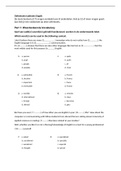
1. Which of the following is true about meiosis?
a. It occurs in sex cells.
b. It produces diploid cells.
c. There is no crossing over of genetic information.
d. The mother and daughter cells are identical.
2. Sometimes people have mixed hair colours, for example a person with brown hair (dominant
gene) having natural blonde highlights (recessive gene). What phenotype expression is this?
a. Codominance
b. Incomplete dominance
c. Sex-linked gene principle
d. Genetic imprinting
3. Mark is very tall and has poor verbal skills. He also used to get bullied often for having what
appeared to be women’s’ breasts. Which sex-linked chromosomal abnormality does he most
likely suffer from?
a. Fragile X syndrome
b. Turner syndrome
c. Klinefelter syndrome
d. Supermale syndrome
4. What is true about teratogens?
a. They all have similar effects.
b. Vulnerability to them is highest during the embryonic phase.
c. The influence of one teratogen is not increased if there are more than one teratogen.
d. Exposure time and intensity don’t influence the effect of teratogens.
5. Which parental factor is NOT a possible teratogen?
a. Neurodivergence
b. Maternal diseases
c. Age
d. Long-term stress
a. It occurs in sex cells.
b. It produces diploid cells.
c. There is no crossing over of genetic information.
d. The mother and daughter cells are identical.
2. Sometimes people have mixed hair colours, for example a person with brown hair (dominant
gene) having natural blonde highlights (recessive gene). What phenotype expression is this?
a. Codominance
b. Incomplete dominance
c. Sex-linked gene principle
d. Genetic imprinting
3. Mark is very tall and has poor verbal skills. He also used to get bullied often for having what
appeared to be women’s’ breasts. Which sex-linked chromosomal abnormality does he most
likely suffer from?
a. Fragile X syndrome
b. Turner syndrome
c. Klinefelter syndrome
d. Supermale syndrome
4. What is true about teratogens?
a. They all have similar effects.
b. Vulnerability to them is highest during the embryonic phase.
c. The influence of one teratogen is not increased if there are more than one teratogen.
d. Exposure time and intensity don’t influence the effect of teratogens.
5. Which parental factor is NOT a possible teratogen?
a. Neurodivergence
b. Maternal diseases
c. Age
d. Long-term stress