Lecture 1: Chapter 2 Research and knowledge
Managerial problem solving and the role of the researcher
- Research in business studies & managerial problem solving are not much different
- Managers must have the capability to analyse their situations and to use investigative
approaches to decision making and problem solving
- The researcher explains how information is collected, argues for methods used to obtain
results and explains their limitations: they work systematically (focus and future research)
- The researcher has to explain and convince the reader of the purpose and methods of
observation
Originality in research: studies have to create a new dimension to already existing knowledge:
1. Some novel twist, fresh perspective
2. New hypothesis or assumption
3. New and innovative methods of handling an existing topic/knowledge
Literature review: need to do research to existing literature (there has to be information on it)
- Build on existing knowledge and build upon
- Use existing methods to solve a problem
Induction vs Deduction
1. Induction: based on empirical evidence from observation to theory (search for a pattern)
o Through induction we draw general conclusions from our empirical observations
o The process goes from observations → analysis→ findings → theory building
o Qualitative research
2. Deduction: based on logic we know the literature, we crate hypothesis and test it
o The researcher builds hypotheses from the existing knowledge (literature), which can
be subject to empirical scrutiny (testing) and thus can be accepted or rejected
o Quantitative research
Induction vs. deduction
- Deductive reasoning: the logical process of deriving a conclusion from a
known premise or something known as true (theory data)
- Inductive reasoning: the systematic process of establishing a general
proposition on the basis of observation or particular facts (Data theory)
Abduction: starts with theory and then collect data to add information (no hypothesis)
- Not just a combination of induction and deduction
- Theoretical interpretation of empirical problem that lead to development of new theories
- The framework and theoretical assumptions are continuously modified as a result of
empirical findings
Translation to master thesis
- Deductive studies use quantitative methods and start with the development of hypotheses,
based on theory
- Abductive studies use qualitative methods and use the literature to identify concepts that
might be relevant to the problem and situation under study
- Inductive studies are not used, mainly because of time constraints
,Research never stops
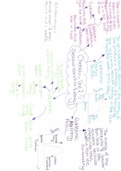
1. Observation: literature review
2. Problem clarification
3. Assumptions & hypothesis
4. Concept, construct & model
5. Research design
6. Data collection & analysis
7. Interpretation & conclusion
8. Improvement theory or problem solving
The researcher’s moral responsibility
- Deals with social guidelines and constraints upon research techniques and measurements
- Findings might lead to action that is against the principles of the researcher or organization
- Results might influence an important decision to be made by policy makers
Ethical issues
- Ethical issues arise particularly at the data collection stage
- Most important: Reporting your results objectively and honestly
- Misinterpretation of data lead to misleading results (ethically wrong)
Research process: a set of activities unfolding over time
- A process has a few distinct stages, as different stages entail different tasks
- In reality, however, the process is not so orderly and sequential
Research progress
1. The starting point is the research topic, that is the phenomenon or theme
to be studied
2. (a) Research problem: a specific question is addressed
2. (b) Problem presentation: a model or interrelated concepts
3. Research design: choice of strategy to collect the data needed to
‘answer’ the stated research problem
4. Measurement
5. Data: how to collect them, from whom, and in what way
6. Sample/respondents
7. Analysed and interpreted
8. Writing
9. In business the outcome results in or influences actions
Levels of research
- Theoretical studies conceptual level
- Empirical studies conceptual and measurement level
, Purpose of research is to produce insights or knowledge New insights can be acquired in:
1. theories/models,
2. concepts,
3. methods/techniques
4. facts
Definitions of important elements of research 4 elements of research
1. Concepts: an abstraction representing an object, a property of an object, or a phenomenon
- Concepts are the foundation of communication
- Concepts introduce a perspective
- Concepts are means of classification and generalization
- Concepts serve as components of theories (models)
- Concepts are the most critical element in any theory they direct what is captured
2. Definitions: Clarification of concepts
- Conceptual definitions: Definitions that describe concepts by using other concepts
- Operational definition: procedures that describe the activities to be performed to
establish empirically the degree of existence of what is described by a concept
- When we move from the conceptual to the empirical level in research, concepts are
converted into variables by mapping them into a set of numbers
3. Theory: a set of interrelated concepts, definitions and propositions that present a systematic
view of relations among variables with the purpose of explaining and predicting phenomena
4. Methods: rules and procedures, can be seen as tools to solve problems
Roles of research methods:
- ‘logic’ or ways of reasoning to arrive at solutions
- rules for communication (to explain how the findings have been achieved)
- rules of intersubjectivity (outsiders should be able to examine research findings)
Managerial problem solving and the role of the researcher
- Research in business studies & managerial problem solving are not much different
- Managers must have the capability to analyse their situations and to use investigative
approaches to decision making and problem solving
- The researcher explains how information is collected, argues for methods used to obtain
results and explains their limitations: they work systematically (focus and future research)
- The researcher has to explain and convince the reader of the purpose and methods of
observation
Originality in research: studies have to create a new dimension to already existing knowledge:
1. Some novel twist, fresh perspective
2. New hypothesis or assumption
3. New and innovative methods of handling an existing topic/knowledge
Literature review: need to do research to existing literature (there has to be information on it)
- Build on existing knowledge and build upon
- Use existing methods to solve a problem
Induction vs Deduction
1. Induction: based on empirical evidence from observation to theory (search for a pattern)
o Through induction we draw general conclusions from our empirical observations
o The process goes from observations → analysis→ findings → theory building
o Qualitative research
2. Deduction: based on logic we know the literature, we crate hypothesis and test it
o The researcher builds hypotheses from the existing knowledge (literature), which can
be subject to empirical scrutiny (testing) and thus can be accepted or rejected
o Quantitative research
Induction vs. deduction
- Deductive reasoning: the logical process of deriving a conclusion from a
known premise or something known as true (theory data)
- Inductive reasoning: the systematic process of establishing a general
proposition on the basis of observation or particular facts (Data theory)
Abduction: starts with theory and then collect data to add information (no hypothesis)
- Not just a combination of induction and deduction
- Theoretical interpretation of empirical problem that lead to development of new theories
- The framework and theoretical assumptions are continuously modified as a result of
empirical findings
Translation to master thesis
- Deductive studies use quantitative methods and start with the development of hypotheses,
based on theory
- Abductive studies use qualitative methods and use the literature to identify concepts that
might be relevant to the problem and situation under study
- Inductive studies are not used, mainly because of time constraints
,Research never stops
1. Observation: literature review
2. Problem clarification
3. Assumptions & hypothesis
4. Concept, construct & model
5. Research design
6. Data collection & analysis
7. Interpretation & conclusion
8. Improvement theory or problem solving
The researcher’s moral responsibility
- Deals with social guidelines and constraints upon research techniques and measurements
- Findings might lead to action that is against the principles of the researcher or organization
- Results might influence an important decision to be made by policy makers
Ethical issues
- Ethical issues arise particularly at the data collection stage
- Most important: Reporting your results objectively and honestly
- Misinterpretation of data lead to misleading results (ethically wrong)
Research process: a set of activities unfolding over time
- A process has a few distinct stages, as different stages entail different tasks
- In reality, however, the process is not so orderly and sequential
Research progress
1. The starting point is the research topic, that is the phenomenon or theme
to be studied
2. (a) Research problem: a specific question is addressed
2. (b) Problem presentation: a model or interrelated concepts
3. Research design: choice of strategy to collect the data needed to
‘answer’ the stated research problem
4. Measurement
5. Data: how to collect them, from whom, and in what way
6. Sample/respondents
7. Analysed and interpreted
8. Writing
9. In business the outcome results in or influences actions
Levels of research
- Theoretical studies conceptual level
- Empirical studies conceptual and measurement level
, Purpose of research is to produce insights or knowledge New insights can be acquired in:
1. theories/models,
2. concepts,
3. methods/techniques
4. facts
Definitions of important elements of research 4 elements of research
1. Concepts: an abstraction representing an object, a property of an object, or a phenomenon
- Concepts are the foundation of communication
- Concepts introduce a perspective
- Concepts are means of classification and generalization
- Concepts serve as components of theories (models)
- Concepts are the most critical element in any theory they direct what is captured
2. Definitions: Clarification of concepts
- Conceptual definitions: Definitions that describe concepts by using other concepts
- Operational definition: procedures that describe the activities to be performed to
establish empirically the degree of existence of what is described by a concept
- When we move from the conceptual to the empirical level in research, concepts are
converted into variables by mapping them into a set of numbers
3. Theory: a set of interrelated concepts, definitions and propositions that present a systematic
view of relations among variables with the purpose of explaining and predicting phenomena
4. Methods: rules and procedures, can be seen as tools to solve problems
Roles of research methods:
- ‘logic’ or ways of reasoning to arrive at solutions
- rules for communication (to explain how the findings have been achieved)
- rules of intersubjectivity (outsiders should be able to examine research findings)