Introduction:
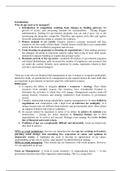
Why do nps need to be managed?
1) Introduction of competition resulting from changes in funding patterns, the
growth of sector, and increasing demand for accountability. During Reagan
administration, funding for government programs was cut and it gave rise to the
outsourcing the programs- nonprofits. Therefore, nps against each other and against
for-profit organizations began to compete for contracts.
2) Donors demand to see results: Funders, donors’s concerns increased and they
wanted to see the results of their funds. Usually donors would like to see a measurable
return in the form of effective programs and services.
3) From focusing on programs to focusing on organizations: Grant making practices
has changed: investing in long-term capacity rather than trying to meet daily needs,
demand for capacity building to expand and go large-scale).
4) Dramatic growth of the np sector: continued devolution of government programs
and fueled philanthropic gifts increased the number of employees and resources that
are under the control. Results: more attention by media, legislature related to their
activities, and trained managers.
There are some who are skeptical that management in nps is unique or it requires particularly
distinctive skills. At operational level, management in nps requires almost the same skills that
are important in government or business (payrolls, information system).
Differences:
1) It requires the ability to integrate mission + resources + strategy. They obtain
resources from multiple sources, like business, have considerable freedom to
determine the activities in which they will engage. Management requires trade-off
among mission, resources and strategy (distinctive from business or government
sector).
2) Complex relationship among stakeholders requires management to be very skilled in
negotiations and compromise with a high level of tolerance for ambiguity. It is
unique because nps are different from business and governmental units- often reliant
on support of donors and work of volunteers.
3) Its success should be measured in terms of its ability to achieve its mission (one
bottom-line). + paying too much attention to financial bottom line if their
organizations are to survive and succeed. Manager must manage the double bottom
line of financial and social return.
4) Problems of nps are exceptionally difficult and intractable. Goals are behavioral,
thus hard to achieve.
NPOs as social institutions: Services are important but also nps are creating civil society,
pursuing social change, and sustaining free expression of values and opinions in
democratic society. It highlights the need to develop an appreciation of np values,
understanding of nps role in society, and capacity for ethical decision making.
NPOs as social enterprises: They assume nps are businesses with social purpose. However,
it is not applicable to all nps.
Focus on Management: 1) work of social scientists+ 2) organizational theory, + 3) rich
practitioner literature that offers important understanding. This is a young field.
Why do nps need to be managed?
1) Introduction of competition resulting from changes in funding patterns, the
growth of sector, and increasing demand for accountability. During Reagan
administration, funding for government programs was cut and it gave rise to the
outsourcing the programs- nonprofits. Therefore, nps against each other and against
for-profit organizations began to compete for contracts.
2) Donors demand to see results: Funders, donors’s concerns increased and they
wanted to see the results of their funds. Usually donors would like to see a measurable
return in the form of effective programs and services.
3) From focusing on programs to focusing on organizations: Grant making practices
has changed: investing in long-term capacity rather than trying to meet daily needs,
demand for capacity building to expand and go large-scale).
4) Dramatic growth of the np sector: continued devolution of government programs
and fueled philanthropic gifts increased the number of employees and resources that
are under the control. Results: more attention by media, legislature related to their
activities, and trained managers.
There are some who are skeptical that management in nps is unique or it requires particularly
distinctive skills. At operational level, management in nps requires almost the same skills that
are important in government or business (payrolls, information system).
Differences:
1) It requires the ability to integrate mission + resources + strategy. They obtain
resources from multiple sources, like business, have considerable freedom to
determine the activities in which they will engage. Management requires trade-off
among mission, resources and strategy (distinctive from business or government
sector).
2) Complex relationship among stakeholders requires management to be very skilled in
negotiations and compromise with a high level of tolerance for ambiguity. It is
unique because nps are different from business and governmental units- often reliant
on support of donors and work of volunteers.
3) Its success should be measured in terms of its ability to achieve its mission (one
bottom-line). + paying too much attention to financial bottom line if their
organizations are to survive and succeed. Manager must manage the double bottom
line of financial and social return.
4) Problems of nps are exceptionally difficult and intractable. Goals are behavioral,
thus hard to achieve.
NPOs as social institutions: Services are important but also nps are creating civil society,
pursuing social change, and sustaining free expression of values and opinions in
democratic society. It highlights the need to develop an appreciation of np values,
understanding of nps role in society, and capacity for ethical decision making.
NPOs as social enterprises: They assume nps are businesses with social purpose. However,
it is not applicable to all nps.
Focus on Management: 1) work of social scientists+ 2) organizational theory, + 3) rich
practitioner literature that offers important understanding. This is a young field.