USABO Biosystematics Exam Questions
and Answers
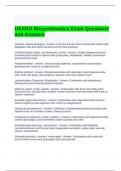
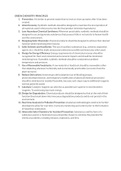
Calcarea, Silicea (sponges) - Answer -Lack true tissues; have choanocytes (collar cells-
flagellated cells that ingest bacteria and tiny food particles)
Cnidaria (hydras, jellies, sea anemones, corals) - Answer -Unique stinging structures
(nematocysts) housed in special cells (cnidocytes); diploblastic, radially symmetrical,
gastrovascular cavity
Plathyhelminthes - Answer -Dorsoventrally flattened, unsegmented acoelomates;
gastrovascular cavity or no digestive tract
Rotifera (rotifers) - Answer -Pseudocoelomates with alimentary canal (digestive tube
with mouth and anus); jaws (trophi) in pharynx; head with ciliated crown
Lophophorates: Ectoprocta, Brachipoda - Answer -Coelomates with lophophores
(feeding structures bearing ciliated tentacles)
Mollusca (clams, snails, squids) - Answer -Coielomates with three main body parts
(muscular foot, visceral mass, mantle); coelom reduced; most have hard shell made of
calcium carbonate
Annelida (segmented worms) - Answer -Coelomates with segmented body wall and
internal organs (except digestive tract, which is unsegmented)
Nematoda (roundworms) - Answer -Cylindrical, unsegmented pseudocoelomates with
tapered ends; no circulator system; undergo ecdysis
Arthopoda (crustaceans, insects, spiders) - Answer -Coelomates with segmented body,
jointed appendages, and exoskeleton made of protein and chitin
Echinodermata (sea stars, sea urchins) - Answer -Coelomates with bilaterally
symmetrical larvae and five-part body organiziation as adults; unique water vascular
system; endoskeleton
Chordata (lancelets, tunicates, vertebrates) - Answer -Coelomates with notochord;
dorsal, hollow nerve cord; pharyngeal slits; post-anal tail
and Answers
Calcarea, Silicea (sponges) - Answer -Lack true tissues; have choanocytes (collar cells-
flagellated cells that ingest bacteria and tiny food particles)
Cnidaria (hydras, jellies, sea anemones, corals) - Answer -Unique stinging structures
(nematocysts) housed in special cells (cnidocytes); diploblastic, radially symmetrical,
gastrovascular cavity
Plathyhelminthes - Answer -Dorsoventrally flattened, unsegmented acoelomates;
gastrovascular cavity or no digestive tract
Rotifera (rotifers) - Answer -Pseudocoelomates with alimentary canal (digestive tube
with mouth and anus); jaws (trophi) in pharynx; head with ciliated crown
Lophophorates: Ectoprocta, Brachipoda - Answer -Coelomates with lophophores
(feeding structures bearing ciliated tentacles)
Mollusca (clams, snails, squids) - Answer -Coielomates with three main body parts
(muscular foot, visceral mass, mantle); coelom reduced; most have hard shell made of
calcium carbonate
Annelida (segmented worms) - Answer -Coelomates with segmented body wall and
internal organs (except digestive tract, which is unsegmented)
Nematoda (roundworms) - Answer -Cylindrical, unsegmented pseudocoelomates with
tapered ends; no circulator system; undergo ecdysis
Arthopoda (crustaceans, insects, spiders) - Answer -Coelomates with segmented body,
jointed appendages, and exoskeleton made of protein and chitin
Echinodermata (sea stars, sea urchins) - Answer -Coelomates with bilaterally
symmetrical larvae and five-part body organiziation as adults; unique water vascular
system; endoskeleton
Chordata (lancelets, tunicates, vertebrates) - Answer -Coelomates with notochord;
dorsal, hollow nerve cord; pharyngeal slits; post-anal tail