Histotechnology--Nuclear & Cytoplasmic Staining fully solved 2024
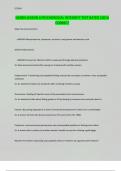
Histotechnology--Nuclear & Cytoplasmic Staining c. nuclei *hemalum stains (hematoxylin mordanted with either ammonium aluminum sulfate or potassium aluminum sulfate) are used almost exclusively to stain nuclei Harris hematoxylin is used on tissue sections to stain: a. fat b. glycogen c. nuclei d. cytoplasm b. oxidation *can be done naturally (atmospheric oxygen), or with oxidizing agents Ripening of hematoxylin is a process of: a. hydrolysis b. oxidation c. mordanting d. reduction a. hematein *hematoxylin is not a dye The active staining chemical in ripened hematoxylin solutions is: a. hematein b. hematin c. hematoxylin d. hemosiderin c. differentiation in acid-alcohol *regressive means to overstain and then remove excess dye (differentiate) with acid-alcohol The most important step in regressive hematoxylin staining is: a. postmordanting in picric acid b. use of hematoxylin containing glycerin c. differentiation in acid-alcohol d. washing in water after the hematoxylin d. sodium iodate *all choices will oxidize hematoxylin, but sodium iodate is used in Mayer hematoxylin Hematein is formed in Mayer hematoxylin solution by the addition of: a. mercuric oxide b. potassium permanganate c. exposure to air
Written for
- Institution
- Histotechnology
- Course
- Histotechnology
Document information
- Uploaded on
- February 11, 2024
- Number of pages
- 33
- Written in
- 2023/2024
- Type
- Exam (elaborations)
- Contains
- Questions & answers
Subjects
-
histotechnology nuclear cytoplasmic staining

Also available in package deal