FPCC exam 2 Questions Rated 100% With Complete Solutions!!!!
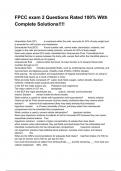
Intracellular fluid (ICF) is contained within the cells. accounts for 40% of body weight and is essential for cell function and metabolism Extracellular fluid (ECF) Found outside cells, carries water, electrolytes, nutrients, and oxygen to the cells and removes waste products. accounts for 20% of body weight three main places where ECF exists Interstitial fluid, Intravascular Fluid, Transcellular fluid interstitial fluid lies in spaces between the body cells. excess fluid within the interstitial space is called edema (npo directly by GI system) intravascular fluid plasma within the blood. Its main function is to transport blood cells (nutrition through an IV) transcellular fluid includes specialized fluids, such as cerebrospinal, pleural, peritoneal, and synovial fluid; and digestive juices. (Healthy male 3700mL 2700mL female) third spacing the accumulation and sequestration of trapped extracellular fluid in an actual or potential body space as a result of disease or injury What are body fluids composed of? water, body fluids oxygen, carbon dioxide, dissolved nutrients, metabolic waste products and electrolytes In the ICF the major actions are... Potassium and magnesium The major nations in ICF are... phosphate In the ECF the major electrolytes are... sodium, chloride, and bicarbonate Isotonic Solution remain inside the blood vessels. What solution is useful for clients with hypotension and hypovolemia? Isotonic solution Clients at risk for Fluid volume excess must be closely monitored when they receive which solution? Isotonic fluid replacement (they may easily develop fluid overload) Hypotonic solution is of lower osmolality of blood, pull body water from intravascular compartment into the interstitial fluid compartment Which solution is used to correct cellular dehydration? hypotonic solution Never give Hypotonic solutions to patients at risk for Increased ICP because they can cause/ exacerbate cerebral edema True Hypertonic solutions contains a higher concentration of solutes than does blood which solution when administered, they pull fluids and electrolytes from the intracellular and interstitial compartments into the intravascular compartment. hypertonic solutions can hypertonic solutions help stabilize blood pressure. increase urine output, and reduce edema? Yes What are the IOM's recommendations for adequate fluid intake? total fluid intake of 2,700 mL per day for women and 3,700 mL per day for men how much fluid should we obtain from drinking fluids____ and the remaining ___ from food and cellular metabolism 80% , 20% Sensible fluid loss is measurable and/ or perceived (urine, diarrhea,ostomy, and gastric drainage) Insensible fluid loss loss that we do not perceive and is not easily measured but accounts for about 900mL per day How does insensible fluid loss primarily occur? by diffusion and evaporation through the skin, but also from the lungs Does insensible fluid loss increase with open wounds, burns, or other breaks in the protective layer of the skin? yes What are the common sources of fluid loss? Urine (1,500 mL/day) varies according to intake and activity 30/50 mL per hr Feces (100 to 200 mL/day stool increases water loss also increases Skin (about 600 mL/day) fever, exercise, metabolic process Sensible (perceived) loss through the skin occurs through preparation Insensible loss through the skin occurs through evaporation. Lungs (about 300 mL/day). Insensible loss occurs through the lungs as water is exhaled with each breath The _______ are the principal regulator of fluid and electrolyte balance. kidneys Sodium (Na+) 136-145 mEq/L Potassium (K+) 3.5-5.0 mEq/L Calcium (Ca2+) 9.0-10.5 mg/dL Magnesium (Mg2+) 1.3-2.1 mEq/L Chloride (Cl-) 95-105 mEq/L Phosphorus (Phosphate [PO4-]) 3.0-4.5 mEq/L Bicarbonate (HCO3-) 22-26 mEq/L What are fluid imbalances? involve deficit or excess in fluid volume or an alteration in distribution among the fluid compartments What concepts are used to describe fluid imbalances? Hypovolemia(fluid deficit) and Hypervolemia (fluid excess) (hypo=low, vol=volume, emit pertains to blood) Deficient fluid volume (hypovolemia) occurs when there is a proportional loss of fluid and electrolytes from the ECF from various causes (e.g., surgery, trauma, uterine rupture) Dehydration describes a state of negative fluid balance in which there is a loss of water (hydro = water) from the intracellular, extracellular, or intravascular spaces 3 categories Insufficient fluid intake (e.g., as may occur with depression, sedation, or alcohol abuse) Excessive fluid loss (e.g., bleeding, diarrhea, vomiting) Fluid shifts (e.g., intravascular fluid leak into body tissues, burns) The first symptom of dehydration is thirst hypovolemic shock As volume loss continues, the heart pumps faster but less powerfully, resulting in a rapid, weak pulse and orthostatic hypotension. Hypervolemia Congestive Heart Failure, Kidney Disease Excess Fluid Volume (Hypervolemia) Excessive retention of sodium, water in the ECF increases osmotic pressure causing fluid to shift from the cells into the ECF, result from high salt intake, disease affecting kidney or liver function, or poor pumping action of the heart. what alveoli are and what is happening in and around them constantly (in a healthy client) Tiny air sacs with thin walls surrounded by a fine network of capillaries, gases easily pass back and forth between alveoli and capillaries how inhalation occurs is the expansion of the chest cavity and lungs to negative pressure inside the lungs and causes air to be drawn in through the nose or mouth and airways Define ventilation. The movement of air into and out of the lungs through the act of breathing, accomplished through cycles of inhalation and exhalation Respiration means _______although you will often hear the term used when we are actually talking about how many breaths/minute a client is taking refers to gas exchange, oxygenation of blood and elimination of carbon dioxide in the lungs Hyperventilation (with common causes) Occurs when a patient breaths fast and deeply to move a large amount of air through the lungs, causing too much carbon dioxide to be removed by alveoli.
Written for
- Institution
- Fpcc
- Course
- Fpcc
Document information
- Uploaded on
- June 22, 2024
- Number of pages
- 4
- Written in
- 2023/2024
- Type
- Exam (elaborations)
- Contains
- Questions & answers
Subjects
-
fpcc exam 2 questions rated 100 with complete sol

Also available in package deal