Animal studies
Lorenz’s research:
Ethologists used animals to understand mother-infant attachment.
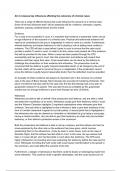
Imprinting: Lorenz first studied imprinting when his neighbour gave him a newly hatched
duck that followed him around.
- Procedure: Division of a clutch of geese eggs. One half with mother geese in natural
environment, other half in incubator with Lorenz.
- Findings – Incubator group followed Lorenz, Controlled group followed mother geese,
even when they were mixed = imprinting = mobile birds attach to the first moving
thing they see. Critical period for imprinting to form – hours after birth
- Sexual imprinting –analysed behaviour with imprinting and adult male preferences =
birds who formed human attachments later showed courtship behaviour towards
humans. Lorenz (1952) described a peacock being born in a reptile house in a zoo and
later showing courtship behaviour towards large tortoises. Concluded that the bird
had undergone sexual imprinting.
Generalizability Lorenz’s aimed to Attachment system is = there are
to humans understand different for birds and generalisability
attachment of birds. humans = mammalian issues
Helped understand mothers show more
human development emotional love to
but hard to generalise offspring than birds +
birds to humans can form attachments at
any time
Lorenz’s People have Guiton et al (1966) = Therefore
observations questioned whether chickens imprinted on unreliable
have been imprinting has a yellow gloves and would
questioned permanent effect on try to mate with them
later mating but later on this changed
behaviour and they later learned to
mate with other
chickens.
, Harlow’s research:
Worked with rhesus monkeys, which are similar to humans.
The importance of contact comfort – Newborn babies kept in a cage alone, died unless they
were given something soft to cuddle like a cloth.
• Procedure – Harlow (1958) tested the fact that soft things substitute a mother. 16
babies, with two wired models (mothers). First monkey was wired and dispensed milk;
second monkey was covered in a cloth, no milk.
• Findings – Baby monkeys preferred the soft object one regardless of which had milk
suggests that ‘contact-comfort’ was most important compared to food.
Maternally deprived monkeys as adults – Harlow followed these monkeys who were
deprived of a maternal figure to see if this had a permanent effect in adulthood:
- Reared with wire mother = dysfunctional
- monkeys reared with soft mother = abnormal social behaviour + less sociable + more
aggressive + bred less than normal monkeys, thus being unskilled at mating. As
mothers some neglected their young and others even killed them.
The critical period for normal development – 90 days for an attachment to be formed, after
this it is irreversible.
Theoretical significance in Also showed importance
value – understanding of early attachment for
attachments = not later social relationships +
result of being fed ability to keep a
but by comfort. relationship and rear
children
Practical value practical application It also provided help for
= helped social captive monkeys and
workers understand those being bred in zoos
severity of neglect and wildlife programmes.
and abuse, therefore
intervene to protect
it
Ethical issues – Monkeys suffered suffering must also be The counter
greatly as a result of human-like. Harlow was argument is that
Harlow’s aware of the suffering he his study has had
procedures, the would have caused = significant in order
species is similar to called the wired monkeys to justify the
humans and thus we ‘ iron maidens’ – a effects
can generalise Medieval torture device
Lorenz’s research:
Ethologists used animals to understand mother-infant attachment.
Imprinting: Lorenz first studied imprinting when his neighbour gave him a newly hatched
duck that followed him around.
- Procedure: Division of a clutch of geese eggs. One half with mother geese in natural
environment, other half in incubator with Lorenz.
- Findings – Incubator group followed Lorenz, Controlled group followed mother geese,
even when they were mixed = imprinting = mobile birds attach to the first moving
thing they see. Critical period for imprinting to form – hours after birth
- Sexual imprinting –analysed behaviour with imprinting and adult male preferences =
birds who formed human attachments later showed courtship behaviour towards
humans. Lorenz (1952) described a peacock being born in a reptile house in a zoo and
later showing courtship behaviour towards large tortoises. Concluded that the bird
had undergone sexual imprinting.
Generalizability Lorenz’s aimed to Attachment system is = there are
to humans understand different for birds and generalisability
attachment of birds. humans = mammalian issues
Helped understand mothers show more
human development emotional love to
but hard to generalise offspring than birds +
birds to humans can form attachments at
any time
Lorenz’s People have Guiton et al (1966) = Therefore
observations questioned whether chickens imprinted on unreliable
have been imprinting has a yellow gloves and would
questioned permanent effect on try to mate with them
later mating but later on this changed
behaviour and they later learned to
mate with other
chickens.
, Harlow’s research:
Worked with rhesus monkeys, which are similar to humans.
The importance of contact comfort – Newborn babies kept in a cage alone, died unless they
were given something soft to cuddle like a cloth.
• Procedure – Harlow (1958) tested the fact that soft things substitute a mother. 16
babies, with two wired models (mothers). First monkey was wired and dispensed milk;
second monkey was covered in a cloth, no milk.
• Findings – Baby monkeys preferred the soft object one regardless of which had milk
suggests that ‘contact-comfort’ was most important compared to food.
Maternally deprived monkeys as adults – Harlow followed these monkeys who were
deprived of a maternal figure to see if this had a permanent effect in adulthood:
- Reared with wire mother = dysfunctional
- monkeys reared with soft mother = abnormal social behaviour + less sociable + more
aggressive + bred less than normal monkeys, thus being unskilled at mating. As
mothers some neglected their young and others even killed them.
The critical period for normal development – 90 days for an attachment to be formed, after
this it is irreversible.
Theoretical significance in Also showed importance
value – understanding of early attachment for
attachments = not later social relationships +
result of being fed ability to keep a
but by comfort. relationship and rear
children
Practical value practical application It also provided help for
= helped social captive monkeys and
workers understand those being bred in zoos
severity of neglect and wildlife programmes.
and abuse, therefore
intervene to protect
it
Ethical issues – Monkeys suffered suffering must also be The counter
greatly as a result of human-like. Harlow was argument is that
Harlow’s aware of the suffering he his study has had
procedures, the would have caused = significant in order
species is similar to called the wired monkeys to justify the
humans and thus we ‘ iron maidens’ – a effects
can generalise Medieval torture device