Key Merchants Tale Critics
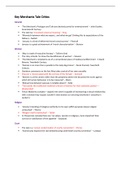
General
‘The Merchant's Prologue and Tale was devised purely for entertainment’ – John Dryden,
Seventeenth Century.
The tale has ‘moralised universal meaning’ – King
‘Mismatch between what we expect…and what we get’ (linking this to expectations of the
fabliau) – Nuttall
‘January is a kind of deformed moral consciousness’ – Pearsall
January is a great achievement of ‘moral characterisation’ – Benson
Women
‘May is made of masculine fantasy’ – Tolliver (she)
The story intends ‘to show the deceitfulness of women’ – Stevens
‘The Merchant's complaints are of a conventional piece of medieval antifeminism’- C David
Benson, Twentieth Century
‘Damian is no more than a poodle to this lady dog-trainer’ - Derek Pearsall, Twentieth
Century
Davidson comments on the fact May takes control of her own sexuality
Chaucer is ‘preoccupied with the sorrows of the female’ – Ackryod
‘Women is at the centre rather than the periphery where she becomes the norm against
which all human behaviour is to be measured’ – Mann
‘Mutual love between spouses is notable absent’ – Kelly
‘Transcends the traditional medieval criticism of women for their seductive powers’ –
Wentersdorf
Freud: Madonna complex – argued men were incapable of maintaining a sexual relationship
with a woman they respect (couldn’t view women as nurturing (motherly) + sexuality in
tandem)
Religion
‘January’s bending of religious authority to his own selfish purposes leaves religion
untouched’ – Thorne
‘Religion itself is bemocked’ – Tatlok
In Chaucerian comedy there are ‘no values, secular or religious, more important than
survival or satisfaction of the appetite’ - Saywood
Court
The tale is a ‘cynical condemnation of courtly convention’ – Shores
‘Humorously exposes the raw bestiality lying underneath courtly convention’ – Laskaya
General
‘The Merchant's Prologue and Tale was devised purely for entertainment’ – John Dryden,
Seventeenth Century.
The tale has ‘moralised universal meaning’ – King
‘Mismatch between what we expect…and what we get’ (linking this to expectations of the
fabliau) – Nuttall
‘January is a kind of deformed moral consciousness’ – Pearsall
January is a great achievement of ‘moral characterisation’ – Benson
Women
‘May is made of masculine fantasy’ – Tolliver (she)
The story intends ‘to show the deceitfulness of women’ – Stevens
‘The Merchant's complaints are of a conventional piece of medieval antifeminism’- C David
Benson, Twentieth Century
‘Damian is no more than a poodle to this lady dog-trainer’ - Derek Pearsall, Twentieth
Century
Davidson comments on the fact May takes control of her own sexuality
Chaucer is ‘preoccupied with the sorrows of the female’ – Ackryod
‘Women is at the centre rather than the periphery where she becomes the norm against
which all human behaviour is to be measured’ – Mann
‘Mutual love between spouses is notable absent’ – Kelly
‘Transcends the traditional medieval criticism of women for their seductive powers’ –
Wentersdorf
Freud: Madonna complex – argued men were incapable of maintaining a sexual relationship
with a woman they respect (couldn’t view women as nurturing (motherly) + sexuality in
tandem)
Religion
‘January’s bending of religious authority to his own selfish purposes leaves religion
untouched’ – Thorne
‘Religion itself is bemocked’ – Tatlok
In Chaucerian comedy there are ‘no values, secular or religious, more important than
survival or satisfaction of the appetite’ - Saywood
Court
The tale is a ‘cynical condemnation of courtly convention’ – Shores
‘Humorously exposes the raw bestiality lying underneath courtly convention’ – Laskaya