TF-CBT - 創傷敘事 I (7|2023/24 UPDATE|GRADED A+
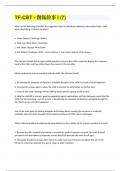
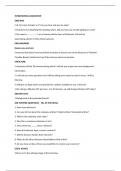
Which of the following describes the suggested order for effectively obtaining information from a child when developing a trauma narrative? a. Listen, Repeat, Challenge, Reflect b. Wait, Ask, Write Down, Read Back c. Ask, Listen, Repeat, Write Down d. Ask, Reflect, Challenge, Write c. Ask, Listen, Repeat, Write Down The therapist should Ask an open-ended question, Listen to the child's response; Repeat the response back to the child, and then Write Down the answer in the narrative When creating the trauma narrative with the child, the clinician should: a. Be listening for examples of distorted, unhelpful thoughts in the child's account of what happened b. Consistently remain quiet to allow the child to process the information on his/her own c. Focus on the child's feelings without talking about specific aspects of the trauma d. Help the child fill in memory gaps by suggesting logical explanations and links between events that the child may be repressing a. Be listening for examples of distorted, unhelpful thoughts in the child's account of what happened One of the main goals of eliciting thoughts and feelings when creating the narrative is to identify unhelpful and inaccurate thoughts that produce symptoms of PTSD and/or depression. Which statement about developmental expectations for the creation of the trauma narrative is correct? a. Because specific, detailed information is essential for gradual exposure to work, the level of detail provided in the description of traumatic events should be basically the same for all ages. b. Therapists should encourage older clients to make more use of trauma narratives that are in the format of a book (as opposed to a poem, song, or other medium). c. The ability to create detailed narratives can vary considerably across school-aged kids. d. Because younger children are more familiar with "make believe" stories, therapists can incorporate imaginary characters and events into trauma narratives among this group. c. The ability to create detailed narratives can vary considerably across school-aged kids. Child distress is actually a reason to complete a trauma narrative, not to avoid it. Repeated exposure to trauma-related memories will help the child learn to manage trauma-related distress.
Written for
- Institution
- TF-CBT
- Module
- TF-CBT
Document information
- Uploaded on
- August 28, 2023
- Number of pages
- 3
- Written in
- 2023/2024
- Type
- Exam (elaborations)
- Contains
- Questions & answers
Subjects
-
tf cbt i 7202324 updategraded a

Also available in package deal