Stuvia.com - The Marketplace to Buy and Sell your Study Material
MARKETING RESUME
Chapter 4: Principles of customer management
Part 14: Channels, supply chains and retailing
14.1 Introduction
● Marketing channel = distribution channel
○ Downstream part of the supply chain
○ Chains of organisations that are concerned with the management of the
processes and activities involved in creating and moving products from
manufacturers to en users
○ All organizations through which product must pass between point of
production and final consumption
○ Each organizations adds something of value
● Supply chain
○ = set of three or more entities directly involved in the upstream of downstream
flows of product, service, finances and/or information from a source to a
customer
○ Enable delivering superior value to customer
○ “Make and sell” view of company
14.2 Channel management
● Value delivery network
○ = Network consisting of the organization, suppliers, intermediaries and
customers that engage in partnerships to enhance the performance of the
entire system
■ Interdependence
■ Share or reduce uncertainty → by exchanging offerings
■ Focus on value delivery upstream and downstream
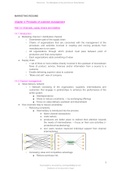
● How channels help to reduce uncertainty
○ Reducing complexity
■ Intermediary is introduced into the process
● fewer channel transactions
● costs reduce
● producers are better place to redirect their attention towards
the needs of intermediaries → focus on their core activities (=
production/manufacturing)
● end users receive improved individual support from channel
intermediaries
○ Increasing value and competitive advantage
■ Reduce purchase risk
1
Downloaded by: bruensterling |
Distribution of this document is illegal
, Stuvia.com - The Marketplace to Buy and Sell your Study Material
■ Intermediaries have the skills and core competencies necessary to
meet end users requirements
○ Routinization
■ Performance risk can be reduced by improving transaction efficiency
■ Standardizing or routinizing the transaction process
→ reduce costs
○ Specialization
■ Intermediaries can develop a service with real value to other channel
members or end users
■ Producers prefer to produce large quantities of a small rang of goods,
but end users only want a limited quantity of a wide variety of goods
■ Intermediaries provide a solution by bringing and sorting out all the
goods produced by different companies in the category → represent
these goods in quantities and formats that enable to buy quantities
they wish and as frequently as they prefer ⇒ sorting and smoothing
○ Disadvantages of using intermediaries
■ Lack of product control
■ Unable to influence in terms of in-store merchandising, placement and
pricing
■ Susceptible to competitor inducements
14.3 Types of intermediary
● Agent or broker
○ Intermediary between seller of an offering and buyers, bringing them together
without taking ownership of the offering
○ Legal authority to act on behalf and make money through commissions
● Merchant
○ Undertakes same actions as agent
○ Takes ownership of a product
● Distributors or dealers
○ Distribute the product
○ Offer value through services associated with selling inventory, credit…
● Franchisee
○ Holds contract to supply and market an offering to requirements or blueprint
of franchisor (owner of the original offering)
● Wholesale
○ Stocks goods before next level of distribution
○ Takes legal title and physical possession
○ Do not deal with consumer, but with other intermediaries
● Retailer
○ Sell directly to consumers and may purchase from manufacturers or deal with
wholesalers
○ Dependent on purchasing power and the volume purchased
● Infomediairs
○ Internet-based organizations
○ Designed to provide information to channel members, including end users
14.4 Managing marketing Channels
2
Downloaded by: bruensterling |
Distribution of this document is illegal
, Stuvia.com - The Marketplace to Buy and Sell your Study Material
● Channel design
○ Most effective way of getting the offering to the customer?
○ Three key decisions
■ Distribution intensity = level of the purchase convenience required by
the different consumer segments
■ Channel configuration = number and type of intermediaries necessary
to deliver products to the optimum number of sales
■ Multichannel decision = number of different types of channel to be
used
○ Key considerations
■ Economics requires: maximizing return on investment
■ Coverage: maximizing the offerings availability in the market
■ Control: achieving the optimum distribution costs without losing
decision-making authority
○ Distribution channel strategy
■ Several key decisions need to be made to serve customers and to
establish appropriate relationships
■ Selecting how the channel will be structured
● Needs of intermediaries → type of market coverage + number
and type of intermediaries + managing relationships between
members and the channel
● Channel structure
○ Direct channel structure = selling directly to end users with little involvement
from other organizations
■ Producer maintains control over its product and profitability
■ Efficiency can be improved
● By processing orders and distributing the offering electronically
directly to customers
● By supporting physical distribution of the product offering
directly to customers
○ Indirect channel structure = use of intermediaries
■ Concentrate on the skills and processes necessary to make offering
and use one or more intermediaries for distribution
○ Multichannel structure = Hybrid marketing system
■ One organization using two or more marketing channels to reach one
or more customer segments
■ Increased reach: reach wider target audience
■ Producer control: greater control over prices, communications and
reach customers directly
3
Downloaded by: bruensterling |
Distribution of this document is illegal
MARKETING RESUME
Chapter 4: Principles of customer management
Part 14: Channels, supply chains and retailing
14.1 Introduction
● Marketing channel = distribution channel
○ Downstream part of the supply chain
○ Chains of organisations that are concerned with the management of the
processes and activities involved in creating and moving products from
manufacturers to en users
○ All organizations through which product must pass between point of
production and final consumption
○ Each organizations adds something of value
● Supply chain
○ = set of three or more entities directly involved in the upstream of downstream
flows of product, service, finances and/or information from a source to a
customer
○ Enable delivering superior value to customer
○ “Make and sell” view of company
14.2 Channel management
● Value delivery network
○ = Network consisting of the organization, suppliers, intermediaries and
customers that engage in partnerships to enhance the performance of the
entire system
■ Interdependence
■ Share or reduce uncertainty → by exchanging offerings
■ Focus on value delivery upstream and downstream
● How channels help to reduce uncertainty
○ Reducing complexity
■ Intermediary is introduced into the process
● fewer channel transactions
● costs reduce
● producers are better place to redirect their attention towards
the needs of intermediaries → focus on their core activities (=
production/manufacturing)
● end users receive improved individual support from channel
intermediaries
○ Increasing value and competitive advantage
■ Reduce purchase risk
1
Downloaded by: bruensterling |
Distribution of this document is illegal
, Stuvia.com - The Marketplace to Buy and Sell your Study Material
■ Intermediaries have the skills and core competencies necessary to
meet end users requirements
○ Routinization
■ Performance risk can be reduced by improving transaction efficiency
■ Standardizing or routinizing the transaction process
→ reduce costs
○ Specialization
■ Intermediaries can develop a service with real value to other channel
members or end users
■ Producers prefer to produce large quantities of a small rang of goods,
but end users only want a limited quantity of a wide variety of goods
■ Intermediaries provide a solution by bringing and sorting out all the
goods produced by different companies in the category → represent
these goods in quantities and formats that enable to buy quantities
they wish and as frequently as they prefer ⇒ sorting and smoothing
○ Disadvantages of using intermediaries
■ Lack of product control
■ Unable to influence in terms of in-store merchandising, placement and
pricing
■ Susceptible to competitor inducements
14.3 Types of intermediary
● Agent or broker
○ Intermediary between seller of an offering and buyers, bringing them together
without taking ownership of the offering
○ Legal authority to act on behalf and make money through commissions
● Merchant
○ Undertakes same actions as agent
○ Takes ownership of a product
● Distributors or dealers
○ Distribute the product
○ Offer value through services associated with selling inventory, credit…
● Franchisee
○ Holds contract to supply and market an offering to requirements or blueprint
of franchisor (owner of the original offering)
● Wholesale
○ Stocks goods before next level of distribution
○ Takes legal title and physical possession
○ Do not deal with consumer, but with other intermediaries
● Retailer
○ Sell directly to consumers and may purchase from manufacturers or deal with
wholesalers
○ Dependent on purchasing power and the volume purchased
● Infomediairs
○ Internet-based organizations
○ Designed to provide information to channel members, including end users
14.4 Managing marketing Channels
2
Downloaded by: bruensterling |
Distribution of this document is illegal
, Stuvia.com - The Marketplace to Buy and Sell your Study Material
● Channel design
○ Most effective way of getting the offering to the customer?
○ Three key decisions
■ Distribution intensity = level of the purchase convenience required by
the different consumer segments
■ Channel configuration = number and type of intermediaries necessary
to deliver products to the optimum number of sales
■ Multichannel decision = number of different types of channel to be
used
○ Key considerations
■ Economics requires: maximizing return on investment
■ Coverage: maximizing the offerings availability in the market
■ Control: achieving the optimum distribution costs without losing
decision-making authority
○ Distribution channel strategy
■ Several key decisions need to be made to serve customers and to
establish appropriate relationships
■ Selecting how the channel will be structured
● Needs of intermediaries → type of market coverage + number
and type of intermediaries + managing relationships between
members and the channel
● Channel structure
○ Direct channel structure = selling directly to end users with little involvement
from other organizations
■ Producer maintains control over its product and profitability
■ Efficiency can be improved
● By processing orders and distributing the offering electronically
directly to customers
● By supporting physical distribution of the product offering
directly to customers
○ Indirect channel structure = use of intermediaries
■ Concentrate on the skills and processes necessary to make offering
and use one or more intermediaries for distribution
○ Multichannel structure = Hybrid marketing system
■ One organization using two or more marketing channels to reach one
or more customer segments
■ Increased reach: reach wider target audience
■ Producer control: greater control over prices, communications and
reach customers directly
3
Downloaded by: bruensterling |
Distribution of this document is illegal