Important Physical Education Terms and definitions
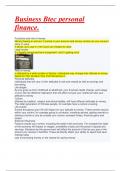
physical education The sequential educational program that teaches students to: - Understand and participate in regular physical activity that assists in development of physical fitness throughout their lifetime. - Understand and improve their motor skills. - Enjoy using skills and knowledge to establish a healthy lifestyle. - Understand how the body works. physical activity Bodily movement that is produced by the contraction of skeletal muscle and that substantially increases energy expenditure, including exercise, sport, dance, and other movement forms. physical fitness A positive state of well-being with a low risk or premature health problems and with the energy to participate in a variety of physical activities. It is influenced by regular, vigorous physical activity, genetic makeup, and nutritional adequacy. Academic Learning Time (ALT) A unit of time during which students are engaged in learning content at an appropriate level of difficulty and in such a way that they have a chance to be successful. Adapted Physical Education (APE) A physical education program designed to meet the unique needs of an individual with a disability who is unable to fully participate in the general physical education program. aerobic activity Exercise that can be performed for a long duration because the energy required can be provided by the burning of fuel, which normally occurs in muscle cells in the presence of oxygen. Aerobic activity my help control body weight, reduce the percentage of body fat, improve the circulatory function and respiratory functions, and reduce blood pressure. Examples include dance, cycling, jogging, walking and kickboxing. anaerobic activity Exercise of short duration that is performed at a more strenuous level, so increased respiration and heart rate cannot provide sufficient oxygen to the muscle cells. Examples of anaerobic activity include sprinting, weight training, gymnastics, and football. body composition The proportion of fat-free mass (e.g., muscle, bone, organs, and tissues) to fat mass in the body. Body Mass Index (BMI) A formula used to assess body fat based on a ratio between height and weight. components of health-related fitness Muscular strength, muscular endurance, aerobic capacity, flexibility, and body composition. skill-related physical fitness Those components of physical fitness that relate to an enhanced performance in sports: agility, balance, coordination, power, speed, and reaction time. cardiovascular endurance A component of health-related fitness that describes the ability of the heart, blood vessels, and respiratory system to supply oxygen and nutrients to the muscles during exercise. content standards What students should know and be able to do at the end of every grade level. Content standards represent the academic content of the discipline of kinesiology. critical elements/critical features Those elements of performing a skill deemed necessary for its correct execution. health Optimal well-being that contributes to the quality of life. It is more than freedom from disease and illness. Optimal health includes high-level mental, social, emotional, spiritual, and physical wellness within the limits of one's heredity and personal abilities. locomotor skills Basic motor skills involving a change of position of the feet and/or a change of direction of the body. Locomotor skills include walking, running, hopping, skipping, jumping, leaping, sliding, and galloping. manipulative movements Basic motor skills involving handling an object. Examples include throwing, catching, kicking, rolling, dribbling, trapping, striking, and volleying. motor skills A skill that requires voluntary body and/or limb movement to achieve its goal. A skill where the primary determinant of success is the movement component itself. Physical activity directed toward a specific function or goal. nonlocomotor movements Movement of the body performed from a relatively stable base of support. Examples include bending, stretching, twisting, turing, leaning, swaying, and swinging. open skills Motor skills that are performed in a changing environment. closed skills Motor skills that are performed in an environment that is stable and predictable.
École, étude et sujet
- Établissement
- Physical Education
- Cours
- Physical Education
Infos sur le Document
- Publié le
- 3 septembre 2023
- Nombre de pages
- 3
- Écrit en
- 2023/2024
- Type
- Examen
- Contient
- Questions et réponses
Sujets
-
important physical education terms and definitions

Document également disponible en groupe