⚪
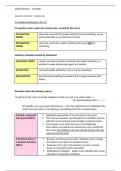
General properties of proteins
Introducing proteins and amino acids:
Proteins are organic molecules with many important functions.
Structural roles- e.g. muscles- form the structure of tendons
Metabolic roles- e.g. enzymes catalyse reactions
Transport roles- e.g haemoglobin transports oxygen
Made of carbon, hydrogen and oxygen like carbohydrates- but also contain
other elements like nitrogen and sometimes sulphur and phosphorus.
Amino Acids:
The building blocks used to make proteins- monomers.
Polymer of amino acids= protein.
All amino acids have the same basic strucure:
Central carbon (C) atom
General properties of proteins 1
, Bonded to a carboxyl group (-COOH)
An amino (amine) group (-NH2)
A hydrogen group (-H)
And an R group (-R)
Each amino acid (20 different types) has a different R group- everything else is
the same.
💡 Amino acids are the monomer units to make proteins. All amino acids
have the same basic strucutre but with different R groups.
R groups can vary in their:
Size- e.g glycine and lysine (don’t have to learn)
Polarity- polar molecules have an area with a positive charge and an area
with a negative charge.- e.g. Alanine and cysteine.
General properties of proteins 2
General properties of proteins
Introducing proteins and amino acids:
Proteins are organic molecules with many important functions.
Structural roles- e.g. muscles- form the structure of tendons
Metabolic roles- e.g. enzymes catalyse reactions
Transport roles- e.g haemoglobin transports oxygen
Made of carbon, hydrogen and oxygen like carbohydrates- but also contain
other elements like nitrogen and sometimes sulphur and phosphorus.
Amino Acids:
The building blocks used to make proteins- monomers.
Polymer of amino acids= protein.
All amino acids have the same basic strucure:
Central carbon (C) atom
General properties of proteins 1
, Bonded to a carboxyl group (-COOH)
An amino (amine) group (-NH2)
A hydrogen group (-H)
And an R group (-R)
Each amino acid (20 different types) has a different R group- everything else is
the same.
💡 Amino acids are the monomer units to make proteins. All amino acids
have the same basic strucutre but with different R groups.
R groups can vary in their:
Size- e.g glycine and lysine (don’t have to learn)
Polarity- polar molecules have an area with a positive charge and an area
with a negative charge.- e.g. Alanine and cysteine.
General properties of proteins 2