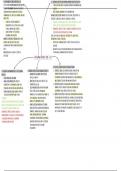
5. Development of Nazi party 1923-29 1. National constituent aembly, Weimar constitution, TofV
-
Hitler joined German workers party in 1919, • ‘stab in the back myth’: November criminals undermined war
25 point prograe drew up with Drexler sue
changing name to nsdap and to destroy • Ebert Groener agrment: 10th November 1918
counism, tofv, unite a germans, and one Weimar constitution January 1919: Reichstag, reichstrat, p.r,
party state. president, chanceor, article 48 and bi of rights.
• sa and created, Beobatcher • Strengths: smaer parties got a voice, president sti had
(newspaper), nstl, Hitler youth, union charge, article 48 gave emergency decr means.
of Nazi lawyers and students. • Weaknees: article 48 t I h power to president, plr led to
• Gained suort tof Streicher, coalitions, aociated with lo at WwI.
Hugenburg and Thyen Tofv: 28th June 1919. War guilt, military cuts, land loes,
bamberg conference February 1926: Fuher reparations, League of Nations.
prinzip and Gauleiter structure, • Diktat view: Germany forced to aept tofv as aies held
outmanoeuvred Drexler and became party blockade
head. • Balanced view: could have bn harsher, not as harsh as Brest-
May 1928: won 2.6% with 32 seats in litsvok which Germany imposed on Ruia.
Reichstag
The Weimar Republic 1919 - 29
2. Political threats from left and right wing
↓
-
4. Strengths and weaknees of the economy 3. Reasons for political instability 1919-23 1. Sparticist 1918: held demonstrations, formed kpd in
1924-29: • weaknees in Weimar constitution: January 1919 where they held a general strike of
• renetemark and reichbank article 48 and p.r government buildings and newspapers, led by Luxembourg
• Dawes plan January 1924: reduced • Anger at tofv: war guilt (article 231), and liebknecht crushed by army and Freikorps
reparations to 50m marks a year then reparations (£6.6B) 2. Ka putsch 1920: led by Wolfgang Ka and old army
125m and gave 800 miion loan from USA. • 1923 hyperinflation: printed more bank members. Held a general strike and overthrew spd
• Young plan June 1929: payments reduced notes to kp up with reparation government, only stayed in oice for 3 days.
to £2b given 59 more years to pay payments led to hyperinflation. Mark 1% 3. Munich putsch 1923: led by Hitler, Von Kahr and Von Loow.
strengths: of pre war value. Increased prices: 8th nov marched into br ha in Munich, declared national
Increased foreign investment, rise in German bread cost 219B marks in 1923 revolution. 9th Nov marched into Munich but were met by
exports, hourly wages rose by 10%, production • Franco-Belgium invasion of the Ruhr army who put down threat and kied 14 Nazis. Hitler
levels were the same a pre war levels. 1923: requested holiday from reparation imprisoned for 9 months in Landsberg. Von Loow let o
Weaknees: eatic economic growth, payments, invaded Ruhr and oupied due to judiciary bias.
unemployment sti high at 1.3m, relied heavily mines and raw materials. Germany
of American investment, government government ordered paive resistance,
continuay ran into debt. worsened inflation as had to continue
to pay wages without economic
development.
-
Hitler joined German workers party in 1919, • ‘stab in the back myth’: November criminals undermined war
25 point prograe drew up with Drexler sue
changing name to nsdap and to destroy • Ebert Groener agrment: 10th November 1918
counism, tofv, unite a germans, and one Weimar constitution January 1919: Reichstag, reichstrat, p.r,
party state. president, chanceor, article 48 and bi of rights.
• sa and created, Beobatcher • Strengths: smaer parties got a voice, president sti had
(newspaper), nstl, Hitler youth, union charge, article 48 gave emergency decr means.
of Nazi lawyers and students. • Weaknees: article 48 t I h power to president, plr led to
• Gained suort tof Streicher, coalitions, aociated with lo at WwI.
Hugenburg and Thyen Tofv: 28th June 1919. War guilt, military cuts, land loes,
bamberg conference February 1926: Fuher reparations, League of Nations.
prinzip and Gauleiter structure, • Diktat view: Germany forced to aept tofv as aies held
outmanoeuvred Drexler and became party blockade
head. • Balanced view: could have bn harsher, not as harsh as Brest-
May 1928: won 2.6% with 32 seats in litsvok which Germany imposed on Ruia.
Reichstag
The Weimar Republic 1919 - 29
2. Political threats from left and right wing
↓
-
4. Strengths and weaknees of the economy 3. Reasons for political instability 1919-23 1. Sparticist 1918: held demonstrations, formed kpd in
1924-29: • weaknees in Weimar constitution: January 1919 where they held a general strike of
• renetemark and reichbank article 48 and p.r government buildings and newspapers, led by Luxembourg
• Dawes plan January 1924: reduced • Anger at tofv: war guilt (article 231), and liebknecht crushed by army and Freikorps
reparations to 50m marks a year then reparations (£6.6B) 2. Ka putsch 1920: led by Wolfgang Ka and old army
125m and gave 800 miion loan from USA. • 1923 hyperinflation: printed more bank members. Held a general strike and overthrew spd
• Young plan June 1929: payments reduced notes to kp up with reparation government, only stayed in oice for 3 days.
to £2b given 59 more years to pay payments led to hyperinflation. Mark 1% 3. Munich putsch 1923: led by Hitler, Von Kahr and Von Loow.
strengths: of pre war value. Increased prices: 8th nov marched into br ha in Munich, declared national
Increased foreign investment, rise in German bread cost 219B marks in 1923 revolution. 9th Nov marched into Munich but were met by
exports, hourly wages rose by 10%, production • Franco-Belgium invasion of the Ruhr army who put down threat and kied 14 Nazis. Hitler
levels were the same a pre war levels. 1923: requested holiday from reparation imprisoned for 9 months in Landsberg. Von Loow let o
Weaknees: eatic economic growth, payments, invaded Ruhr and oupied due to judiciary bias.
unemployment sti high at 1.3m, relied heavily mines and raw materials. Germany
of American investment, government government ordered paive resistance,
continuay ran into debt. worsened inflation as had to continue
to pay wages without economic
development.