The single dash —
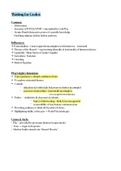
Create a dramatic pause introducing
- an unexpected twist
- an explanation/ example
- a humorous statement
- a descriptive detail
Double dashes, double commas, brackets - - ,, ()
- Create parenthesis
- conveying extra information
The hyphen -
- Separates a word at a syllable when the full word can’t fit on the previous line
- separate vowels for pronunciation
- creates compound adjectives and nouns
The colon :
- Introduces a list
- direct speech
- Explanation
The semi colon ;
- Use to separate items on the list
- leak/separate related ideas
- introduce an explanation.
Double Inverted commas “”
- Indicate direct speech
Ellipsis dots …
- Indicates words have been left out
- thought not completed
- creates mood of suspense/ mystery
Comma
- Short pause
- separate items on the list
- indicate a change of thought
Apostrophe ‘
Indicates singular or plural POSSESSION
Example: the book of the girl — the girl’s book (singular)
, Books of the girls —the girls’ books (plural)
Reason: To indicate animation causing a CONTRACTION
ITS/IT’S & the apostrophe
It’s- it is
Rules of apostrophe:
1. If owner is singular, just add ‘s
Example: the bag of the boy — the boy’s bag
2. If owner is plural and ends with s already, just add ‘ after the word
Example: the bags of the boys — the boys’ bags
3. If owner is plural and doesn’t end with ‘s’, simply add ‘s
Example: the clothes of the women — the women’s clothes
RULE: apply for men & children
4. If word ends s, add ‘s
Example: the passengers of the bus—the bus’s passengers
5. If biblical name ends in s, simply add ‘
Example: the strength of Hercules — Hercules’ strength
Title
- Underline titles for everything besides poems and short stories
- Use ‘’ for poems and short stories.
Noun - naming word
Proper noun - name of someone/ something
Common noun - name objects
Collective noun - a name for a group of nouns
Abstracts noun - a name for a emotion
Pronoun - replaces noun
Adjective - describing noun
Adverb - describes verb
Verb - describing action (doing word)
Conjunction - joins two words or sentences
Preposition - comes before noun or pronoun (position of pronoun or noun)
Create a dramatic pause introducing
- an unexpected twist
- an explanation/ example
- a humorous statement
- a descriptive detail
Double dashes, double commas, brackets - - ,, ()
- Create parenthesis
- conveying extra information
The hyphen -
- Separates a word at a syllable when the full word can’t fit on the previous line
- separate vowels for pronunciation
- creates compound adjectives and nouns
The colon :
- Introduces a list
- direct speech
- Explanation
The semi colon ;
- Use to separate items on the list
- leak/separate related ideas
- introduce an explanation.
Double Inverted commas “”
- Indicate direct speech
Ellipsis dots …
- Indicates words have been left out
- thought not completed
- creates mood of suspense/ mystery
Comma
- Short pause
- separate items on the list
- indicate a change of thought
Apostrophe ‘
Indicates singular or plural POSSESSION
Example: the book of the girl — the girl’s book (singular)
, Books of the girls —the girls’ books (plural)
Reason: To indicate animation causing a CONTRACTION
ITS/IT’S & the apostrophe
It’s- it is
Rules of apostrophe:
1. If owner is singular, just add ‘s
Example: the bag of the boy — the boy’s bag
2. If owner is plural and ends with s already, just add ‘ after the word
Example: the bags of the boys — the boys’ bags
3. If owner is plural and doesn’t end with ‘s’, simply add ‘s
Example: the clothes of the women — the women’s clothes
RULE: apply for men & children
4. If word ends s, add ‘s
Example: the passengers of the bus—the bus’s passengers
5. If biblical name ends in s, simply add ‘
Example: the strength of Hercules — Hercules’ strength
Title
- Underline titles for everything besides poems and short stories
- Use ‘’ for poems and short stories.
Noun - naming word
Proper noun - name of someone/ something
Common noun - name objects
Collective noun - a name for a group of nouns
Abstracts noun - a name for a emotion
Pronoun - replaces noun
Adjective - describing noun
Adverb - describes verb
Verb - describing action (doing word)
Conjunction - joins two words or sentences
Preposition - comes before noun or pronoun (position of pronoun or noun)