CA REHS 2023 Exam - Bacteria
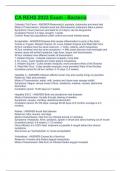
Colorado Tick Fever - ANSWER-Reservoir(s): squirrels, chipmunks and wood rats Mode of Transmission: Infected wood tick (Dermacentor andersoni) bites a person Symptoms: Fever (reoccurs and lasts for 2-3 days); can be dengue-like Incubation Period: 4-5 days (roughly 1 week) Control: Keep tick populations under control and avoid infested areas Encephalitis - ANSWER-Disease that causes inflammation to parts of the brain Comes in 4 types: Western Equine, St. Louis, Eastern Equine and West Nile Virus All four varieties have the same reservoir -- birds, rodents, adult mosquitoes All four varieties have the same symptoms -- Mild cases become viral meningitis and severe cases will exhibit headache, high fever, stupor and disorientation All four varieties have different modes of transmission: 1. Eastern Equine - Culiseta melanura mosquito; more fatal 2. St. Louis - Culex tarsalis and Culex pipens mosquitoes 3. Western Equine - Culex tarsalis mosquito; more prevalent West of the Rockies 4. West Nile Virus - Culex tarsalis mosquito; more prevalent West of the Rockies Incubation period for all four varities: 5-15 days (1-2 weeks) Hepatitis A - ANSWER-Infection afflicts human liver and usually brings on jaundice. Reservoir: Man and primates Mode of Transmission: water, milk, oysters and clams near sewage outfall Symptoms: fatigue, abrupt onset of fever, headache, malaise, nausea, abdominal discomfort. Incubation period: 15-50 days (2-7 weeks) Hepatitis B & C - ANSWER-Both are bloodborne viral diseases Mode of transmission: Usually through sharing of needles Symptoms: nausea, vomiting, abdominal discomfort Incubation period: 45-160 days; average 60-90 days (2-5 months; average is 2-3 months) Rabies - ANSWER-Acute fatal disease Reservoir: bats, skunks, and dogs Mode of transmission: bite from an infected animal or individual Symptoms: Headache, fever, paralysis, spasm in throat and saliva foaming out of mouth Incubation period: 3-6 weeks (1-1.5 months) Once inflicted, it is 100% fatal; treatment is possible if caught before first clinical symptoms. Also known as "hydrophobia" or "acute encephalitis" Yellowfever - ANSWER-Caused by a flavivirus Reservoir: Humans and Aedes aegypti mosquitoes Mode of transmission: Bite from an infected Aedes aegypti mosquito
Written for
- Institution
- CA REHS
- Course
- CA REHS
Document information
- Uploaded on
- September 29, 2023
- Number of pages
- 11
- Written in
- 2023/2024
- Type
- Exam (elaborations)
- Contains
- Questions & answers
Subjects
-
ca rehs
-
ca rehs 2023 exam bacteria

Document also available in package deal