Written by students who passed Immediately available after payment Read online or as PDF Wrong document? Swap it for free 4,6 TrustPilot
logo-home
Exam (elaborations)

Natural family planning - ANS-abstinence coitus interrupts (withdrawal) calendar method basal body temperature

Rating
-
Sold
-
Pages
28
Grade
A+
Uploaded on
20-04-2024
Written in
2023/2024

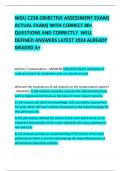
Natural family planning - ANS-abstinence coitus interrupts (withdrawal) calendar method basal body temperature Barrier methods - ANS-male condom- protects against STIs and involves the male in the birth control method diaphragm and spermicide- be properly fitted with a diaphragm by a provider; replace every 2 years and refit for a 20% weight fluctuation; can be inserted up to 6 hrs. before intercourse and must stay in place 6 hrs. after intercourse but for no more than 24 hrs.; reapply spermicide with each act of coitus Combined oral contraceptives adverse effects - ANS-chest pain, SOB, leg pain for possible clot, headache, eye problems from a stroke, and HTN, breakthrough bleeding, fluid retention and breast tenderness Combined oral contraceptives complications - ANS-women who have a history of thromboembolic disorders, stroke, heart attack, CAD, uncontrolled HTN, smoking Injectable progestins - ANS-is an intramuscular or subcutaneous injection given to a female client every 11-13 weeks Maintain an adequate intake of calcium and vitamin D Adverse effects- decrease in bone mineral density intrauterine device (IUD) - ANS-report to provider abdominal pain or pain with intercourse, abdominal or foul-smelling vaginal discharge, a change in string length Can increase risk of PID, uterine perforation, or ectopic pregnancy Transcervical sterilization - ANS-insertion of small flexible agents through the vagina and the cervix into the Fallopian tubes. This results in the development of scar tissue in the tubes Transcervical sterilization advantages/disadvantages/risks - ANS-quick procedure requires no general anesthesia not intended for use in the client who is postpartum, delay in effectiveness for 3 months. The client should use an alternative means of birth control until confirmation of blocked Fallopian tube occurs perforation can occur; increased risk of ectopic pregnancy if pregnancy occurs Female sterilization - ANS-procedure of severance or burning or blocking the Fallopian tubes to prevent fertilization Carries a risk of complications, infection, hemorrhage, or trauma Male sterilization (vasectomy) - ANS-cutting of the vas deferens in the male as a form of permanent sterilization Use alternate forms of birth control for approximately 20 ejaculations or 1 week to several months to allow all of the sperm to clear the vas deferens. Follow up is important for sperm count Presumptive signs of pregnancy - ANS-amenorrhea, N/V, urinary frequency, breast changes, quickening, abdominal enlargement Probable signs of pregnancy - ANS-Hegar's sign- softening and compressibility of lower uterus Goodell's sign- softening of cervical tip Chadwick's sign- deepened violet-bluish color of cervix and vaginal mucosa Ballottement- rebound of unengaged fetus Braxton-Hicks contractions- false contractions that are painless, irregular, and relieved with walking Positive pregnancy test Positive signs of pregnancy - ANS-fetal heart sounds, visualization of the fetus, fetal movement palpated by an experienced examiner. Nagele's Rule - ANS-Take the first day of the client's last menstrual cycle, subtract 3 months, and then add 7 days and 1 year Measurement of fundal height - ANS-in centimeters from the symphysis pubis to the top of the uterine fundus (between 18 and 32 weeks of gestation) approximates the gestational age GTPAL system - ANS-G = gravidity (# of times pregnant) T = term (38-42 weeks) P = preterm birth (20-37 weeks) A = abortion ( 20 weeks) L = living children Supine hypotensive syndrome - ANS-dizziness, lightheadness, and pale, clammy skin. Encourage client to lie on the left side, in a semi-Fowler's position, or, if supine, with a wedge placed under one hip to alleviate pressure to the vena cava pregnancy skin changes - ANS-linea nigra- dark line of pigmentation from the umbilicus extending to the pubic area Striae gravidarum- stretch marks most notably found on the abdomen and thighs Prenatal laboratory tests - ANS-Blood type, Rh factor (Indirect Coombs test), CBC with diff, Hgb, Hct, Hgb electrophoresis, Rubella titer, hepatitis B screen, GBS, urinalysis with microscopic, 1 hour glucose tolerance, Pap test, vaginal/cervical culture, PPD, syphilis screening, HIV, TORCH screening, maternal serum alpha-fetoprotein (MSAFP) Common discomforts of pregnancy - ANS-N/V, urinary frequency, UTIs, heartburn, constipation, hemorrhoids, SOB, varicose veins and lower extremity edema, gingivitis, nasal stuffiness, and epistaxis (nosebleed) Weight gain during pregnancy - ANS-25-35 lbs. Client should gain 1-2 kg during the first trimester and approximately 0.4 kg per week for the last two trimesters. Underweight clients are advised to gain 29-40 lbs. Overweight clients, 15-25 lbs Increase calories - ANS-340 calories/day is recommended during the second trimester. 452 calories/day is recommended during the third trimester Breast feeding clients should add 450-500 calories/day protein intake - ANS-increasing is essential to basic growth Folic Acid - ANS-is crucial for neurological development and the prevention of fetal neural tube defects. Take 600 mcg of folic acid Iron supplements - ANS-is best absorbed between meals and when given with a source of vitamin C Calcium - ANS-is important to a developing fetus, is involved in bone and teeth formation. Recommendation is 1,000 mg for pregnant and nonpregnant 19-50 years of age fluid - ANS-8-10 (2.3 L) glasses of fluid is recommended limit caffeine - ANS-a daily intake of no more than 200 mg caffeine PKU diet - ANS-low protein diet ultrasound (abdominal, transvaginal, doppler) - ANS-allows for early diagnosis of complications, permits early interventions, and thereby decreases neonatal and maternal morbidity, and mortality Considerations- advise client to drink 1 quart of water prior to the ultrasound to fill the bladder if she's in her 1st trimester Biophysical profile - ANS-uses a real time ultrasound to visualize physical physiological characteristics of the fetus Variables: FHR, fetal breathing movements, gross body movements, fetal tone and qualitative amniotic fluid volume Score findings: 8-10 normal, low risk of chronic fetal asphyxia; 4-6 abnormal, suspect chronic fetal asphyxia nonstress test - ANS-evaluation of fetal well being during the third trimester, It is a noninvasive procedure that monitors response of the FHR to fetal movement The client is asked to push a button whenever she feels a fetal movement, which is then noted on the tracing The NST is interpreted as reactive if the FHR is a normal baseline rate with moderate variability, accelerates at least 15/min above baseline. Nonreactive NST is a test that does not demonstrate at least two qualifying accelerations in a 20-min window. If this is so, further assessment is needed (CST, BPP) is indicated nonstress test client presentation - ANS-decreased fetal movement, postmaturity, gestational diabetes mellitus, gestational hypertension Contraction Stress Test (CST) - ANS-Nipple-stimulated contraction test Interpretation: -CST (normal) indicated if within a 10-min period, with 3 uterine contractions, there are no late decelerations of the FHR. +CST (abnormal) persistent and consistent late decelerations with 50% or more of the contractions. Complications- potential for preterm labor amniocentesis - ANS-aspiration of amniotic fluid for analysis by insertion of a needle transabdominally into a client's uterus and amniotic sac under direct US guidance locating the placenta and determining the position of the fetus. It may be performed after 14 weeks of gestation Amniocentesis indications & complications - ANS-previous birth with chromosomal anomaly, a parent who is a carrier of a chromosomal anomaly, alpha- fetoprotein level for fetal abnormalities, lung maturity assessment amniotic fluid emboli, maternal or fetal hemorrhage, maternal or fetal infection, miscarriage or preterm labor, premature rupture of membranes, leakage of amniotic fluid amniocentesis pre & post procedure - ANS-assist in obtaining informed consent. Empty the bladder prior to the procedure to reduce its size administer Rho(D) immune globulin to the client if she is Rh negative (standard procedure for all clients who are Rh negative) fetal lung testa - ANS-tests for fetal maturity can be performed if gestation is less than 37 weeks, in the event of a rupture of membranes, for preterm labor, or for a complication indicating a cesarean birth dilation and curettage (D&C) - ANS-to dilate and scrape the uterine walls to remove uterine contents for inevitable and incomplete abortions Prostaglandin and oxytocin - ANS-to augment or induce uterine contractions and expel the products of conception ectopic pregnancy - ANS-abnormal implantation of a fertilized ovum outside of the uterine cavity, usually in the fallopian tube, which can result in tubal rupture causing fatal hemorrhage therapeutic procedures: methotrexate inhibits cell division and embryo enlargement, dissolving the pregnancy and salpingostomy ectopic pregnancy expected findings - ANS-unilateral stabbing pain and tenderness in the lower abdominal quadrant; scant, dark red, or brown vaginal spotting that occurs 6-8 weeks after last normal menses, referred shoulder pain due to blood in the peritoneal cavity irritating the diaphragm or phrenic nerve after tubal rupture Manifestations of hemorrhage and shock (pallor, tachycardia, hypotension) threatened abortion - ANS-possible mild cramps, spotting-moderate, no passed tissue, cervical opening closed Inevitable abortion - ANS-moderate cramps, mild to severe bleeding, no tissue passed, dilated with membranes or tissue bulging at cervix. incomplete abortion - ANS-Severe cramps, continuous bleeding, partial tissue passed or placenta, dilated with tissue in cervical canal or passage of tissue complete abortion - ANS-Mild cramps; minimal bleeding; complete expulsion of uterine contents; cervix is closed with no tissue in cervical canal Gestational Trophoblastic Disease (GTD) - ANS-Abnormal proliferation of trophoblastic tissue. The embryo fails to develop beyond the primitive state and these structures are associated with choriocarcinoma, which is a rapidly metastasizing malignancy GTD expected findings and therapeutic procedures - ANS-excessive vomiting due to elevated hCG levels, bleeding is often dark brown resembling prune juice suction curettage is done to aspirate and evacuate mole GTD nursing care - ANS-chemotherapeutic medications for manifestations of malignant cells indicating choriocarcinoma placenta previa - ANS-occurs when the placenta abnormally implants in the lower segment of the uterus near or over the cervical os instead of attaching to the fundus Complete or total: the cervical os is completely covered by the placental attachment Incomplete or partial: the cervical os is only partially covered Marginal or low-lying: the placenta is attached to the lower uterine segment but does not cover the cervical os placenta previa expected findings & diagnostic procedures - ANS-painless, bright red vaginal bleeding during the second or third trimester, decreased HCT and HGB transabdominal or transvaginal ultrasound for placement of the placenta placenta previa nursing care - ANS-refrain from performing vaginal exams, administer medications. Monitor IV fluids and blood products. Corticosteroids, such as betamethasone, promote fetal lung maturation if early delivery is anticipated (cesarean birth) Client education: maintain bed rest, do not insert anything vaginally abruptio placentae - ANS-premature separation of the placenta from the uterus, which can be partial or completed detachment. This separation occurs 20 weeks after gestation =, usually in the third trimester. It has a significant maternal and fetal morbidity and mortality and is a leading cause of maternal death abruptio placentae nursing care - ANS-administer medications. Moni-tor IV fluids and blood products. Administer oxygen 8-10 L/min via face mask. Administer corticosteriods HIV/AIDS - ANS-is a retrovirus that attacks and destruction of T lymphocytes. For clients who test positive for HIV procedures such as amniocentesis and episiotomy should be avoided. The use of fetal monitors, vacuum extraction, and forceps during labor should be avoided due to the risk of fetal bleeding HIV/AIDS Nursing Care - ANS-administer antiviral prophylaxis, triple drug antiretroviral, or highly active antiretroviral therapy. Review plan for scheduled cesarean birth at 38 weeks for maternal viral load of more than 1,000 copies/mL. Infant should be bathed after birth before remaining with mother. Administer zidovudine at 14 weeks of gestation, throughout pregnancy, and before onset of labor or cesarean birth. Administer zidovudine to the infant at delivery and 6 weeks following birth Instruct client not to breastfeed TORCH infections - ANS-toxoplasmosis, other infections (hepatitis), rubella virus, cytomegalovirus, and herpes simplex virus RUBELLA immunization is contraindicated in pregnant women because it is a live virus and rubella infection can develop TORCH infections risk factors - ANS-toxoplasmosis is caused by consumption of raw or undercooked meat or handling cat feces. Other infections include hepatitis A and B, syphilis, mumps. Rubella (German measles) is contracted through children. Cytomegalovirus transmitted through droplet infection. Herpes simple virus Group B streptococcus - ANS-bacterial infection that can be passed to a fetus during labor and delivery Expected findings: chorioamnionitis, infections of the urinary tract; vaginal and rectal cultures are performed at 35-37 weeks of gestation Chylamydia - ANS-azithromycin or amoxicillin Administer erythromycin eye ointment to all infants following delivery. Within 1-2 hours of birth Syphilis - ANS-primary: characterized by presence of chancres secondary: characterized by skin rashes, such as rash on the palms of hands and soles of feet tertiary: damage to internal organs Penicillin G IM in a single dose Human Papillomavirus (HPV) - ANS-most common viral STI; can cause genital warts and cancer Trichomoniasis - ANS-caused by a protozoan parasite if left untreated in women, it can cause PID, which can cause infertility. Clients who have trichomoniasis are more likely to have preterm delivery and babies with low birth weight (less than 5.5 lb) yellow-green, frothy vaginal discharge with foul odor, dyspareunia and itching, dysuria Administer metronidazole or tinidazole in a single dose Candidiasis - ANS-fungal infection thick, creamy, white, cottage cheese-like vaginal discharge. Vaginal and vulvar erythema and inflammation, white patches on vaginal wall Administer oral fluconazole, OTC treatments, such as clotrimazole Client education: avoid tight-fitting clothing, wear cotton lined underpants, limit wearing damp clothing, avoid douching, void before and after intercourse cervical insufficiency - ANS-cervix opens too early and expulsion of the products of conception occurs; increase in pelvic pressure or urge to push Findings: pink-stained vaginal discharge or bleeding, possible gush of fluid (rupture membranes), uterine contractions with the expulsion of the fetus Client teaching: place the client on activity restriction or bed rest; encourage hydration to promote a relaxed uterus; avoid INTERCOURSE Cervical insufficiency therapeutic procedures - ANS-prophylactic cervical cerclage: is the surgical reinforcement of the cervix with a suture to strengthen it and prevent premature cervical dilation. Occurs best if done at 12-14 weeks of gestation. Cerclage is removed at 37 weeks or when spontaneous labor occurs Hyperemesis gravidarum - ANS-excessive N/V that is prolonged past 12 weeks of gestation and results in 5% weight loss from prepregnancy weight, electrolyte imbalance, acetonuria, and ketosis Expected findings: dehydration with possible electrolyte imbalance, weight loss Lab test- + ketonuria, elevated urine specific gravity Hyperemesis nursing care - ANS-monitor I&O, monitor weight Administer IV lactated Ringer;s for dehydration. Give pyridoxine (vitamin B6) and other vitamin supplements as tolerated. Use antiemetic medications (odansetron, metoclopramide) cautiously for uncontrolled N/V iron deficiency anemia - ANS-inadequacy i maternal iron stores and consuming insufficient amounts of dietary iron Expected findings: fatigue and weakness, Pica, pallor, SOB Lab test: Hgb 11 mg/dl, Hct 33% Increase dietary intake of foods rich in iron (legumes,fruit, green leafy vegetables, meat) Medications: ferrous sulfate, take on empty stomach with orange juice to increase absorption Gestational Diabetes Mellitus (GDM) - ANS-is an impaired tolerance to glucose with the first onset or recognition during pregnancy. The ideal blood glucose level during pregnancy is 70-110 mg/dl Risk increase to spontaneous abortion, infections, hydramnios, ketoacidosis, glycosuria, hypoglycemia and hyperglycemia Medications: most oral hypoglycemic agents are contraindicated, but there us limited use of glyburide GDM expected findings and lab test - ANS-hypoglycemia: nervousness, headache, weakness, blurred vision hyperglycemia: polydipsia, polyuria, polyphagia, nausea and fruity breath, excessive weight gain during pregnancy Administer 1-hr glucose test at 24-28 weeks of gestation. Oral glucose tolerance test is done when 1-hr glucose test results are between 130-140 or greater gestational hypertension - ANS-vasospasm contributing to poor tissue perfusion is the underlying mechanism. Occurs after the 20th week or an elevated blood pressure at 140/90 mm Hg or greater recorded on two different occasions, at least 4 hrs apart. there is no proteinuria preeclampsia - ANS-the same as gestational hypertension with addition to proteinuria +1 Severe preeclampsia - ANS-consists of blood pressure that is 160/110 mm Hg or greater, proteinuria greater than 3+, oliguria, elevated serum creatinine greater than 1.1 mg/dL, cerebral or visual disturbances (headache and blurred vision), eclampsia - ANS-is severe preeclampsia manifestations with the onset of seizure activity or coma Hemolysis: anemia and jaundice EL: elevated liver enzymes; increased ALT and AST LP: low platelets gestational hypertension nursing care - ANS-anihypertensive medications: methyldopa, nifedipine, hydralazine, labetalol anticonvulsants: magnesium sulfate; monitor for magnesium sulfate toxicity: absence of patellar deep tendon reflex, urine output30 mL/hr, respiration 12/min, decreased LOC, cardiac dysrhythmias; administer calcium gluconate or calcium chloride for magnesium toxicity gestational hypertension client teaching - ANS-maintain bed rest and encourage side-lying position, avoid foods high in sodium, maintain a dark, quiet environment to avoid stimuli that can precipitate a seizure preterm labor - ANS-Uterine contractions and cervical changes occurring between 20 and 37 weeks gestation Risk factors: infections of the urinary tract , vagina, or chorioamnionitis, multi-fetal pregnancy, smoking, placenta previa or abruptio placentae, preterm premature rupture of membranes preterm labor expected findings and diagnostic procedure - ANS-uterine contractions, vaginal discharge, change in cervical dilation, regular uterine contractions with a frequency of every 10 min or greater, lasting 1 hour or longer obtain swab of vaginal secretions for fetal fibronectin between 24-34 weeks of gestation preterm labor medications - ANS-nifedipine: a CCB used to suppress contractions magnesium sulfate: tocolytic used to suppress contractions indomethacin: a NSAID that suppresses preterm labor by blocking prostaglandins betamethasone: a glucocorticoid that is administered IM in 2 injections 24 hours apart and requires 24 hours to be effective. It enhances fetal lung maturity and surfactant production in fetuses between 24-34 weeks; administer medication deep into the gluteal muscle 24 and 48 hours prior to birth of a preterm neonate Premature Rupture of Membranes (PROM) - ANS-is the spontaneous rupture of the amniotic membrane 1 hr or more prior to the onset of true labor risk factors: increased risk of infection if there is a lag period over the 24-hr period from when the membranes rupture to delivery Monitor FHR and uterine contractions. Administer betamethasone PROM expected findings and lab test - ANS-client reports a gush or leakage of clear fluid from the vagina a positive nitrazine paper test (blue, pH 6.5-7.5) or + ferning test physiologic changes preceding labor - ANS-backache, weight loss, lightening (fetal head descends into pelvis), contractions, increased vaginal discharge or bloody show, energy burst, gastrointestinal changes, rupture of membranes and evaluation of amniotic fluid Latent phase of labor:(1st stage) - ANS-0-3 cm, onset of labor, irregular, mild to moderate contractions, frequency 5-30 min, duration 30-45 seconds, talkative and eager Active stage of labor (1st stage) - ANS-4-7 cm, contractions more regular, moderate to strong, frequency 3-5 minutes, duration 40-70 seconds, feelings of helplessness, anxiety and restlessness increases as contractions become stronger transition stage of labor (1st stage) - ANS-8-10 cm, contractions strong to very strong, frequency 2-3 minutes, duration 45-90 seconds, urge to push, increased rectal pressure and feelings of needing to have a bowel movement second stage of labor - ANS-full dilation, progresses to intense contractions every 1-2 min, BIRTH third stage of labor - ANS-Delivery of neonate to delivery of placenta fourth stage of labor - ANS-Delivery of placenta Maternal stabilization of vital signs Passenger - ANS-consists of the fetus and the placenta presentation: the part of the fetus that is entering the pelvic inlet first and leads through the birth canal during labor lie: relationship of the maternal longitudinal axis to fetal longitudinal axis; transverse: shoulder is the presenting part; parallel or longitudinal: either cephalic or breech position Passenger (continued) - ANS-attitude: fetal flexion- chin flexed to chest; fetal extension- chin extended away from chest; fetal position-right or left, occiput, sacrum mentum (chin), or scapula, anterior, posterior or transverse station- 0 at the level of ischial spines, minus station superior to ischial spine, plus station inferior to ischial spines passageway - ANS-the birth canal composed of the bony pelvis, cervix, pelvic floor, vagina, and introitus (vaginal opening) powers - ANS-Uterine contractions cause effacement and dilation of the cervix position - ANS-gravity can aid in fetal descent in upright, sitting, kneeling, and squatting positions psychological response - ANS-maternal stress, tension, and anxiety can impair the progress of labor sensory and cutaneous stimulation - ANS-effleurage: light, gentle circular stroking of the client's abdomen with the fingertips in rhythm with breathing during contractions sacral counterpressure: consistent pressure is applied by the support person using the heel of the hand or fist against the client's sacral area to counteract pain in the lower back, application of heat or cold, hydrotherapy increases maternal endorphin levels, breathing techniques and imagery opioid analgesics & anesthesia for pain management - ANS-meperidine. Nalaxone should be readily available for opioid induced respiratory depression epidural block: eliminates all sensation from the level of the umbilicus to the thighs spinal block: eliminates all sensation from the level of the nipples to the feet Side effects: maternal hypotension and fetal bradycardia pain management nursing care - ANS-help position and steady the client into a sitting or side-lying modified Sims' position, monitor maternal blood pressure and pulse, monitor FHR patterns continuously, potential headache from leakage of cerebrospinal fluid at the puncture site induction of labor - ANS-oxytocin is used to initiate induction. Monitor FHR and contraction pattern every 15 min and with every change in dose. Discontinue if uterine hyperstimulation occurs Hyperstimulation s/s: frequency longer than every 2 min, duration longer than 90 sec, intensity in pressure greater than 90 mm Hg as shown by IUPC, uterine resting tone greater than 20 mm Hg Administer tocolytic terbutaline 0.25 mg amniotomy - ANS-Artificial rupture of amniotic membranes vacuum-assisted delivery - ANS-cuplike suction device applied to the fetal head associated risk: scalp lacerations, subdural hematoma of the neonate indications: maternal exhaustion and ineffective pushing efforts Forceps-assisted birth - ANS-two-curved spoon-like blades to assist in delivery. Traction is applied during contraction indications: fetal distress, abnormal presentation or a breech position complications: lacerations of the vagina and perineum, facial nerve palsy of the neonate, facial bruising of the neonate prolapsed umbilical cord - ANS-umbilical cord protrudes through the cervix nursing care: call for assistance immediately, insert two fingers into the vagina, and apply finger pressure on either side of the cord to elevate fetal off the cord, reposition the client in a knee-chest, Trendelenburg , or a side lying position, apply a warm, sterile, saline-soaked towel to the visible cord to prevent drying and to maintain blood flow Meconium stained amniotic fluid - ANS-stained fluid accompanied by variable or late deceleration in FHR notify neonatal resuscitation team to be present at birth dystocia - ANS-difficult labor risk factors: uterine abnormality, fetal presentation, birth canal too small for baby S/S: insufficient progress of dilation and effacement, descend of the baby dystocia nursing care - ANS-encourage position change frequently, ambulate, assist with amniotomy if indicated, administer oxytocin as prescribed. Shoulder dystocia apply subrapubic pressure to help assist with delivery of the baby, assist mom to hand-knee position. Prepare for forcep or vacuum assist birth if needed or cesarean section continuous electronic fetal monitoring - ANS-recording of FHR pattern; expected findings baseline fetal heart rate is 110-160/min, moderate variability fetal bradycardia - ANS-FHR than 110/min for 10 min or more causes/complications: uteroplacental insufficiency, umbilical cor prolapse, maternal hypotension, anesthetic medications Nursing actions: discontinue oxytocin if being administered, assist client to side-lying position, administer oxygen at 10 L/min via nonrebreather face mask, notify provider fetal tachycardia - ANS-FHR than 160/min for 10 min or more Causes/complications: maternal infection, maternal use of cocaine or methamphetamines, maternal dehydration Nursing action: administer antipyretics, administer oxygen at 10 L/min, monitor IV fluid bolus Early deceleration of FHR - ANS-slowing of the FHR at the beginning of a contraction with the return of the FHR to baseline causes/complications: compression of the fetal head resulting from contraction Late deceleration of FHR - ANS-Slowing of FHR after contraction has started with return of FHR to baseline well after contraction has ended causes/complications: uteroplacental insufficiency Nursing action: place client in side-lying position, increase rate of IV maintenance, discontinue oxytocin if infused, administer oxygen at 8-10 L/min, NOTIFY the provider Variable deceleration of FHR - ANS-transitory, abrupt slowing of FHR less than 110/min causes/complications: umbilical cord compression Nursing action: place client in side-lying or knee-chest position, discontinue oxytocin if being infused, administer oxygen at 8-10 L/min, notify the provider continuous internal fetal monitoring - ANS-scalp electrode is performed by attaching a small spiral electrode to the presenting part of the fetus to monitor FHR Indications: average pressure is usually 50-85 mm Hg disadvantages: membranes must be ruptured, cervix must be dilated a minimum of 2-3 cm, presenting part must have descended enough Precipitous labor - ANS-lasts than 3 hours from the onset of contractions to when the baby is delivered Risk factors: hypertonic uterine contractions, oxytocin, and multiparus mom Complications (mom): lacerations, tissue trauma, uterine rupture, amniotic fluid embolism, postpartum hemorrhage (neonate) fetal hypoxia, intracranial hemorrhage uterine rupture - ANS-risk factors: trauma, over-distention of uterus, hyper-stimulation of uterus from oxytocin S/S: severe abdominal pain, described as ripping and tearing , fetal HR bradycardia, non-reassuring late or variable deceleration or decreased variability, hypovolemic shock Administer IV fluids and blood products as prescribed. Prepare for emergency C-section and possible hysterectomy amniotic fluid embolism - ANS-infiltration of amniotic fluid into maternal circulation that travel and obstruct pulmonary vasculature, leads to respiratory distress and circulatory collapse in mom. S/S: sudden chest pain, dyspnea, cyanosis, tachycardia, hypotension and bleeding Administer oxygen, IV fluids, and blood pressure as prescribed, assist with incubation and mechanical ventilation if indicated fundus - ANS-immediately after delivery, the fundus should be firm, midline with the umbilicus, and approximately at the level of the umbilicus. At 12 hrs. postpartum, the fundus can be palpated at 1 cm above the umbilicus. Every 24 hrs., the fundus should descend approximately 1-2 cm. It should be halfway between the symphysis pubis and the umbilicus by the 6th postpartum day. After 2 weeks, the uterus should lie within the true pelvis and should not be palpable Fundus - Data collection - ANS-nurse should assist with determining the fundal height, uterine placement, and uterine consistency at least every 8 hrs. after the recovery period has ended. Document the fundal height, location, and uterine consistency. Determine whether the fundus is midline in the pelvis or displaced laterally. If the fundus is boggy, lightly massage the fundus in a circular motion. Encourage emptying of bladder every 2-3 hrs. Lochia - ANS-lochia rubra: dark red to brown "period like", the flow lasts 1-3 days after delivery lochia serosa: pinkish brown, last approximately day 4-10 after delivery lochia alba: yellowish or white creamy, this discharge lasts from approximately day 11 up to 8 weeks after delivery Monitor for excessive blood loss: one pad saturated in 15 min or less Abnormal lochia findings - ANS-excessive spurting of bright red blood from the vagina possibly indicating a cervical or vaginal tear, numerous large clots, foul odor, which is suggestive of infection, persistent lochia rubra beyond day 3, which can indicate retained placental fragments patient-centered care for perineal tenderness, laceration, episiotomy - ANS-promote measures to help soften the client's stools, use a squeeze bottle filled with tap water warmed to 38 C (100.4 F) after each voiding to cleanse the perineal area, clean the perineal area from front to back, blot dry; do not wipe Apply ice packs to the perineum consistently during the first 24 hrs. to reduce edema, encourage sitz baths warmed to 40.6 C (105.1) or cooler for at least 20 min, apply topical anesthetic cream or spray, apply witch hazel compress breast - ANS-secretion of clear yellow fluid called colostrum, which occurs during pregnancy and 3-4 days immediately after birth. Milk is produced 72-96 hrs. after birth of the newborn Data collection: cracked nipples and indications of mastitis Inform the client that breastfeeding causes the release of oxytocin, which stimulates uterine contractions Cardiovascular system and hematologic status - ANS-blood loss during childbirth: average blood loss is 300-500 mL (10-15% of blood volume) in a uncomplicated vaginal delivery and 500-1000 mL (15-30% of blood volume) for a cesarean birth Data collection: inspect the legs for redness, swelling, and warmth which are additional indications of venous thrombosis Encourage early ambulation, coagulation factor and WBC count is increased for 2-3 weeks Immune system - ANS-A client who has a titer of less than 1:8 will receive MMR vaccination caution the client to avoid getting pregnant for 28 days following the immunization due to the potential risk of birth defects in the fetus; Hepatitis B and hepatitis B immune globulin is administered to newborns born to infected mothers within 12 hrs.; Rh negative mothers who birthed Rh positive neonates must receive IM Rho(D) within 72 hrs to suppress antibody formation; Varicella if the client has no immunity; TDAP if client has not received immunization pulmonary embolus - ANS-chest pain, dyspnea, tachypnea, hemoptysis, peripheral edema, hypotension, hypoxia place the client in a Semi-fowler's position, administer oxygen by mask. Thrombolytic therapy medication postpartum hemorrhage - ANS-Risk factors: uterine atony, precipitous delivery, magnesium sulfate therapy during pregnancy, lacerations and hematomas, inversion of uterus, retained placental fragments expected findings: blood clots larger than the size of a quarter, perineal pad saturated in 15 min or less, constant oozing of blood from vagina, tachycardia and hypotension, skin pale, cool, and clammy. Decrease in hemoglobin and hematocrit Postpartum hemorrhage nursing care - ANS-firmly massage uterus, maintain IV fluids with isotonic solutions (lactated Ringer's, 0.9% sodium chloride), assist with blood products, provide oxygen at 2-3 L/min via nasal cannula and elevate clients legs to 20-30 degrees to increase venous return Administer uterine stimulants oxytocin or misoprostol endometritis - ANS-risk factors: cesarean birth, prolonged uterine rupture of membranes, retained placental fragments, internal fetal/uterine pressure monitoring findings: pelvic pain, dark profuse lochia, lochia that is either malodorous or purulent endometritis nursing care - ANS-collect vaginal and blood cultures Assist with administration of IV antibiotics, administer analgesics Reinforce teaching with the client about hand hygiene Treatment- clindamycin, cephalosporins, penicillin and getamicin postpartum blues - ANS-no more than 10 days after delivery lack of appetite, feeling of inadequacies, crying easily for no apparent reason, insomnia postpartum depression - ANS-lack of appetite, persistent feelings of sadness, intense mood swings, rejection of the infant, severe anxiety and panic attack postpartum psychosis - ANS-confusion, paranoia, delusions, hallucinations. Behavioral thoughts of self-harm or harming the infant dependent role - ANS-taking in phase first 24-48 hrs., rely on others for assistance, need to review birth experience with others dependent-independent role - ANS-taking-hold phase begins on day 2-3, last days to several weeks, focus on baby care and improving caregiving competency interdependent role - ANS-letting-go phase focus on family as a unit, resumption of role lack of mother-newborn bonding - ANS-apathy when the newborn cries, disgust when the newborn voids, defecates, or spits up, expresses disappointment in newborn, does not talk about the newborn unique features maternal bonding nursing actions - ANS-skin-skin and face-face contact immediately after birth promote early initiation of breastfeeding and recognize newborn cues, provide frequent praise, support sibling adaption - ANS-regression in toileting and sleep habits aggression toward the newborn Increased attention-seeking behaviors and whining Nursing action: let sibling be among the first to see the newborn, provides a gift from the newborn to give the siblings, allow older siblings to provide care for the newborn, give preschool-aged siblings a doll to care for parenting styles - ANS-authoritarian: parent try to control the child's behaviors and attitudes through unquestioned rules and expectations permissive: parents exert little to no control over the child's behaviors, and consult the child when making decisions authoritative: parents direct the child's behavior by setting rules and explaining the reason for each rule setting physical assessment nursing considerations - ANS-keep medical out of sight, use age-applicable language, demonstrate what will happen using dolls, puppets, or paper drawings, allow the child to manipulate and handle equipment. Encourage the child to use equipment on others, examine, the child in a secure comfortable position temperature - ANS-At 2 hours of age, temperature is approximately 99 degrees. The temperature stabilizes at 98.6 by 4 hrs. of age heart rate - ANS-1-11 years of age 60-110 bpm head - ANS-fontanels should be flat. The posterior fontanel usually closes by 6-8 weeks of age, and the anterior fontanels usually closes between 12-18 months of age teeth - ANS-infants should have 6-8 teeth by 1 years old sucking and rooting reflexes - ANS--elicited by stroking an infant's cheek or the edge of an infant's mouth -the infant turns her head toward the side that is touched and starts to suck -birth to 4 months palmar grasp reflex - ANS-elicited by touching an infant's palm, near the fingers birth to 3 months Plantar Grasp Reflex - ANS--Elicited by touching the sole of the -The newborn responds by curling toes downward .-birth to 8 months Moro reflex - ANS-elicited by allowing the head and trunk of an infant in a semi sitting position to fall backward to an angle of at least 30 degrees Birth to 4 months startle reflex - ANS-Elicited by clapping hands or a loud noise Birth to 4 months Asymmetric Tonic Neck Reflex - ANS-elicited by turning an infant's head to ones side Birth to 3-4 months Babinski reflex - ANS-elicited by stroking the outer edge of the sole, across the ball of an infant's foot up toward the toes Birth-1 year Dancing/Stepping Reflex - ANS-elicited by holding an infant upright with his feet touching a hard, flat surface. The infant make steeping movements Birth-4 weeks motor skill development - ANS-1 month: demonstrates head lag; has a strong grasp reflex 2 months: lifts head off mattress when prone; holds hands in an open position 3 months: raise head and shoulders off mattress when prone, only slight head lag; no longer has grasp reflex, keeps hands loosely open 4 months: rolls from back to side; grasps objects with both hands 5 months: rolls from abdomen to back; use palmar grasp 6 months: rolls from back to abdomen; holds bottle 7 months: bears full weight on feet, sits, leaning forward on both hands; moves objects from hand to hand 8 months: sits unsupported; begins using pincer grasp 9 months: pulls to a standing position, creeps on hands and knees instead of crawling; has a crude pincer grasp, dominant hand preference evident 10 months: changes from prone to a sitting position; grasps rattle by its handle 11 months: cruises or walks by holding on to something, walks with both hands held; places objects into a container, neat pincer grasp 12 months: sits down from a standing position without assistance, walk with one hand held; tries to build a two block tower without success, can turn paged in a book Infants (2 days - 1 year) - ANS-Piaget: sensorimotor stage; object permanence learn that an object still exists when it is out of view Says 3-5 words by the age of 1 year, compered the word NO by 9-10 months and obeys single commands accompanied by gestures separation anxiety begins around 4-8 months and stranger fear becomes evident between 6-8 months Solitary play. Age appropriate toys are rattles, teething toys, nesting toys, playing pat-a-cake, playing with balls, playing with blocks Infants immunizations - ANS-Birth: Hepatitis B (Hep B) 2 months: DTap, RV, IPV, Hib, PCV, and Hep B 4 months: DTap, RV, IPV, Hib, PCV 6 months: DTap, RV, IVP (6-18 months), PCV, and Hep B (6-18 months); RV; Hib 6-12 moths : seasonal influenza vaccination infant nutritional needs - ANS-breastfeeding provides a completed diet for infants during the first 6 months, iron-fortified formula is an acceptable alternative to breast milk, alternative sources of fluids are not needed during the first 4 months of life, solids are introduced around 4-6 months of age, new foods should be introduced one at a time, over 5-7 day period Infant injury prevention - ANS-burns: set hot water thermostats at or less than 120 degrees drowning: infants should not be left unattended in bath tubs or around water sources motor-vehicle injuries: rear-facing until the age 2 or the height recommendation by the manufacturer suffocation: crib slats should be no farther apart than 6 cm Toddler (1-3 years) - ANS-at 30 months toddlers should weigh four times their birth weight toddlers grow about 7.5 cm (3 in) per year Piaget: preoperational stage around 19-24 months; does not understand other point of view, but does allow them to symbolize objects and people, 1 year: using one-word sentences; 2 years old: using multiword sentences Erikson: autonomy vs shame and doubt toddler motor skills - ANS-15 months: walk without help; builds a two block tower 18 months: throws a ball overhand, jumps in place with both feet; manages a spoon without rotation, build tower of 3-4 blocks 2 years: walks up and down stairs by placing both feet on each step; builds a tower of 6-7 blocks 2.5 years: stands on one foot momentarily; draws circles Parallel play. Age appropriate activities: playing with blocks, push-pull toys, large-piece puzzles, puppets. Toilet training can begin when toddlers have the sensation to urinate or defecate toddler immunizations - ANS-12-15 months- inactivated poliovirus (third dose), Hib, pneumococcal vaccine (PCV), MMR and varicella 12-23 months- Hep A, given in two doses at least 6 months apart 15-18 months- DTap 12-36 months- yearly flu, attenuated nfluenza vaccine (LAIV) nasally at 2 years of age. Toddler nutritional needs - ANS-should consume 24-28 oz. of mil per day, and can switch from drinking whole milk to low-fat milk after 2 years of age, juice consumption should be limited to 4-6 oz. per day, foods that are potential choking hazards should be avoided, foods should be cut into bite-size pieces Preschoolers (3-6) - ANS-gain about 2-3 kg (4.4-6.6 lbs.) per year, grow about 6.5-9 cm (2.6-3.5 in) per year. Piaget preoperational stage. Magical thinking, animism, time. Erikson: initiative vs guilt Associative play, is not highly organized. Age appropriate activities playing with a ball, putting puzzles together, riding tricycles, pretend and dress-up activities, painting, reading books Preschool gross motor skills - ANS-3 years old: rides a tricycle, jumps off bottom steps 4 years old: skips and hops on one foot, throws ball overhead; uses scissors to cut out shapes 5 years old: jumps rope; draws a stick figure with 7 body parts 6 years old: identifies right/left; able to use utensils to spread peanut butter Preschool Immunizations - ANS-4-6 : DTaP, MMR, Varicella, IPV 3-6: Influenza preschool nutritional needs - ANS-average daily intake of calories or 90 kcal/kg 5 servings of fruits and vegetables, 2 hrs. or less of screen time, and 1 hr. of physical activity Preschool Sleep/Rest - ANS-keep a consistent bedtime routine, use a nightlight in the room, reassure preschoolers who are frightened , but discourage sleeping with parents School Aged (6-12 years) - ANS-gain 2-3 kg (4.4-6.6 lbs.) per year, grow about 5 cm (2 in) per year Piaget: concrete operation, able to see perspectives of others Erikson: industry vs inferiority Age appropriate activities: cooperative and competitive play, team play, makes crafts, engage in hobbies, play board and card games, join organized, competitive sports for skill-building School Aged Immunizations - ANS-yearly influenza vaccine, 11-12 years: Tdap, HPV, and MCV4 school aged sleep/rest - ANS-9 hours of sleep is needed each night School Aged: Injury Prevention - ANS-bodily harm: keep firearms locked in cabinets or boxes. encourage children to wear pads and helmets motor-vehicle injuries: use an approved car restraint system until they achieve a height of 145 cm (4 feet, 9 inches) poisoning/substance abuse: cleaners and chemicals should be kept locked in cabinets or out of reach of younger children adolescents (12-20 years) - ANS-females stop growing about 2-2.5 years after the onset of menarche males stop growing at around 18-20 years of age In females, sexual maturation occur in the following order: breast development, pubic hair, axillary hair growth, menstruation In males, sexual maturation occurs in the following order: testicular enlargement, pubic hair growth, penile enlargement, growth of axillary hair, facial hair growth and vocal changes Piaget: formal operations, Erikson: identity vs role confusion adolescents immunizations - ANS-yearly seasonal influenza vaccination, 16-18 year MCV4 booster is recommended if first dose was received between the ages 13-15 years. If first dose was received at 16 years, booster is not needed adolescents injury prevention - ANS-motor vehicle injuries: emphasize the need for adherence to seat belt use, discuss the dangers of using cell phones or texting while driving oral administration - ANS-use the smallest measuring device for liquids, use an oral syringe for smaller doses and medication cup for larger doses. Avoid mixing medication with formula or putting it in a bottle. Administer the medication in the side of the mouth in small amounts. Stroke infants under the chin to promote swallowing while holding cheeks together. Add flavoring to medication as available, use a nipple to allow the infant to suck the medication Optic Administration - ANS-administer ointments before nap or bedtime Otic medications - ANS-children younger than 3 years. Pull the pinna downward and straight back children older than 3 years: Pull the pinna upward and back intradermal administration - ANS-use a TB- syringe with a 26-30 gauge needle. Insert at 15 degree angle Subcutaneous administration - ANS-common site are lateral aspect of the upper arm, abdomen, anterior thigh. Inject volume less than 0.5 mL, use a 1 mL syringe with a 26-2-30 gauge needle, Insert at a 90 degree angle Intramuscular administration - ANS-use a 22-25 gauge needle, 1/2- 1 inch needle common sites vastus lateralis, ventrogluteal and deltoid Intravenous Administration (IV) - ANS-Apply EMLA to the site for 60 min prior to attempt, perform procedure in treatment room, allow parents to stay if they prefer, swaddle infants, offer nonnutritive sucking to infants before, during, and after the procedure Hospitalization, illness, and play based on development - ANS-infant: inability to describe illness and follow directions toddler: limited ability to describe illness, limited ability to follow directions, experiences separation anxiety and behaviors can regress preschooler: fears related to magical thinking, can experience separation anxiety, offer choices when possible school-aged: increasing ability to understand cause and effect adolescent: perceptions of illness severity are based on the degree of body image changes, develops body image disturbance, experience feelings of isolation from peers anticipatory grief - ANS-when death is expected or a possible outcome complicated grief - ANS-Extends for more than 1 year following the loss; intense thoughts; disturbances in personal activities, such as sleep death and dying stage of development - ANS-infants/toddlers: have little to no concept of death; can regress preschool: magical thinking allows for the belief that thoughts can cause an event such as death; view dying as temporary school-age: begin to have an adult concept; experience fear of the disease process, death process, the unknown, and loss of control; fear often displayed through uncooperative behavior adolescents: can have an adult-concept of death, rely more on peers than the influence of parents; can become increasingly stressed by changes in physical appearance due to medications or illness more than the prospect of death physical manifestations of death - ANS-● Sensation of heat when the body feels cool ● Decreased sensation and movement in lower extremities ● Confusion or loss of consciousness ● Swallowing difficulties ● Loss of bowel and bladder control ● Bradycardia, hypotension ● Cheyne-Stokes respirations meningitis - ANS-is an inflammation of the meninges, which are the connective tissues that cover the brain and spinal cord viral: usually requires only supportive care for recovery bacterial: is a contagious infection. Prognosis depends on how quickly care is initiated meningitis findings - ANS-photophobia, N/V, irritability, headache birth- 3 months: refuses feedings, possible fever, bulging fontanels is a late manifestation 3 months-2 years: seizures, high pitched cry 2 years- adolescents: nuchal rigidity, positive Brudzinski's sign. positive Kernig's sign, petechial or purpuric rash meningitis laboratory tests - ANS-CSF analysis bacterial: cloudy color, elevated WBC count, elevated protein content, decreased glucose content, positive gram stain viral: clear color, slightly elevated WBC count, normal or slightly elevated protein content, normal glucose content, negative gram stain Meningitis diagnostic tests - ANS-lumbar puncture: have the child empty bladder; apply a topical anesthetic cream EMLA at least 1 hour prior to procedure, place the child in side lying position (cannon-ball). Remain flat position in bed to prevent leakage and a resulting spinal headache for at least 12 hours meningitis nursing care - ANS-droplet precaution up until 24 hours following antibiotic administration, maintain NPO status if client has decreased LOC, provide quiet environment, minimize exposure to bright lights Medications: antibiotics, corticosteroids (dexamethasone) Complications: ICP- BULGING OR TENSE FONTANELS, INCREASED HEAD CIRCUMFERENCE, HIGH-PITCHED CRY, IRRITABILITY, BRADYCARDIA, HEADACHE, SEIZURES AND RESPIRATORY CHANGES Reye's syndrome - ANS-viral infection treated with ; risk factors salicylate products used to treat fevers cause by viral infections s/s- irritability, confusion, excessive vomiting, seizures and LOC nursing care: to decrease ICP (neutral position), keep at 30 angle, administer mannitol as ordered, monitor for bleeding and administer vitamin K Reye's syndrome labs and diagnosis - ANS-liver enzymes ALT and AST increased and increased serum ammonia liver biopsy and CSF analysis to R/O meningitis Seizures - ANS-abnormal, excessive electrical discharges of neurons within the brain risk factors: febrile episode, cerebral edema, intracranial infection or hemorrhage, brain tumors or cysts, toxins or medications, lead poisoning, hypoxia, electrolyte imbalances epilepsy - ANS-is chronic, recurring, and diagnosed after two or more unprovoked seizures risk factors: trauma, hemorrhage and infection generalized tonic-clonic seizure - ANS-tonic phase (10-30 seconds), LOC clonic phase: (30-50 seconds), violent jerking movement of body postictal phase: confused for several hours, sleeps for several hours absence seizures - ANS-LOC lasting 5-10 seconds, can drop items being held, but the child seldom falls, lip smacking, twitching of eyelids or face, or slight hand movements myoclonic seizure - ANS-brief contractions of muscle or group of muscles atonic or akinetic seizure - ANS-muscle tone is lost for a few seconds, frequently results in falling seizure diagnostic procedures - ANS-EEG: abstain from caffeine the morning of procedure; wash hair before and after procedure to remove ele trode gel seizure nursing care - ANS-initiate seizure precautions. have suction and oxygen equipment available. During seizure: protect from injury, maintain position to provide a patent airway, turn child to a side-lying position, loosen restrictive clothing, DO NOT attempt to open the jaw or insert an airway during seizure, administer oxygen, note onset, time, and characteristics of seizure postseizure: maintain child in side-lying position, check for breathing, vital signs, and position of head and tongue, reorient and calm the child, do not offer foods or liquids until completely awake and swallowing reflex has returned seizure medications and complications - ANS-anti-epileptic drugs: phenytoin, carbamazepine, valproic acid. Monitor phenytoin levels Status epilepticus: is prolonged seizure activity that lasts longer than 30 min or continuous seizure activity which the child does not enter the postictal phase seizure therapeutic management - ANS-removal of tumor, hematoma, or lesions hemispherectomy: removal of one hemisphere of the brain corpus callosotomy: separation of the two hemispheres in the brain vagal nerve stimulator: implanted into the left chest wall and connected to an electrode that is placed at the left vagus nerve Myopia (nearsightedness) - ANS-- Sees close objects clearly, but not objects in distance Hyperopia (farsightedness) - ANS--sees distant objects clearly but not objects that are close strasbismus - ANS-inward deviation of eye; abnormal corneal light reflex, headache, dizziness, diplopia occlusion therapy (patch stronger eye) visual acuity screening - ANS-Snellen letter, tumbling E, or picture chart place the client 10 feet from the chart with heels on the 10-foot mark hearing impairment - ANS-conductive losses: involve interference of sound transmission; causes external ear infection, excessive ear wax sensorineural losses (auditory canal): congenital defects, ototoxic medication hearing impairment expected findings - ANS-infants: lack of startle reflex, absence of vocalization by 7 months older children: failure to develop speech by 24 months, yelling to express emotions, seeming shy or withdrawn, speaking in monotone hearing impairment nursing care - ANS-use sign language or interpreter if appropriate, identify safety hazards and adjust environment as needed, assist with use of hearing aids meter dose inhalers (MDI) & dry powder inhalers (DPI) - ANS-MDI- shake the inhaler 5-6 times, attach spacer, take a deep breath and then exhale. While pressing the inhaler, begin a slow, deep breath that last 3-5 seconds to facilitate delivery to the air passages. Hold the breath for approximately 5-10 seconds to allow the medication to deposit in the airways. Rinse mouth after inhaler use. DPI- do not shake the device; spacer is not needed Chest physiotherapy (CPT) - ANS-manual or mechanical percussion, vibration, cough, forceful expiration (or huffing), and breathing exercises indications: cystic fibrosis considerations: schedule treatments before meals or at least 1 hr. after meals. Administer bronchodilator medication or nebulizer treatment prior to postural drainage 1 hr. prior to CPT Oxygen Therapy Indications - ANS-hypoxemia s/s:tachypnea, tachycardia, restlessness, pallor skin and mucous membranes. Late stages: confusion and stupor, cyanosis of skin and mucous membranes, bradypnea, bradycardia provide oxygen at the lowest flow oxygen combustion - ANS-Place " No Smoking" or "Oxygen in Use" signs to alert others of the combustion hazard, have the child wear a cotton gown, because synthetics or wools can create sparks of static electricity. ensure that all electrical machinery are grounded oxygen toxicity - ANS-hypoventilation, and increased PaCO2, levels allow for rapid progression into unconscious state oxygen delivery system - ANS-oxygen hood: use a minimum flow rate of 4-5 L/min to prevent carbon dioxide buildup nasal cannula: flow rate 1-6 L/min; provide humidification for flow rates greater than 4 l/min pediatric face mask: used at a flow rate of 5-10 L/min to minimize carbon dioxide re-breathing. Used for supplying high oxygen flow rate or for children who are mouth breathers suctioning - ANS-assist the child to a high-Fowler's position for suctioning if possible. Select a catheter with a diameter half the diameter of the tracheostomy tube. Hyperoxygeneate and hyperventilate the child using a bag-valve-mask resuscitator or specialized ventilator function. Obtain baseline breath sounds and vital signs. Monitor oxygen saturation continually during the procedure Limit suction time to less than 5 seconds for infants and less than 10 seconds for children. Allow the child to rest 30-60 seconds after each aspiration for oxygen saturation to return to normal Vacuum pressure: 60-100 mm Hg for infants and children tonsillitis - ANS-exposure to a viral or bacterial agent; report of sore throat with difficulty swallowing; history of otitis media and hearing difficulties lab test: throat culture for group A beta-hemolytic streptococci nursing care: provide treatment rest, warm fluids, warm-salt water gargles medications: antipyretics and antibiotics tonsillectomy - ANS-place in position to facilitate drainage'data collection: frequent swallowing, clearing the throat, tachycardia, pallor diet: encourage clear liquids and fluids after return of gag reflex. Advance the diet with soft bland foods client education: avoid coughing, throat clearing, and nose blowing, avoid straws, expect some clots or blood-tinged mucus in emesis, limit activity to decrease the potential for bleeding for at least 10 days; full recovery usually occurs in approximately 14 days nasopharyngitis - ANS-aka common cold is a self-limiting virus that persists for 4-10 days s/s: nasal inflammation, irritation of nasal passages and the pharynx, fever nursing care: give antipyretic, provide vaporized air, give decongestants for children older than 6 years, give cough suppressants with caution Acute Streptococcal Pharyngitis - ANS-infection of the upper airway s/s: headache, fever, and abdominal pain; tonsils and pharynx can be inflamed and covered with white exudate lab test: throat culture or rapid antigen testing to determine GABHS infection nursing care: administer antibiotics and antipyretics asthma - ANS-is a chronic inflammatory disorder of the airways that results in intermittent and reversible airflow obstruction of the bronchioles asthma data collection - ANS-allergens, exercise, cold air, tobacco smoke physical findings: dyspnea, hacking-nonproductive cough, audible wheezing, anxiety, use of accessory muscles;retractions in infants asthma diagnostic test - ANS-pulmonary function test peak expiratory flow rates- use at the same time each day, ensure the marker is zeroed, stand straight up, close lips tightly around the mouthpiece, blow out as hard and quickly as possible, read the number on the meter, repeat 3 more times and record the highest number Asthma Medications - ANS-bronchodilators-albuterol-prevention of exercise induced asthma, salmeterol cholinergic antagonists-atropine corticosteroids- prednisone asthma complications - ANS-status asthmaticus- airway obstruction that is often unresponsive to common treatment respiratory failure- persistent hypoxemia; mechanical ventilation as indicated cystic fibrosis - ANS-thick, tenacious mucus, which leads to mechanical obstruction of organs (pancreas, lungs, liver, small intestine, and reproductive system cystic fibrosis risk factors - ANS-both biological parents carrying the recessive trait cystic fibrosis expected findings - ANS-meconium ileus, wheezing, dry,nonproductive cough, cyanosis, barrel-shaped chest, steatorrhea, failure to gain weight or weight loss, delayed growth patterns, deficiency of fat-soluble vitamins, sweat, tears, and saliva have an excessively high content of sodium and chloride cystic fibrosis diagnostic procedures - ANS-DNA testing, pulmonary function tests, stool analysis, sweat chloride test, chest physiotherapy, administer aerosol therapy cystic fibrosis management - ANS-dornase alfa- decreases the viscosity of mucus and improves lung function provide a well balanced diet high in protein and calories, administer vitamin supplements pancreatic enzymes- administer with meals or within 30 min of eating a meal or snack antibiotics-administer through IV or aerosol ventricular septal defect - ANS-a hole in the septum between the right/left ventricle; loud, harsh murmur auscultated at the left sternal border; closed during cardiac catheterization atrial septal defect - ANS-a hole in the septum between the left/right atria loud, harsh murmur with a fixed split second heart sound; closed during cardiac catheterization patent ductus arteriosus (PDA) - ANS-the normal fetal circulation conduit between the pulmonary artery and the aorta fails to close murmur (machine hum), wide pulse pressure, bounding pulses; administration of a prostaglandin inhibitor (indomethacin) or insertion of polyethylene coated coils pulmonary stenosis - ANS-a narrowing of the pulmonary valve or pulmonary artery; systolic ejection murmur; balloon angioplasty or pulmonary valvotomy aortic stenosis - ANS-a narrowing of the aortic valve; hypotension, tachycardia, intolerance to exercise; balloon dilation or aortic valvotomy coarctation of the aorta - ANS-a narrowing of the lumen of the aorta, usually at or near the ductus arteriosus; elevated BP in the arms, bounding pulses in the upper extremities, decreased BP in the lower extremities, weak or absent femoral pulses;balloon angioplasty or placement of stents tricupsid atresia - ANS-a complete closure of the tricuspid valve that results in mixed blood flow; cyanosis, tachycardia, dyspnea, hypoxemia, clubbing of fingers; surgery in 3 stages: shunt placement, Glenn procedure, modified Fontan procedure Tetralogy of Fallot - ANS-Pulmonary stenosis, ventricular septal defect, overriding aorta, hypertrophy of right ventricle episodes of acute cyanosis and hypoxia; complete repair within 1st year of life Transposition of the great arteries - ANS-Aorta is connected to right ventricle, pulmonary artery is connected to left ventricle; low to severe cyanosis, cardiomegaly; surgery to switch the arteries within the first 2 weeks of life Truncus arteriosus - ANS-failure of septum formation; HF, murmur, lethargy Hypoplastic Left Heart Syndrome - ANS-left side of the heart is underdeveloped; mild cyanosis, HR, lethargy, cold hands and feet surgery in 3 stages: shunt placement, Glenn procedure, modified Fontan procedure starting shortly after birth cardiac catherization (CC) - ANS-check for allergies to iodine and shellfish, provide NPO status 4-6 hrs. prior to procedure, locate and mark the dorsalis pedis and posterior tibial pulses on both extremities, check HR and respiratory for 1 full minute, prevent bleeding by maintaining the affected extremity in a straight position for 4-8 hrs., encourage oral intake, starting with clear liquids cardiovascular disorders medications - ANS-digoxin- withhold if infant pulse is 90/min and in children 70/min; monitor for toxicity as evidenced by bradycardia, dysrhythmias, N/V, or anorexia; Monitor serum levels range should be 0.5-2 ng/mL; administer water following administration to prevent tooth decay, DO NOT give extra doses if missed or increase doses, if vomit occurs DO NOT re-administer metoprolol, furosemide

Show more Read less
Institution
Course

Content preview

Natural family planning - ANS-abstinence
coitus interrupts (withdrawal)
calendar method
basal body temperature

Barrier methods - ANS-male condom- protects against STIs and involves the male in
the birth control method
diaphragm and spermicide- be properly fitted with a diaphragm by a provider; replace
every 2 years and refit for a 20% weight fluctuation; can be inserted up to 6 hrs. before
intercourse and must stay in place 6 hrs. after intercourse but for no more than 24 hrs.;
reapply spermicide with each act of coitus

Combined oral contraceptives adverse effects - ANS-chest pain, SOB, leg pain for
possible clot, headache, eye problems from a stroke, and HTN, breakthrough bleeding,
fluid retention and breast tenderness

Combined oral contraceptives complications - ANS-women who have a history of
thromboembolic disorders, stroke, heart attack, CAD, uncontrolled HTN, smoking

Injectable progestins - ANS-is an intramuscular or subcutaneous injection given to a
female client every 11-13 weeks
Maintain an adequate intake of calcium and vitamin D
Adverse effects- decrease in bone mineral density

,intrauterine device (IUD) - ANS-report to provider abdominal pain or pain with
intercourse, abdominal or foul-smelling vaginal discharge, a change in string length
Can increase risk of PID, uterine perforation, or ectopic pregnancy

Transcervical sterilization - ANS-insertion of small flexible agents through the vagina
and the cervix into the Fallopian tubes. This results in the development of scar tissue in
the tubes

Transcervical sterilization advantages/disadvantages/risks - ANS-quick procedure
requires no general anesthesia
not intended for use in the client who is postpartum, delay in effectiveness for 3 months.
The client should use an alternative means of birth control until confirmation of blocked
Fallopian tube occurs
perforation can occur; increased risk of ectopic pregnancy if pregnancy occurs

Female sterilization - ANS-procedure of severance or burning or blocking the Fallopian
tubes to prevent fertilization
Carries a risk of complications, infection, hemorrhage, or trauma

Male sterilization (vasectomy) - ANS-cutting of the vas deferens in the male as a form of
permanent sterilization
Use alternate forms of birth control for approximately 20 ejaculations or 1 week to
several months to allow all of the sperm to clear the vas deferens. Follow up is
important for sperm count

Presumptive signs of pregnancy - ANS-amenorrhea, N/V, urinary frequency, breast
changes, quickening, abdominal enlargement

Probable signs of pregnancy - ANS-Hegar's sign- softening and compressibility of lower
uterus
Goodell's sign- softening of cervical tip
Chadwick's sign- deepened violet-bluish color of cervix and vaginal mucosa
Ballottement- rebound of unengaged fetus
Braxton-Hicks contractions- false contractions that are painless, irregular, and relieved
with walking
Positive pregnancy test

Positive signs of pregnancy - ANS-fetal heart sounds, visualization of the fetus, fetal
movement palpated by an experienced examiner.

Nagele's Rule - ANS-Take the first day of the client's last menstrual cycle, subtract 3
months, and then add 7 days and 1 year

Measurement of fundal height - ANS-in centimeters from the symphysis pubis to the top
of the uterine fundus (between 18 and 32 weeks of gestation) approximates the
gestational age

, GTPAL system - ANS-G = gravidity (# of times pregnant)
T = term (38-42 weeks)
P = preterm birth (20-37 weeks)
A = abortion (< 20 weeks)
L = living children

Supine hypotensive syndrome - ANS-dizziness, lightheadness, and pale, clammy skin.
Encourage client to lie on the left side, in a semi-Fowler's position, or, if supine, with a
wedge placed under one hip to alleviate pressure to the vena cava

pregnancy skin changes - ANS-linea nigra- dark line of pigmentation from the umbilicus
extending to the pubic area
Striae gravidarum- stretch marks most notably found on the abdomen and thighs

Prenatal laboratory tests - ANS-Blood type, Rh factor (Indirect Coombs test), CBC with
diff, Hgb, Hct, Hgb electrophoresis, Rubella titer, hepatitis B screen, GBS, urinalysis
with microscopic, 1 hour glucose tolerance, Pap test, vaginal/cervical culture, PPD,
syphilis screening, HIV, TORCH screening, maternal serum alpha-fetoprotein (MSAFP)

Common discomforts of pregnancy - ANS-N/V, urinary frequency, UTIs, heartburn,
constipation, hemorrhoids, SOB, varicose veins and lower extremity edema, gingivitis,
nasal stuffiness, and epistaxis (nosebleed)

Weight gain during pregnancy - ANS-25-35 lbs. Client should gain 1-2 kg during the first
trimester and approximately 0.4 kg per week for the last two trimesters. Underweight
clients are advised to gain 29-40 lbs. Overweight clients, 15-25 lbs

Increase calories - ANS-340 calories/day is recommended during the second trimester.
452 calories/day is recommended during the third trimester
Breast feeding clients should add 450-500 calories/day

protein intake - ANS-increasing is essential to basic growth

Folic Acid - ANS-is crucial for neurological development and the prevention of fetal
neural tube defects. Take 600 mcg of folic acid

Iron supplements - ANS-is best absorbed between meals and when given with a source
of vitamin C

Calcium - ANS-is important to a developing fetus, is involved in bone and teeth
formation. Recommendation is 1,000 mg for pregnant and nonpregnant 19-50 years of
age

fluid - ANS-8-10 (2.3 L) glasses of fluid is recommended

Written for

Course

Document information

Uploaded on
April 20, 2024
Number of pages
28
Written in
2023/2024
Type
Exam (elaborations)
Contains
Questions & answers

Subjects

R315,69
Get access to the full document:

Wrong document? Swap it for free Within 14 days of purchase and before downloading, you can choose a different document. You can simply spend the amount again.
Written by students who passed
Immediately available after payment
Read online or as PDF

Get to know the seller
Seller avatar
Shimwai126

Get to know the seller

Seller avatar
Shimwai126 All
Follow You need to be logged in order to follow users or courses
Sold
1
Member since
2 year
Number of followers
1
Documents
487
Last sold
1 year ago

0,0

0 reviews

5
0
4
0
3
0
2
0
1
0

Recently viewed by you

Why students choose Stuvia

Created by fellow students, verified by reviews

Quality you can trust: written by students who passed their exams and reviewed by others who've used these notes.

Didn't get what you expected? Choose another document

No worries! You can immediately select a different document that better matches what you need.

Pay how you prefer, start learning right away

No subscription, no commitments. Pay the way you're used to via credit card or EFT and download your PDF document instantly.

Student with book image

“Bought, downloaded, and aced it. It really can be that simple.”

Alisha Student

Working on your references?

Create accurate citations in APA, MLA and Harvard with our free citation generator.

Working on your references?

Frequently asked questions