Chapter 6 - Patterns of Chromosome Inheritance
A review of Chromosomes
Humans have 46 chromosomes that are in 23 pairs in the nucleus
Pairs of chromosomes are called Homologous Chromosomes (homologues)
Autosomes are the 22 pairs of chromosomes that control traits unrelated to gender
Sex chromosomes are the 1 pair that contains the genes that do control gender (Male
sex chromosomes are XY and those of the female are XX)
Cells (somatic or body) that have 46 (2n) paired chromosomes are called diploid
Cells (sex cells or gametes) that have only 23 (n) unpaired chromosomes are called
haploid cells
Karyotype: The number and appearance of chromosomes in the nucleus of a eukaryotic
cell
How it's done
A sample is obtained from
The chorion of developing embryo (during week 10–12 of gestation)
The amniotic fluid (amniocentesis), during week 15-17 of gestation
1
,Blood from adults (white blood cells)
Cells are stimulated by an agent and allowed to divide in culture by mitosis
Mitosis is stopped by treating cells with an anti-mitotic reagent (e.g. cholchicine)
Cells are spread on a slide and chromosomes are studied under microscope
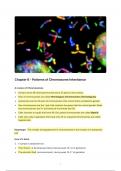
Photomicrographs are taken for all chromosomes, identified and arranged in what is
called a karyogram
2
, Procedure
3
A review of Chromosomes
Humans have 46 chromosomes that are in 23 pairs in the nucleus
Pairs of chromosomes are called Homologous Chromosomes (homologues)
Autosomes are the 22 pairs of chromosomes that control traits unrelated to gender
Sex chromosomes are the 1 pair that contains the genes that do control gender (Male
sex chromosomes are XY and those of the female are XX)
Cells (somatic or body) that have 46 (2n) paired chromosomes are called diploid
Cells (sex cells or gametes) that have only 23 (n) unpaired chromosomes are called
haploid cells
Karyotype: The number and appearance of chromosomes in the nucleus of a eukaryotic
cell
How it's done
A sample is obtained from
The chorion of developing embryo (during week 10–12 of gestation)
The amniotic fluid (amniocentesis), during week 15-17 of gestation
1
,Blood from adults (white blood cells)
Cells are stimulated by an agent and allowed to divide in culture by mitosis
Mitosis is stopped by treating cells with an anti-mitotic reagent (e.g. cholchicine)
Cells are spread on a slide and chromosomes are studied under microscope
Photomicrographs are taken for all chromosomes, identified and arranged in what is
called a karyogram
2
, Procedure
3