CSP2601
Assignment 04
Unique number: 638814
Due date: 03 September 2024
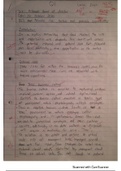
, QUESTION 1
1.1
Effective practice of teacher counselling requires some personal characteristics in
the professional. The following are three such characteristics:
Empathy:
Empathy is a state wherein one can understand and share the feelings of another at
the individual level. The establishment of a strong rapport among the students
approached and a teacher counsellor who shows empathy will have them feel
understood and supported, thus creating a safe environment for expressing their
concerns.
Active Listening:
Active listening involves the ability to totally concentrate, understand, respond, and
remember what the student says. Consequently, a teacher counselor who has this
skill can easily pick up the subtle cues in the student's communication and, hence,
find it easy to identify the underlying issues and provide appropriate support.
Consideration:
Patience is the power to accept or tolerate delay, trouble, or suffering without
becoming angry or upset. In counselling, students may take time to open up or show
progress. A patient teacher counselor stays calm and persistent, offering steady
support along the way.
1.2
Developmental Stage:
The age and the stage of development of the child or the adolescent in question are
very important to any knowledgeable counselor. Younger children may be handled
effectively through play therapy. And, older children and adolescents may positively
find cognitive-behavioral oriented techniques most helpful.
Culture of the Student of Concern
The culture of the student of concern forms an important consideration that should
inform the right counseling approach among knowledgeable or well-informed
counselors. This is the only way the socio-cultural values and beliefs of the students
of concern will be respected.
Nature of the Problem
It is the nature of the problem of the student that will determine the approach to be
used. A student undergoing anxiety may requ ire a different method from one
experiencing grief.
Student's Personality and Preferences:
Assignment 04
Unique number: 638814
Due date: 03 September 2024
, QUESTION 1
1.1
Effective practice of teacher counselling requires some personal characteristics in
the professional. The following are three such characteristics:
Empathy:
Empathy is a state wherein one can understand and share the feelings of another at
the individual level. The establishment of a strong rapport among the students
approached and a teacher counsellor who shows empathy will have them feel
understood and supported, thus creating a safe environment for expressing their
concerns.
Active Listening:
Active listening involves the ability to totally concentrate, understand, respond, and
remember what the student says. Consequently, a teacher counselor who has this
skill can easily pick up the subtle cues in the student's communication and, hence,
find it easy to identify the underlying issues and provide appropriate support.
Consideration:
Patience is the power to accept or tolerate delay, trouble, or suffering without
becoming angry or upset. In counselling, students may take time to open up or show
progress. A patient teacher counselor stays calm and persistent, offering steady
support along the way.
1.2
Developmental Stage:
The age and the stage of development of the child or the adolescent in question are
very important to any knowledgeable counselor. Younger children may be handled
effectively through play therapy. And, older children and adolescents may positively
find cognitive-behavioral oriented techniques most helpful.
Culture of the Student of Concern
The culture of the student of concern forms an important consideration that should
inform the right counseling approach among knowledgeable or well-informed
counselors. This is the only way the socio-cultural values and beliefs of the students
of concern will be respected.
Nature of the Problem
It is the nature of the problem of the student that will determine the approach to be
used. A student undergoing anxiety may requ ire a different method from one
experiencing grief.
Student's Personality and Preferences: