100% satisfaction guarantee Immediately available after payment Both online and in PDF No strings attached 4,6 TrustPilot
logo-home
Other

human anatomy and physiology (bio 235) Final-Version-A study notes verified 100%

Rating
-
Sold
-
Pages
13
Uploaded on
17-10-2024
Written in
2024/2025

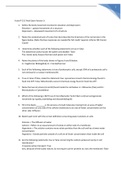
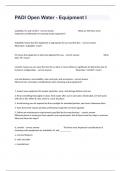
human anatomy and physiology (bio 235) Final-Version-A study notes verified 100%human anatomy and physiology (bio 235) Final-Version-A study notes verified 100% Final Review Version A Chapter 19: The Cardiovascular System: The Blood • Buffy Coat: The fraction of an anticoagulated blood sample that contains most of the WBCs and platelets. (Page 662) • Plasma Proteins: Proteins confined to blood; include: albumins, globulin, and fibrinogen. (Page 664) • White blood cells (WBCs) or leukocytes protect the body from invading pathogens and other foreign substances. There are several types of WBCs. Each type of WBC contributes in its own way to the body's defense mechanisms. (Page 664) o Major Function: Combat pathogens and other foreign substances that enter the body. (Page 675) • Hemopoiesis: The process by which the formed elements of blood develop; occurs in red bone marrow. (Page 665) • Thrombopoietin (TPO): A hormone produced by the liver that stimulates the formation of platelets from megakaryocytes. (Page 667) o Megakaryoblasts: Precursor cells that transform into megakaryocytes (Page 674) • Major Histocompatibility (MHC) Antigen: Surface proteins on white blood cells and other nucleated cells that are unique for each person (except for identical siblings); used to type tissues and help prevent rejection of transplanted tissues. Also known as human leukocyte antigens (HLA). (Page 672) • What cell secretes lysozyme? Neutrophils (Page 673) • Major function of erythrocytes: Hemoglobin within RBCs transports most oxygen and part of carbon dioxide in the blood. (Page 675) • Extrinsic Pathway: Occurs rapidly; tissue factor (TF) leaking into the blood from cells outside blood vessels and initiates the formation of prothrombinase. Prothrombinase converts prothrombin into the enzyme thrombin. Thrombin converts soluble fibrinogen into insoluble fibrin; fibrin forms the threads of the clot. (Page 678) • Difference between thrombus and embolus (Page 680) o Thrombus: A clot formed in an unbroken vessel (usually a vein) o Embolus: A blood clot, bubble of air, fat from broken bones, or a piece of debris transported by the bloodstream. • Agglutinins: Antibodies that react with the A or B antigens if the two are mixed. o Anti-A Antibody: Reacts with antigen A o Anti-B Antibody: Reacts with antigen B (Page 681) • Agglutination: An antigen-antibody response in which RBCs become cross-linked to one another (Page 681) Chapter 20: The Cardiovascular System: The Heart • Atrioventricular (AV) Valves: The tricuspid and bicuspid valves; located between an atrium and a ventricle. Blood moves from a higher pressure in the atria to a lower pressure in the ventricles through open AV valves. (Page 697) • Semilunar (SL) Valves: The aortic and pulmonary valves; allow ejection of blood from the heart into arteries but prevent backflow of blood into the ventricles. (Page 697) • Pulmonary Circulation: The right side of the heart is the pump for pulmonary circulation; it receives all of the dark-red deoxygenated blood returning from the systemic circulation. Blood ejected from the right ventricle flows into the pulmonary trunk, which branches into pulmonary arteries that carry blood to the right and left lungs. In pulmonary capillaries, blood unloads CO2, which is exhaled, and picks up O2 from inhaled air. The freshly oxygenated blood then flows into pulmonary veins and returns to the left atrium. (Page 700) • Types of cell junctions between neighbouring cells: The ends of cardiac muscle fibers connect to neighboring fibers by irregular transverse thickenings of the sarcolemma called intercalated discs. The discs contain desmosomes, which hold the fibers together, and gap junctions, which allow muscle action potentials to conduct from one muscle fiber to its neighbors. Gap junctions allow the entire myocardium of the atria or the ventricles to contract as a single, coordinated unit. (Page 702) • An action potential occurs in a contractile fiber as follows: o Depolarization: Voltage-gated fast Na+ channels open allowing Na+ inflow  inflow produces a rapid depolarization causing Na+ channels to deactivate. o Plateau: A period of maintained depolarization. o Repolarization: Voltage-gated K+ channels open causing outflow of K+, restoring the negative resting membrane potential. (Page 706) • ECG Waves (Page 707) o P Wave: The first wave; a small upward deflection; represents atrial depolarization o QRS Complex: The second wave; begins as a downward deflection, continues as a large, uprights, triangular wave, and ends as a downward wave; represents rapid ventricular depolarization. o T Wave: The third wave; a dome-shaped upward deflection; indicates ventricular repolarization • Ventricular Diastole: Relaxation of the ventricles; occurs shortly after the T wave begins; caused by ventricular repolarization (Page 709 & 710) • Stroke Volume: The volume ejected per beat from each ventricle, equals end-diastolic volume minus end systolic volume. At rest = 70 mL (Page 710) • Cardiac Output: The volume of blood ejected from the left ventricle (or the right ventricle) into the aorta (or pulmonary trunk) each minute. Calculated by: stroke volume x heart rate. (Page 713) • Frank Starling Law of the Heart: The more the heart fills with blood during diastole, the great the force of contraction during systole. (Page 713) Chapter 21: The Cardiovascular System: Blood Vessels and Hemodynamics • Venules: A small vein that collects blood from capillaries and delivers it to a vein. (Page 730) • Structure of a Blood Vessel (Page 731) o Tunica Interna: Forms the inner lining of a blood vessel and is in direct contact with blood. ▪ Endothelium: Innermost layer ▪ Basement Membrane: Middle layer ▪ Internal Elastic Lamina: Outermost layer o Tunica Media: Muscular and connective tissue layer ▪ Smooth Muscle o Tunica Externa: Outer covering of a blood vessel ▪ Collagen and elastic fibers • Major function of arteries and arterioles (Table 21.1 Page 737) o Elastic Arteries: Conduct blood from heart to muscular arteries o Muscular Arteries: Distribute blood to arterioles o Arterioles: Deliver blood to capillaries and help

Show more Read less
Institution
Bio 235
Course
Bio 235

Content preview

human anatomy and physiolo
jd jd jd


gy (bio 235) Final-Version-
jd jd jd


A study notes verified 100%
jd jd jd jd

, Final Review Versio
jd jd


nA jd


Chapterjd19:jdThejdCardiovascularjdSystem:jdThejdBlood
• BuffyjdCoat:jdThejdfractionjdofjdanjdanticoagulatedjdbloodjdsamplejdthatjdcontainsjdmostjdofjdt
hejdWBCsjdandjdplatelets.jd(Pagejd662)
• PlasmajdProteins:jdProteinsjdconfinedjdtojdblood;jdinclude:jdalbumins,jdglobulin,jdan
djdfibrinogen.jd(Pagejd664)
• Whitejdbloodjdcellsjd(WBCs)jdorjdleukocytesjdprotectjdthejdbodyjdfromjdinvadingjdpathogensjdan
djdotherjdforeignjdsubstances.jdTherejdarejdseveraljdtypesjdofjdWBCs.jdEachjdtypejdofjdWBCjdcon
tributesjdinjditsjdownjdwayjdtojdthejdbody'sjddefensejdmechanisms.jd(Pagejd664)
o MajorjdFunction:jdCombatjdpathogensjdandjdotherjdforeignjdsubstancesjdthatjdenterjdth
ejdbody.jd(Pagejd675)
• Hemopoiesis:jdThejdprocessjdbyjdwhichjdthejdformedjdelementsjdofjdbloodjddevelop;jdoccursjdinjdr
edjdbonejdmarrow.jd(Pagejd665)
• Thrombopoietinjd(TPO):jdAjdhormonejdproducedjdbyjdthejdliverjdthatjdstimulatesjdthejdformatio
njdofjdplateletsjdfromjdmegakaryocytes.jd(Pagejd667)
o Megakaryoblasts:jdPrecursorjdcellsjdthatjdtransformjdintojdmegakaryocytesjd(Pagejd674)
• MajorjdHistocompatibilityjd(MHC)jdAntigen:j d Surfacejdproteinsjdonjdwhitejdbloodjdcellsjdan
djdotherjdnucleatedjdcellsjdthatjdarejduniquejdforjdeachjdpersonjd(exceptjdforjdidenticaljdsiblings);jd
usedjdtojdtypejdtissuesjdandjdhelpjdpreventjdrejectionjdofjdtransplantedjdtissues.jdAlsojdknownjdasjd
human
leukocytejdantigensjd(HLA).jd(Pagejd672)
• Whatjdcelljdsecretesjdlysozyme?jdNeutrophilsjd(Pagejd673)
• Majorjdfunctionjdofjderythrocytes:jdHemoglobinjdwithinjdRBCsjdtransportsjdmostjdoxygenjdan
djdpartjdofjdcarbonjddioxidejdinjdthejdblood.jd(Pagejd675)
• ExtrinsicjdPathway:jdOccursjdrapidly;jdtissuejdfactorjd(TF)jdleakingjdintojdthejdbloodjdfromjdcel
lsjdoutsidejdbloodjdvesselsjdandjdinitiatesjdthejdformationjdofjdprothrombinase.jdProthrombinas
ejdconvertsjdprothrombinjdintojdthejdenzymejdthrombin.jdThrombinjdconvertsjdsolublejdfibrino
genjdintojdinsolublejdfibrin;jdfibrinjdformsjdthejdthreadsjdofjdthejdclot.jd(Pagejd678)
• Differencejdbetweenjdthrombusjdandjdembolusjd(Pagejd680)
o Thrombus:jdAjdclotjdformedjdinjdanjdunbrokenjdvesseljd(usuallyjdajdvein)
o Embolus:jdAjdbloodjdclot,jdbubblejdofjdair,jdfatjdfromjdbrokenjdbones,jdorjdajdpiecejdofjddebr
isjdtransportedjdbyjdthejdbloodstream.
• Agglutinins:jdAntibodiesjdthatjdreactjdwithjdthejdAjdorjdBjdantigensjdifjdthejdtwojdarejdmixed.
o Anti-AjdAntibody:jdReactsjdwithjdantigenjdA
o Anti-BjdAntibody:jdReactsjdwithjdantigenjdBjd(Pagejd681)
• Agglutination:jdAnjdantigen-antibodyjdresponsejdinjdwhichjdRBCsjdbecomejdcross-
linkedjdtojdonejdanotherjd(Pagejd681)

Written for

Institution
Bio 235
Course
Bio 235

Document information

Uploaded on
October 17, 2024
Number of pages
13
Written in
2024/2025
Type
OTHER
Person
Unknown

Subjects

Get to know the seller

Seller avatar
Reputation scores are based on the amount of documents a seller has sold for a fee and the reviews they have received for those documents. There are three levels: Bronze, Silver and Gold. The better the reputation, the more your can rely on the quality of the sellers work.
clevercopies Teachme2-tutor
Follow You need to be logged in order to follow users or courses
Sold
77
Member since
1 year
Number of followers
10
Documents
4591
Last sold
2 days ago
EXAM HUB test banks and exam help

we believe in making study materials accessible and engaging for everyone. Our store specializes in high-quality notes, study guides, and resources tailored for all subjects and academic levels. message for any academic writing and tasks

4,1

49 reviews

5
23
4
14
3
7
2
2
1
3

Trending documents

Recently viewed by you

Why students choose Stuvia

Created by fellow students, verified by reviews

Quality you can trust: written by students who passed their exams and reviewed by others who've used these notes.

Didn't get what you expected? Choose another document

No worries! You can immediately select a different document that better matches what you need.

Pay how you prefer, start learning right away

No subscription, no commitments. Pay the way you're used to via credit card or EFT and download your PDF document instantly.

Student with book image

“Bought, downloaded, and aced it. It really can be that simple.”

Alisha Student

Frequently asked questions